

Credit Scores, Credit Cards

Curated by Brian Kim, CPA — every pick gets a plain-English summary and the key takeaways.
Brian Kim, CPA · 2.89M YouTube Subscribers →What this book actually teaches
- 01The interest calculation walkthrough — showing how a $5,000 balance at 18% APR compounds when paying only minimums — remains illustrative even as specific card terms have changed.
- 02The book predates the Credit CARD Act of 2009, which eliminated several practices it describes as standard industry norms — retroactive rate increases, aggressive fee stacking, and manipulative minimum-payment formulas.
- 03Dispute rights under the FCRA and the basic five-factor FICO model are covered, but at a surface level compared to more rigorous contemporary treatments.
- 04Silver Lake's guides were trade-oriented with thin sourcing; the analysis does not hold up as a research reference, only as a general-audience primer.
- 05Published in 2003, this is most useful as context for how consumer credit worked before major regulatory reform rather than as current guidance.
What's in this book
Credit Scores, Credit Cards published in 2003 by Silver Lake Editors is a compact consumer reference covering the mechanics of credit scoring and credit card management. Silver Lake was a small independent press known for practical consumer guides; this title reflects the pre-financial-crisis period when FICO scoring was less publicly understood and credit card usage was expanding rapidly among American households.
The book addresses two parallel topics. On credit scores, it covers how the FICO model weights the five factor categories, how to interpret a credit report, what negative items look like and how long they persist under the Fair Credit Reporting Act, and the basic mechanics of disputing inaccurate information with the bureaus. On credit cards, it covers how interest is calculated (average daily balance method versus adjusted balance method), how minimum payments extend payoff timelines dramatically through compounding, the distinction between introductory rates and ongoing APRs, balance transfer mechanics, and the hidden costs in annual fees, cash advance fees, and over-limit fees.
The interest calculation section is the book's most durable contribution. Many cardholders in 2003 — and many today — misunderstand how quickly a balance compounds when only minimum payments are made. Walking through the arithmetic of a $5,000 balance at 18% APR on minimum payments illuminates the real cost in time and money in a way that abstract warnings do not.
The weaknesses are substantial given the publication date. The book predates the Credit CARD Act of 2009, which eliminated several of the practices it describes as standard — retroactive rate increases on existing balances, arbitrary over-limit fee stacking, and the most aggressive minimum-payment structures. A reader relying on this for current card terms will encounter outdated information. The book also predates the widespread availability of free credit monitoring, VantageScore as an alternative scoring model, and the shift toward app-based card management that has changed how most consumers interact with their accounts.
Silver Lake guides were also written for a general trade audience rather than as deeply researched texts; the sourcing is thin and the analysis stays at the surface level compared to Evan Hendricks' more rigorous Credit Scores & Credit Reports (published the following year) or the CFPB's current free consumer guides.
Worth reading primarily as a historical artifact of how credit education was packaged for consumers in the early 2000s. For current guidance on credit scores and credit card management, more recent resources are significantly more accurate and complete.
Read next

For anyone whose financial education was "get a good job and save" — the book is most valuable for first-time readers…
Buy on Amazon →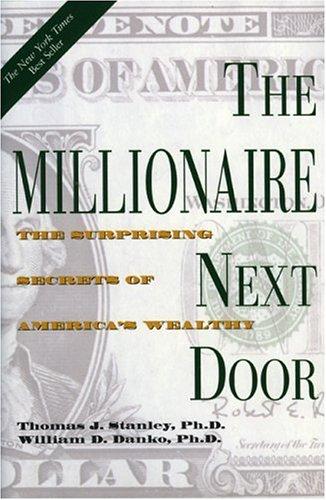
For anyone who confuses high income with wealth, or who feels behind because their lifestyle doesn't look like the we…
Buy on Amazon →
Anyone who earns enough to make discretionary spending choices but suspects their spending is not generating proporti…
Buy on Amazon →
Households in active consumer-debt distress who need a non-negotiable shared script. Not for investors already past B…
Buy on Amazon →About The Silver Lake Editors
Read more from The Silver Lake Editors and explore the full bibliography on ClearValue Books.
View The Silver Lake Editors's page →Get an email if our take on Credit Scores, Credit Cards changes.
We re-review our picks. We'll email you if Credit Scores, Credit Cards's ranking or review changes — no checking back.
Across the site
Featured in lists
Recommended in answers

Ready to read Credit Scores, Credit Cards?
Buy the edition we recommend on Amazon.
Buy on Amazon →