

Debt Trap

Curated by Brian Kim, CPA — every pick gets a plain-English summary and the key takeaways.
Brian Kim, CPA · 2.89M YouTube Subscribers →What this book actually teaches
- 01Student loans expanded because they served multiple constituencies — colleges, the federal government, lenders, and families — each rationally pursuing their interests inside a system that produced collective harm.
- 02The removal of bankruptcy discharge rights for student loans (1976, tightened 1998) was a structural change that transferred all repayment risk to borrowers permanently.
- 03Tuition increases and loan availability formed a feedback loop: each dollar of additional loan capacity was absorbed by price increases, not expanded access.
- 04For-profit college inclusion in federal loan programs (1970s) opened a channel for credential mills to extract federal money with weak accountability.
- 05Parent PLUS loans were extended without meaningful income underwriting — a policy decision that created a distinct class of trapped borrowers invisible in most student loan statistics.
What's in this book
Josh Mitchell's The Debt Trap: How Student Loans Became a National Catastrophe is a narrative investigation into how the federal student loan program grew from a modest, narrowly targeted instrument of the 1960s Great Society into a $1.7 trillion system that now functions as a mechanism for transferring wealth from working-class and middle-class families to colleges and the federal government. Mitchell, a Wall Street Journal reporter who covered the student loan beat for years, builds the book as a reported history with deep character work: specific borrowers whose trajectories he traces over years, administrators and policy architects whose decisions compounded into the crisis, and the political dynamics that prevented course corrections.
The book's central argument is that student loans expanded not because the evidence supported their effectiveness at producing economic mobility, but because they were useful to multiple constituencies simultaneously. Colleges used them to justify tuition increases, knowing that credit availability would absorb the price hike. The federal government used them to expand higher education access without putting costs on the federal balance sheet in ways that appeared as discretionary spending. Lenders (before the 2010 direct loan shift) extracted fees and interest with federal guarantees against default risk. Students and families borrowed because the credential felt mandatory and alternatives felt foreclosed. Each actor behaved rationally within the system; the system itself produced a collectively irrational outcome.
Mitchell traces specific policy decisions that created inflection points: the extension of loans to for-profit colleges in the 1970s, the removal of bankruptcy discharge rights in 1976 and their further restriction in 1998, the growth of Parent PLUS loans without meaningful income underwriting, and the expansion of graduate loan limits without caps. Each decision solved a short-term problem while creating a longer-term structural vulnerability. He is careful about causation — he does not argue that loans caused tuition increases in a simple mechanical sense, but demonstrates the feedback loop that developed.
The borrower narratives are the book's most powerful device. Mitchell follows specific individuals — a nursing student, a law school graduate, a for-profit college attendee — across years of repayment, income-driven plan enrollment, and the psychological weight of nondischargeable debt. The specificity prevents the aggregate numbers from becoming abstract.
This is for readers who want to understand how the student loan crisis was constructed — policy layer by policy layer — rather than readers looking for personal repayment advice.
The weaknesses are worth noting. The book is a reported narrative, not a policy prescription — Mitchell diagnoses with precision but does not land on a clear reform agenda, which will frustrate readers who want the analysis to end in a concrete recommendation. The focus on federal direct and FFEL loans means private student lending gets less attention than its role in certain borrower outcomes warrants. And the narrative structure, while compelling, occasionally prioritizes individual story arc over systemic analysis in ways that make some policy sequences harder to track.
For anyone trying to understand how a program designed to expand opportunity became a trap, The Debt Trap is essential reading. The reporting is rigorous, the characters are real, and the policy history is assembled with unusual care.
Read next

For anyone whose financial education was "get a good job and save" — the book is most valuable for first-time readers…
Buy on Amazon →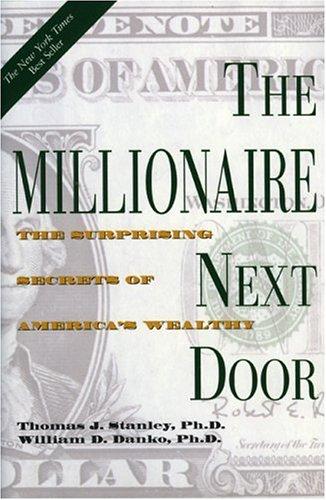
For anyone who confuses high income with wealth, or who feels behind because their lifestyle doesn't look like the we…
Buy on Amazon →
Anyone who earns enough to make discretionary spending choices but suspects their spending is not generating proporti…
Buy on Amazon →
Households in active consumer-debt distress who need a non-negotiable shared script. Not for investors already past B…
Buy on Amazon →About Josh Mitchell
Read more from Josh Mitchell and explore the full bibliography on ClearValue Books.
View Josh Mitchell's page →Get an email if our take on Debt Trap changes.
We re-review our picks. We'll email you if Debt Trap's ranking or review changes — no checking back.
