

Diploma Mills

Curated by Brian Kim, CPA — every pick gets a plain-English summary and the key takeaways.
Brian Kim, CPA · 2.89M YouTube Subscribers →What this book actually teaches
- 01The for-profit college playbook — recruit from veterans and low-income students with federal loan access, minimize instruction, oversell credential value — recurs across more than a century of US education history.
- 02The GI Bill created the first large federal education subsidy stream that proprietary schools moved quickly to capture, often with minimal legitimate instruction.
- 03Accreditation bodies in this sector were structurally captured by the institutions they were supposed to oversee — regulatory capture, not regulatory failure.
- 04For-profit college enrollment is one of the highest-cost, lowest-return financial decisions available to students with limited resources; understanding the sector's track record is relevant before signing.
- 05The book is historical and analytical, not a current school-by-school guide — verify any specific institution's current outcomes through federal Scorecard data.
What's in this book
A. J. Angulo's Diploma Mills: How For-Profit Colleges Stiffed Students, Taxpayers, and the American Dream is a historical account of how the for-profit higher education sector developed in the United States — from 19th-century correspondence schools and proprietary trade schools through the post-WWII GI Bill expansion to the publicly traded chains of the 1990s and 2000s. Angulo, a historian of education at Winthrop University, argues that the patterns of federal subsidy, low educational quality, aggressive marketing to vulnerable populations, and regulatory avoidance that characterized the recent for-profit college scandals were not anomalies — they were the default operating mode of a sector that had been recurring in roughly the same form for over a century.
The historical structure is the book's distinguishing feature. Angulo shows that the playbook used by Corinthian Colleges, ITT Technical Institute, and the University of Phoenix in the 2000s — recruit heavily from veterans and low-income students with access to federal grants and loans, minimize instructional investment, project credential value that the labor market does not honor, use political influence to resist accreditation reform — was pioneered by mail-order diploma mills in the 1880s and refined through multiple subsequent waves. The GI Bill chapters are particularly strong: the extension of education benefits to veterans after World War II created a revenue stream that proprietary schools moved quickly to capture, often with minimal instructional infrastructure and explicit credential fraud.
Angulo traces the specific moments when federal policy could have constrained the sector and did not. The Higher Education Act's inclusion of for-profit colleges as Title IV eligible, accreditation bodies that were structurally captured by the institutions they were supposed to oversee, and congressional resistance to the Department of Education's gainful employment rule — each represents a fork in the road where the pattern was preserved rather than corrected.
The book is relevant to personal finance in a specific but important way: for-profit college enrollment decisions are among the highest-cost, lowest-return financial choices available to students with limited resources, and the patterns Angulo documents — aggressive recruitment targeting military and low-income students, credential promises that the labor market does not honor, and debt that survives institutional closure — continue to recur.
This is for readers who want historical context for the for-profit college debate, or who are evaluating an enrollment decision at a proprietary institution and want to understand the sector's track record.
The caveats are structural. Diploma Mills is primarily historical and analytical — readers looking for current institution-specific evaluations or practical guidance on evaluating a specific school will not find it here. The coverage of recent for-profit scandals is stronger on systemic patterns than on the specific institutions involved, which limits its usefulness as a guide to specific current schools. Angulo's tone is consistently critical of the for-profit sector, which is warranted by the evidence he presents but means the book does not engage seriously with legitimate for-profit institutions that have produced credentialed outcomes.
As a historical and structural account of how credential fraud has been sustained across a century of federal education policy, the book is thorough and well-sourced.
Read next

For anyone whose financial education was "get a good job and save" — the book is most valuable for first-time readers…
Buy on Amazon →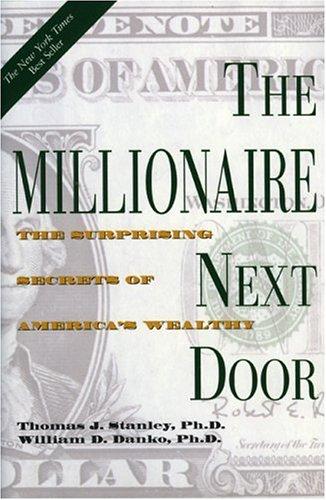
For anyone who confuses high income with wealth, or who feels behind because their lifestyle doesn't look like the we…
Buy on Amazon →
Anyone who earns enough to make discretionary spending choices but suspects their spending is not generating proporti…
Buy on Amazon →
Households in active consumer-debt distress who need a non-negotiable shared script. Not for investors already past B…
Buy on Amazon →About A J Angulo
Read more from A J Angulo and explore the full bibliography on ClearValue Books.
View A J Angulo's page →Get an email if our take on Diploma Mills changes.
We re-review our picks. We'll email you if Diploma Mills's ranking or review changes — no checking back.
