

Executive finance and strategy

Curated by Brian Kim, CPA — every pick gets a plain-English summary and the key takeaways.
Brian Kim, CPA · 2.89M YouTube Subscribers →What this book actually teaches
- 01Strategic decisions and financial decisions are inseparable — the return structure and capital requirements of a strategy determine whether it creates or destroys value.
- 02The book teaches financial statements as an integrated picture of a business, not three separate documents, with emphasis on where accrual accounting diverges from cash reality.
- 03DuPont decomposition of return on equity is a recurring diagnostic tool — Tiffin uses it to connect profitability, efficiency, and leverage into a single strategic lens.
- 04The strategy-facing chapters address M&A due diligence, capital budgeting, and the financial implications of build-versus-buy and fixed-versus-variable cost decisions.
- 05Breadth is the book's trade-off — adequate for orientation on any given topic, but not deep enough for executives who need to build or review models themselves.
What's in this book
Ralph Tiffin's argument is that finance is a first-language skill for executives, not a support function to be handed off to the CFO. Executive Finance and Strategy is aimed at general managers, strategy consultants, and senior business-school students who interact with financial decisions regularly but were trained in another discipline. The book's core claim is that strategic decisions and financial decisions are not separable — the capital allocation, risk profile, and return structure of a strategy determine whether it creates or destroys value, and executives who cannot read those signals clearly make worse strategic choices.
The book organizes its content in three broad sections. First, the accounting and financial statement fundamentals: how to read a balance sheet, income statement, and cash flow statement as an integrated picture of a business rather than three separate documents; how accrual accounting works and where it diverges from cash reality; the meaning of working capital and why it matters in fast-growth or seasonally volatile businesses. Second, the financial analysis section covers ratio analysis (liquidity, efficiency, leverage, profitability), DuPont decomposition of return on equity, and how to use these diagnostics to compare businesses across an industry or track a business over time. Third, the strategy-facing content addresses valuation basics — discounted cash flow, comparable-company analysis, enterprise value versus equity value — and the financial implications of strategic choices: acquisition versus organic growth, fixed-cost versus variable-cost operating models, capital-light versus capital-intensive business models. The final chapters connect directly to the kind of financial decisions executives sponsor or approve: M&A due diligence, capital budgeting, and financial performance targets.
The natural audience is experienced managers without a finance background who need to operate at the intersection of strategy and capital allocation — not students learning accounting for the first time, and not finance professionals who already own the technical foundation.
The weaknesses are real. The book's breadth means no single topic receives deep treatment; the DCF chapter, for instance, is adequate for orientation but insufficient for anyone who will actually build or review a model. The writing is dense in places and not always illustrative — Tiffin uses worked examples but not the kind of full case-study treatment that business school texts use to make the material stick. The 2014 publication date means the data and market-context examples are dated, though the accounting and valuation frameworks are durable.
Worth reading as a single-volume bridge between strategy and finance for executives who feel fluent in one and opaque in the other. Supplement with a more applied source — case studies, or a financial-modeling primer — for any topic you need to act on, not just understand.
Read next

For anyone whose financial education was "get a good job and save" — the book is most valuable for first-time readers…
Buy on Amazon →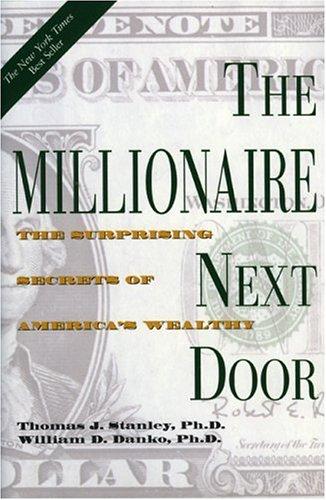
For anyone who confuses high income with wealth, or who feels behind because their lifestyle doesn't look like the we…
Buy on Amazon →
Anyone who earns enough to make discretionary spending choices but suspects their spending is not generating proporti…
Buy on Amazon →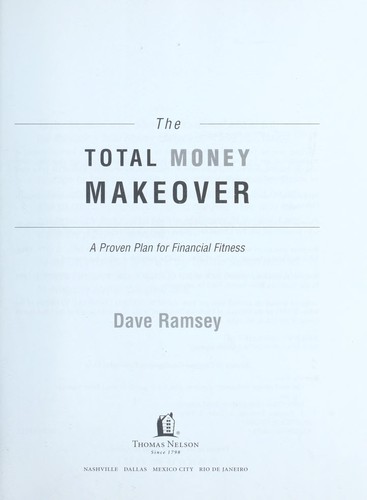
Households in active consumer-debt distress who need a non-negotiable shared script. Not for investors already past B…
Buy on Amazon →About Ralph Tiffin
Read more from Ralph Tiffin and explore the full bibliography on ClearValue Books.
View Ralph Tiffin's page →Get an email if our take on Executive finance and strategy changes.
We re-review our picks. We'll email you if Executive finance and strategy's ranking or review changes — no checking back.

Ready to read Executive finance and strategy?
Buy the edition we recommend on Amazon.
Buy on Amazon →