

Finance for normal people

Curated by Brian Kim, CPA — every pick gets a plain-English summary and the key takeaways.
Brian Kim, CPA · 2.89M YouTube Subscribers →What this book actually teaches
- 01Normal investors have three kinds of wants — utilitarian, expressive, and emotional — and standard finance accounts only for the first.
- 02The behavioral portfolio framework (Shefrin and Statman) describes how investors actually manage money in layered mental accounts rather than a single mean-variance optimal portfolio.
- 03Cognitive patterns like the disposition effect, overconfidence, and mental accounting are presented as features of normal behavior to understand, not irrational errors to be cured.
- 04Financial advisors serve emotional and expressive functions that portfolio optimization models cannot capture — the book frames this as a feature of the advisory relationship, not a flaw.
- 05The book is stronger as a descriptive and diagnostic account than as a prescriptive guide — it explains behavior well but is less specific about what normal investors should do differently.
What's in this book
Meir Statman's argument is that finance has two populations of theories: standard finance, which assumes rational investors building mean-variance optimal portfolios in efficient markets, and behavioral finance, which replaces idealized homo economicus with normal people who want more than just high expected returns and low risk. Finance for Normal People is Statman's attempt to unify the behavioral finance literature he helped build into a single accessible account — a finance theory that describes what people actually want and how they actually behave, not what an optimization model says they should want.
The book organizes its argument through the wants and cognitive patterns of normal investors. First, it frames wants in three categories: utilitarian (the functional value of money), expressive (what investment choices say about the investor's identity and values), and emotional (how investments feel — hope, pride, fear, regret). Standard finance accounts only for utilitarian wants; behavioral finance has to account for all three, which is why normal investors hold cash they don't need, refuse to sell losing positions, and concentrate in their employer's stock. Second, the cognitive section covers the well-documented errors: overconfidence, loss aversion, mental accounting, the disposition effect, representativeness, and the tendency to mistake recent performance for future performance. Statman is careful to present these not as irrationalities to be corrected but as patterns to be understood — the investor is not broken; the standard model is incomplete. Third, the portfolio section introduces the concept of behavioral portfolios — the mental accounts (safety layer, growth layer, lottery layer) that normal investors actually maintain — which Shefrin and Statman formalized as an alternative to the single-portfolio mean-variance framework. Fourth, Statman addresses the social dimensions of finance: why people trade status as much as money, why financial advisors serve emotional and expressive functions that portfolio optimization models ignore, and why market prices aggregate the expectations and errors of normal people rather than rational abstractions.
The natural audience is financially sophisticated non-professionals — investors, financial advisors, and serious general readers who want to understand why the standard models fail to describe observed behavior.
The weaknesses are disciplinary. Statman's account is descriptive and diagnostic; it explains why investors behave as they do but is less prescriptive about what they should do differently given that they are normal people with the wants and cognitive patterns he describes. The book is also better-suited to investors who have some familiarity with the standard finance concepts being challenged — a reader who hasn't encountered modern portfolio theory or efficient markets will miss some of the force of the behavioral critique. And the 2017 publication date means it predates the literature on machine learning in trading and the explosion of passive investing, which shifts some of the market-structure arguments.
Worth reading as the most accessible synthesis of behavioral finance by one of its central architects. A genuine alternative to the standard finance curriculum, not just a collection of cognitive-bias anecdotes.
Read next

For anyone whose financial education was "get a good job and save" — the book is most valuable for first-time readers…
Buy on Amazon →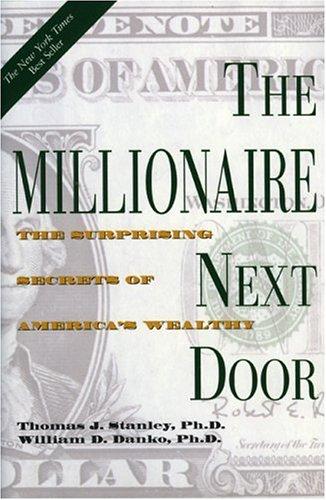
For anyone who confuses high income with wealth, or who feels behind because their lifestyle doesn't look like the we…
Buy on Amazon →
Anyone who earns enough to make discretionary spending choices but suspects their spending is not generating proporti…
Buy on Amazon →
Households in active consumer-debt distress who need a non-negotiable shared script. Not for investors already past B…
Buy on Amazon →About Meir Statman
Read more from Meir Statman and explore the full bibliography on ClearValue Books.
View Meir Statman's page →Get an email if our take on Finance for normal people changes.
We re-review our picks. We'll email you if Finance for normal people's ranking or review changes — no checking back.
Across the site
Featured in lists

Ready to read Finance for normal people?
Buy the edition we recommend on Amazon.
Buy on Amazon →