
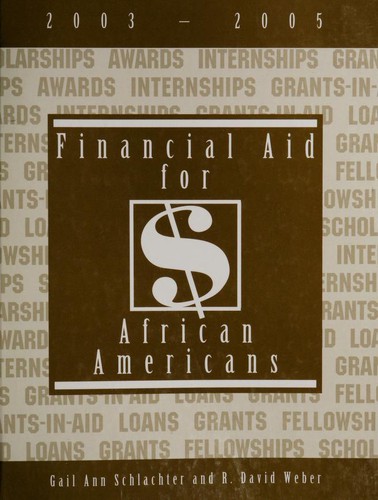
Financial Aid for African Americans

Curated by Brian Kim, CPA — every pick gets a plain-English summary and the key takeaways.
Brian Kim, CPA · 2.89M YouTube Subscribers →What this book actually teaches
- 01A large pool of scholarship and grant funding specifically designated for African American students goes unclaimed each year primarily because the programs are scattered and poorly publicized.
- 02The directory covers all degree levels — undergraduate, graduate, postdoctoral, and professional development — not just the undergraduate focus of most financial aid guides.
- 03HBCU-sponsored endowed funds and department-specific scholarships often have fewer applicants than nationally advertised programs, making them high-value targets.
- 04Directory listings require direct verification with sponsors — contact information, eligibility criteria, and funding availability all change between editions.
- 05Cross-reference these listings against current digital scholarship databases (UNCF portal, Fastweb, Scholarships.com) to catch programs added or revised after publication.
What's in this book
Financial Aid for African Americans by R. David Weber is a reference directory compiled to address a practical gap: African American students have access to a substantial pool of scholarship and grant funding specifically designated for them, yet many of those dollars go unclaimed every year because the programs are fragmented across hundreds of private organizations, foundations, HBCUs, professional associations, and civil rights groups. The book's core argument is that information asymmetry is the primary barrier — the money exists, the eligibility exists, and the missing variable is awareness.
The book organizes listings by category: undergraduate scholarships, graduate fellowships, postdoctoral funding, professional development grants, awards from historically Black colleges and universities, and funding from major civil rights and fraternal organizations including the NAACP, National Urban League, Alpha Phi Alpha, Delta Sigma Theta, and the United Negro College Fund. Each entry provides the sponsoring organization, amount or range, eligibility criteria, application requirements, and contact information. The format is reference, not narrative — readers use it as a research tool, not a cover-to-cover read.
Webster's approach is notable for its breadth across degree levels and disciplines. The directory does not focus exclusively on undergraduate scholarships, which dominate most financial aid guides. Graduate students in law, medicine, engineering, and the social sciences will find relevant entries, as will professionals seeking continuing education or research funding. Entries from HBCUs include not only institution-sponsored scholarships but also endowed funds tied to specific departments, which often have fewer applicants than nationally advertised programs.
The practical value of a book like this is directly tied to how current the listings are. Scholarship programs change eligibility criteria, funding levels, and deadlines; some suspend operations temporarily or permanently. Weber addresses this by providing multiple contact channels — phone, address, and where available early web contact information — but the verification burden shifts to the reader. The book functions as a starting point for research, not a substitute for confirming current terms directly with each sponsor.
This is for African American students at any degree level, their families, and school counselors advising them on funding sources beyond the FAFSA-eligible federal pool.
The weaknesses are inherent to the format. Directory books become partially outdated as soon as they go to print — contact information changes, programs are funded or defunded on grant cycles, and new programs that postdate the directory are invisible to readers relying solely on this source. The book predates the consolidation of scholarship search onto digital platforms; a reader today would cross-reference these listings against current databases like Scholarships.com, Fastweb, and the UNCF scholarship portal to verify currency. The directory format also means entries vary in depth — some programs have full descriptions while others have only basic contact information, which creates unequal utility across the listings.
As a starting point for identifying targeted funding opportunities, the book remains conceptually useful even where specific listings require verification. The organizational categories are sound, and the coverage of HBCUs and civil rights organizations fills a gap that general financial aid directories leave open.
Read next

For anyone whose financial education was "get a good job and save" — the book is most valuable for first-time readers…
Buy on Amazon →
For anyone who confuses high income with wealth, or who feels behind because their lifestyle doesn't look like the we…
Buy on Amazon →
Anyone who earns enough to make discretionary spending choices but suspects their spending is not generating proporti…
Buy on Amazon →
Households in active consumer-debt distress who need a non-negotiable shared script. Not for investors already past B…
Buy on Amazon →About R David Weber
Read more from R David Weber and explore the full bibliography on ClearValue Books.
View R David Weber's page →Get an email if our take on Financial Aid for African Americans changes.
We re-review our picks. We'll email you if Financial Aid for African Americans's ranking or review changes — no checking back.

Ready to read Financial Aid for African Americans?
Buy the edition we recommend on Amazon.
Buy on Amazon →