

Financial planning for your first job

Curated by Brian Kim, CPA — every pick gets a plain-English summary and the key takeaways.
Brian Kim, CPA · 2.89M YouTube Subscribers →What this book actually teaches
- 01Benefits enrollment is the first financial decision a new employee faces and one of the highest-stakes — health plan type, 401(k) contribution rate, and HSA eligibility all lock in during the first two weeks.
- 02New employees consistently overestimate take-home pay because they have not seen the effect of FICA taxes, insurance premiums, and retirement contributions — budget from net, not gross.
- 03Whether to prioritize student loan repayment or 401(k) contribution depends on the interest rate, the employer match rate, and whether the loans are federal or private — there is no universal answer.
- 04Target-date funds and broad index funds are sound defaults for a new investor who will not actively manage their portfolio; the behavioral case for simplicity outweighs the theoretical case for optimization at this stage.
- 05The 2013 publication date means contribution limits, student loan program structures, and some tax rules require current verification — the decision frameworks hold but the specific figures do not.
What's in this book
Financial Planning for Your First Job by Matthew Brandeburg, a CFP, addresses the specific financial decisions that cluster in the first year of full-time employment — when the first real paycheck arrives, benefits enrollment opens, and the financial choices made (or deferred) create trajectories that compound for decades. The book's argument is that the first job is the highest-leverage moment in a person's financial life precisely because the stakes feel low: the numbers are smaller, the habits are not yet entrenched, and the advantage of starting early in a 401(k) or Roth IRA is maximized when the clock starts at 22 rather than 35.
Brandeburg organizes the book around the sequence of decisions a new employee actually faces. The benefits enrollment chapter comes first because that is chronologically first — health insurance selection, 401(k) contribution rate and investment selection, life and disability insurance decisions, and FSA versus HSA tradeoffs all arrive in the first two weeks on the job. Most new employees are making these decisions with no framework and default to the minimum contribution or the first fund on the list. Brandeburg walks through each decision with the specific criteria that should drive the choice: whether the employer offers a traditional pension affects 401(k) priority; whether the health plan is an HDHP affects HSA eligibility; whether the employer matches affects where the first contribution dollar goes.
The budgeting section uses the first paycheck as the anchor. Brandeburg is concrete about the net-versus-gross gap — new employees consistently overestimate take-home pay because they have not seen the effect of FICA taxes, health insurance premiums, and retirement contributions on the actual deposit. The book builds a first budget from the net figure rather than the gross, which is the right starting point for someone who has never seen a pay stub breakdown.
The debt section covers student loan repayment decision-making (standard versus income-driven plans, the interaction between employer 401(k) matching and student loan payoff sequencing) and credit card management for someone establishing credit for the first time. The analysis of whether to prioritize student loan repayment or 401(k) contribution is handled with appropriate nuance — the answer depends on the interest rate, the employer match rate, and whether the loans are federal or private.
The investing chapter covers the basics of tax-advantaged account types, contribution limits, and the behavioral case for index funds and target-date funds as default choices for someone who will not actively manage their portfolio.
This is for new graduates entering full-time employment who are making their first independent financial decisions, and for parents who want a structured resource to hand them.
The weaknesses are currency-related. The 2013 publication date means contribution limits, specific student loan program structures, and some tax rules require updating — the decision frameworks are sound but the specific numbers need verification against current IRS and Department of Education guidance. The book assumes traditional W-2 employment with standard benefits; the large population of first-job workers who enter through contract, gig, or part-time arrangements without benefits will find less directly applicable content.
For the traditional first job with a benefits package, this is one of the more practically organized books in the genre — the chronological sequencing of decisions mirrors how a new employee actually encounters them.
Read next

For anyone whose financial education was "get a good job and save" — the book is most valuable for first-time readers…
Buy on Amazon →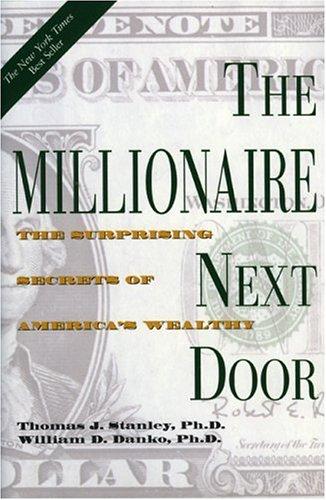
For anyone who confuses high income with wealth, or who feels behind because their lifestyle doesn't look like the we…
Buy on Amazon →
Anyone who earns enough to make discretionary spending choices but suspects their spending is not generating proporti…
Buy on Amazon →
Households in active consumer-debt distress who need a non-negotiable shared script. Not for investors already past B…
Buy on Amazon →About Matthew Brandeburg
Read more from Matthew Brandeburg and explore the full bibliography on ClearValue Books.
View Matthew Brandeburg's page →Get an email if our take on Financial planning for your first job changes.
We re-review our picks. We'll email you if Financial planning for your first job's ranking or review changes — no checking back.
Across the site
Featured in lists

Ready to read Financial planning for your first job?
Buy the edition we recommend on Amazon.
Buy on Amazon →