

Footing the Tuition Bill

Curated by Brian Kim, CPA — every pick gets a plain-English summary and the key takeaways.
Brian Kim, CPA · 2.89M YouTube Subscribers →What this book actually teaches
- 01The book's central argument is that the federal financial aid system functions as a tuition-inflation engine rather than an access tool — the availability of federal loans provides colleges with captive demand, enabling price increases that absorb whatever aid expands.
- 02Hess documents the shift from need-based to merit-based aid and the rise of 'enrollment management,' explaining how institutional pricing strategies use FAFSA data to engage in sophisticated price discrimination calibrated to enrollment goals rather than family need.
- 03This is a policy analysis book, not a consumer planning guide — families looking for concrete advice on 529 selection, aid application strategy, or school selection criteria will not find it here.
- 04The 2007 publication date predates income-driven repayment expansion and Public Service Loan Forgiveness, which materially altered the borrowing risk calculus in ways the book's framework does not address.
- 05Hess's AEI affiliation shapes the analysis: the book is skeptical of federal intervention and sympathetic to market mechanisms, which narrows the range of policy alternatives it takes seriously.
What's in this book
Footing the Tuition Bill (2007) by Frederick M. Hess — a resident scholar at the American Enterprise Institute and a prolific writer on education policy — is a policy-oriented examination of college financial aid rather than a consumer guide to paying for college. The book's central argument is that the college financial aid system, as structured in the mid-2000s, creates perverse incentives that drive tuition inflation, obscure real costs from families, and distribute aid in ways that frequently serve institutional interests rather than student or public interests. Hess writes primarily as a policy analyst rather than as a financial planner, and the book's value is in understanding the structural dynamics of college finance rather than optimizing a family's individual college savings strategy.
The first section of the book examines how the aid system evolved from its original purpose — expanding access for low-income students — into a sophisticated price discrimination mechanism that allows colleges to charge high sticker prices while offering strategic discounts calibrated to enrollment goals. Hess documents the shift from need-based to merit-based aid, the rise of "enrollment management" as an institutional function, and the role of the FAFSA and Expected Family Contribution formulas in creating information asymmetry that disadvantages families who don't understand how college pricing actually works. The analysis is drawn from institutional research and policy literature rather than from original reporting, but it is well-organized and more substantive than the typical consumer-side treatment of these dynamics.
The second section examines the policy interventions — federal loan programs, state grant structures, tax benefits for college savings — and assesses each for its effect on tuition inflation and access. Hess's assessment of federal student lending is consistently skeptical: his argument is that the availability of federal loans enables tuition increases by providing colleges with a captive demand source, and that the programs designed to make college more affordable have contributed to making it more expensive. This argument was not novel in 2007 — the "Bennett hypothesis" (named for Reagan education secretary William Bennett) had been circulating since the 1980s — but Hess synthesizes the evidence more clearly than most popular treatments.
The weaknesses are inherent to the genre. This is a policy book, not a planning guide, and families looking for concrete advice on 529 plans, aid application strategy, or school selection will not find it here. The 2007 publication date means the book predates the significant expansion of income-driven repayment and Public Service Loan Forgiveness programs, which altered the risk calculus for student borrowing in ways Hess's framework does not account for. The AEI affiliation signals the ideological orientation: Hess is skeptical of federal intervention and generally sympathetic to market mechanisms, which shapes which policy alternatives he takes seriously.
For education policy researchers, journalists, or policy-engaged parents who want to understand the structural dynamics driving tuition inflation — rather than optimize their own family's aid strategy — this book provides a well-grounded and readable account of how the system was built and why it produces the outcomes it does.
Read next

For anyone whose financial education was "get a good job and save" — the book is most valuable for first-time readers…
Buy on Amazon →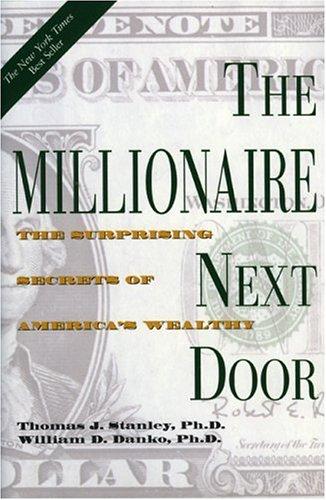
For anyone who confuses high income with wealth, or who feels behind because their lifestyle doesn't look like the we…
Buy on Amazon →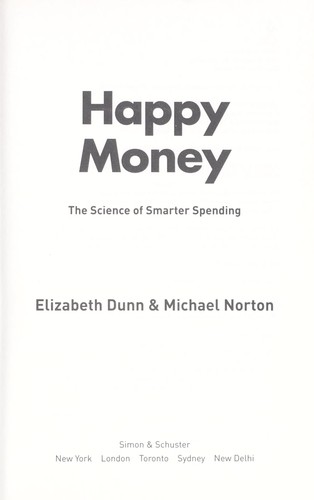
Anyone who earns enough to make discretionary spending choices but suspects their spending is not generating proporti…
Buy on Amazon →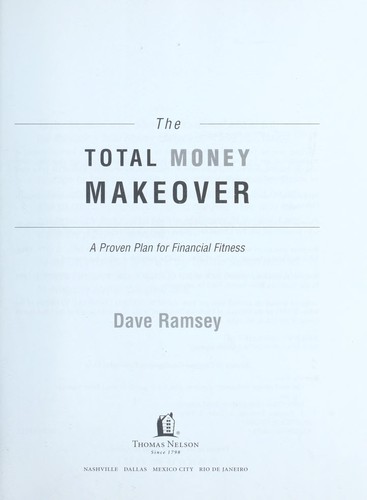
Households in active consumer-debt distress who need a non-negotiable shared script. Not for investors already past B…
Buy on Amazon →About Frederick M Hess
Read more from Frederick M Hess and explore the full bibliography on ClearValue Books.
View Frederick M Hess's page →Get an email if our take on Footing the Tuition Bill changes.
We re-review our picks. We'll email you if Footing the Tuition Bill's ranking or review changes — no checking back.

Ready to read Footing the Tuition Bill?
Buy the edition we recommend on Amazon.
Buy on Amazon →