

Freedom without borders

Curated by Brian Kim, CPA — every pick gets a plain-English summary and the key takeaways.
Brian Kim, CPA · 2.89M YouTube Subscribers →What this book actually teaches
- 01US citizens can legally reduce tax exposure through offshore banking, international trusts, and foreign residency — but the compliance burden under FATCA is substantially higher than this 2012 book acknowledges.
- 02Barber's "multinational person" framework centers on establishing legal presence in multiple jurisdictions to exploit gaps between tax regimes.
- 03Specific jurisdictions — Belize, Panama, Cook Islands, St. Kitts & Nevis — are profiled for banking secrecy, asset protection laws, and second residency options.
- 04Offshore structures require ongoing professional maintenance (FBAR, Form 8938, PFIC reporting) that can cost thousands annually — the book underplays this reality.
- 05Treat this as an orientation to the landscape, not an actionable playbook; get updated legal counsel before acting on any specific strategy.
What's in this book
The central argument of "Freedom Without Borders" is that American citizens are not legally obligated to pay high domestic taxes on their global income — they simply need to know how to structure their lives and assets across jurisdictions. Author Hoyt L. Barber, a longtime international financial consultant, contends that the combination of offshore residency, foreign banking, and international legal structures can dramatically reduce — and in some cases eliminate — US income and capital gains tax exposure. The book frames this not as a loophole but as a legitimate exercise of a taxpayer's legal rights.
Barber builds his argument around what he calls the "multinational person" concept: a US citizen or resident who establishes legal ties to multiple countries, exploiting the gaps between tax regimes. He spotlights specific jurisdictions — Belize, the Cook Islands, Panama, St. Kitts & Nevis, and Dominica, among others — as workable destinations for banking, investing, and second residency or citizenship. Each is profiled with attention to banking secrecy laws, asset protection regulations, and lifestyle considerations.
The asset protection angle is the third pillar. Barber devotes substantial attention to offshore trusts, international LLCs, and foreign bank structures as shields against litigation, creditor claims, and political risk. His thesis is that high-net-worth Americans who rely solely on domestic legal structures are leaving themselves exposed in ways that are both unnecessary and avoidable.
This book is most relevant for wealthy individuals already serious about international diversification — not curious observers. The material assumes readers have meaningful assets to protect, are willing to take on the compliance burden of an international structure, and are prepared for a significant lifestyle change if they pursue the residency path fully.
The weaknesses are real and worth noting. Barber's credibility takes a hit from extended sections of political doom-mongering about the United States — readers who don't share his ideological framing may find those sections a distraction from the financial substance. More importantly, the book predates the full enforcement of FATCA (the Foreign Account Tax Compliance Act), which became operational in 2014 and fundamentally changed the calculus of offshore banking. US persons with foreign accounts now face a compliance gauntlet — FBAR filings, Form 8938, PFIC rules, and reporting obligations that can cost thousands annually in professional fees. Barber does not engage with this compliance burden adequately, and readers following his strategies without updated legal counsel could find themselves in serious trouble.
For high-net-worth investors who already have competent international tax counsel and are evaluating offshore diversification as a real option, "Freedom Without Borders" provides a useful — if now partially dated — orientation to the jurisdiction landscape. Anyone newer to this space should treat it as a starting point for conversation with a qualified attorney, not an executable playbook.
Read next

For anyone whose financial education was "get a good job and save" — the book is most valuable for first-time readers…
Buy on Amazon →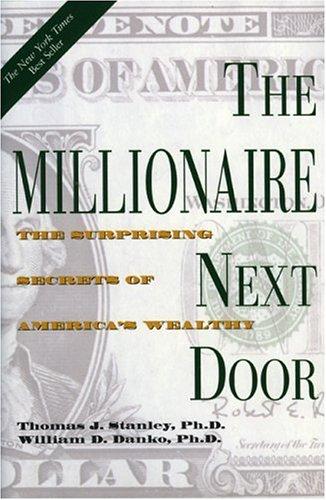
For anyone who confuses high income with wealth, or who feels behind because their lifestyle doesn't look like the we…
Buy on Amazon →
Anyone who earns enough to make discretionary spending choices but suspects their spending is not generating proporti…
Buy on Amazon →
Households in active consumer-debt distress who need a non-negotiable shared script. Not for investors already past B…
Buy on Amazon →About Hoyt L Barber
Read more from Hoyt L Barber and explore the full bibliography on ClearValue Books.
View Hoyt L Barber's page →Get an email if our take on Freedom without borders changes.
We re-review our picks. We'll email you if Freedom without borders's ranking or review changes — no checking back.

Ready to read Freedom without borders?
Buy the edition we recommend on Amazon.
Buy on Amazon →