

Fringe banking

Curated by Brian Kim, CPA — every pick gets a plain-English summary and the key takeaways.
Brian Kim, CPA · 2.89M YouTube Subscribers →What this book actually teaches
- 01Caskey's central argument is structural rather than behavioral: fringe banking grew not because low-income consumers made poor decisions but because mainstream banking withdrew from low-income neighborhoods and customers, creating a market gap that alternative providers filled.
- 02The fee structure analysis translates check-cashing fees, pawnshop loan rates, and early payday loan pricing into annualized percentage rates, making the true cost of fringe services visible in a way that per-transaction fee framing deliberately obscures.
- 03The demand-side fieldwork identifies multiple distinct customer profiles — unbanked workers, ChexSystems-disqualified individuals, workers needing immediate check access, and banked customers using cashers for convenience — complicating the simple predatory-lending narrative.
- 04Caskey evaluates policy proposals including postal banking, credit union expansion, and fee regulation cautiously, arguing that price caps without addressing underlying demand could reduce service availability to the populations most dependent on fringe providers.
- 05The 1994 vantage point means the payday loan industry (then nascent) receives less attention than its subsequent scale warrants, and mobile banking, fintech financial inclusion, and prepaid debit cards are not addressed.
What's in this book
Fringe Banking: Check-Cashing Outlets, Pawnshops, and the Poor (1994) by John P. Caskey is an academic examination of the financial service businesses that serve low-income and unbanked Americans in place of conventional banks. Caskey, an economist at Swarthmore College, conducted field research at check-cashing outlets and pawnshops and combined that fieldwork with industry data to produce what became an early systematic analysis of what is now called the alternative financial services sector. The book's central argument is that fringe banking is not primarily a predatory aberration but a market response to a gap left by mainstream banking's systematic withdrawal from low-income neighborhoods and customers.
Caskey documents the growth of check-cashing outlets and pawnshops through the 1980s and into the early 1990s, correlating that growth with the consolidation of commercial banking, the closure of branches in low-income areas, and the increasing minimum balance requirements that made conventional checking accounts inaccessible or uneconomical for low-wage workers. His argument is structural rather than behavioral: the fringe banking sector grew not because low-income consumers made poor decisions but because the mainstream financial system stopped serving them, creating a vacuum that alternative providers filled at a cost.
The fee structure analysis is the book's most useful empirical contribution. Caskey works through the economics of check-cashing fees expressed as annual percentage rates — a translation that makes visible the true cost of fringe services that is obscured by per-transaction fee framing. A fee of 2-3% to cash a paycheck looks modest; annualized as a credit equivalent, the cost is substantially higher. He applies the same annualization to pawnshop loan rates and payday loan structures (which were emerging as a distinct product category at the time of writing). The goal is not to condemn the providers but to give readers and policymakers a consistent metric for comparing financial service costs across sectors.
The demand-side analysis examines who uses fringe financial services and why. Caskey's fieldwork identifies several distinct customer profiles: workers who are unbanked by choice or circumstance, individuals with ChexSystems records that disqualify them from conventional bank accounts, workers whose employers pay by check and who need immediate cash access, and small business owners who use check cashers for speed and convenience despite having bank accounts. The heterogeneity of the customer base complicates the simple predatory-lending narrative and points toward multiple distinct policy interventions rather than a single solution.
The policy discussion addresses several proposed responses — postal banking, credit union expansion, bank CRA requirements, fee regulation — and evaluates each against the demand-side evidence. Caskey is cautious about fee regulation in particular, arguing that price caps on check-cashing fees without addressing the underlying demand could reduce service availability to the populations most dependent on fringe services.
The weaknesses reflect the 1994 vantage point. The payday loan industry, which would become the dominant and most controversial segment of alternative financial services, was still nascent and receives less analytical attention than it would warrant today. The analysis predates mobile banking, fintech-driven financial inclusion products, and the expansion of prepaid debit cards — all of which have meaningfully altered the landscape Caskey describes.
For readers interested in financial inclusion, consumer finance policy, or the economics of low-income financial services, Fringe Banking provides a rigorous, empirically grounded foundation that shaped subsequent scholarship and policy debate on the unbanked population.
Read next

For anyone whose financial education was "get a good job and save" — the book is most valuable for first-time readers…
Buy on Amazon →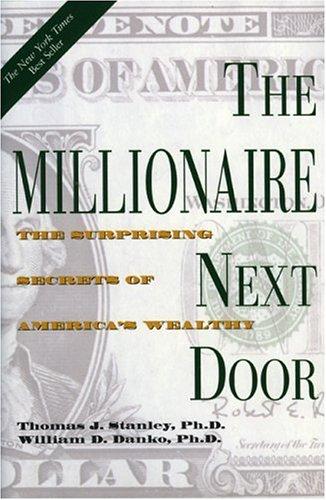
For anyone who confuses high income with wealth, or who feels behind because their lifestyle doesn't look like the we…
Buy on Amazon →
Anyone who earns enough to make discretionary spending choices but suspects their spending is not generating proporti…
Buy on Amazon →
Households in active consumer-debt distress who need a non-negotiable shared script. Not for investors already past B…
Buy on Amazon →About John P Caskey
Read more from John P Caskey and explore the full bibliography on ClearValue Books.
View John P Caskey's page →Get an email if our take on Fringe banking changes.
We re-review our picks. We'll email you if Fringe banking's ranking or review changes — no checking back.
