

Game of loans

Curated by Brian Kim, CPA — every pick gets a plain-English summary and the key takeaways.
Brian Kim, CPA · 2.89M YouTube Subscribers →What this book actually teaches
- 01The student debt crisis is not uniform — high default rates concentrate among small-balance borrowers at for-profit and community colleges, not among the high-balance graduate and professional degree holders who dominate the headline numbers.
- 02Credential completion is the single biggest predictor of repayment success; the same debt level is manageable with a completed degree and difficult without one.
- 03Income-driven repayment is framed as a structural solution to repayment risk, not just a safety net — the book argues it should be the default enrollment mechanism.
- 04Because federal loans flow to students rather than institutions, schools bear no financial consequence when their graduates cannot repay — the book proposes risk-sharing as the accountability fix.
- 05Across-the-board loan forgiveness delivers the most relief to graduate and professional borrowers who need it least, while targeting the wrong part of the distribution.
What's in this book
Beth Akers and Matthew Chingos argue in Game of Loans that the American student debt crisis has been badly misdiagnosed — and that the misdiagnosis is leading to policy responses that will make the underlying problem worse. The book's core claim is that the headline numbers on student debt ($1 trillion in outstanding loans when it was published) obscure enormous variation in who borrows, how much, for what credentials, and with what economic outcomes. Treating the student debt crisis as a uniform emergency affecting all 40 million borrowers leads to solutions — across-the-board loan forgiveness, arbitrary debt caps — that deliver the most relief to graduate and professional-degree borrowers who are least financially stressed, while doing little for the smaller-balance community college dropouts who are actually struggling to repay.
The book proceeds through the data. Akers and Chingos, both economists with policy backgrounds, spend considerable effort disaggregating the borrower population. High-balance borrowers (over $100,000) are disproportionately graduate and professional degree holders — doctors, lawyers, MBAs — whose lifetime earnings more than justify the debt. The borrowers with high delinquency and default rates are concentrated among smaller-balance borrowers who attended for-profit institutions and community colleges, often without completing a credential. The earnings differential between credential-completers and non-completers is stark and does most of the work in explaining repayment difficulty. The crisis, properly understood, is not one of too much debt but of credentials that do not generate sufficient earnings to service even modest debt loads.
The policy section covers income-driven repayment — which Akers and Chingos treat as a structural solution to the repayment-risk problem, not just a safety net — and the institutional accountability gap: because federal loans flow to students rather than institutions, schools bear no financial consequence when their graduates cannot repay. The book proposes risk-sharing mechanisms (requiring institutions to absorb a portion of defaults) as a way to align institutional incentives with student outcomes.
The audience is policy-oriented readers — students of higher education policy, journalists, voters who want to reason about student debt from data rather than narrative. This is not a personal guide for managing student debt.
The weaknesses are real. The book was written before income-driven repayment plans became the dominant vehicle for federal borrowers, and the policy landscape has shifted substantially since 2016. The argument that graduate borrowers are largely fine has also aged into a more complicated political environment where borrower burden has intensified even for some professional-degree holders. And the book's tone is at times more dismissive of the lived experience of borrowers than the data alone warrants.
Worth reading as a rigorous, contrarian corrective to student debt coverage that is often more narrative than analytical. Pair with more recent reporting on income-driven repayment outcomes and the for-profit college accountability gap, both of which the book identified early.
Read next

For anyone whose financial education was "get a good job and save" — the book is most valuable for first-time readers…
Buy on Amazon →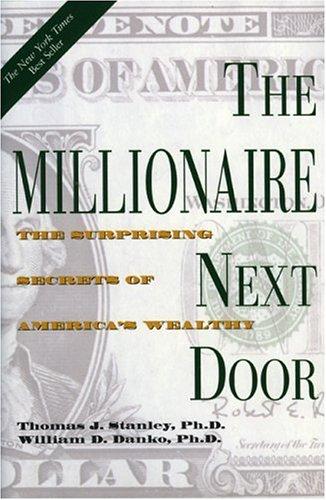
For anyone who confuses high income with wealth, or who feels behind because their lifestyle doesn't look like the we…
Buy on Amazon →
Anyone who earns enough to make discretionary spending choices but suspects their spending is not generating proporti…
Buy on Amazon →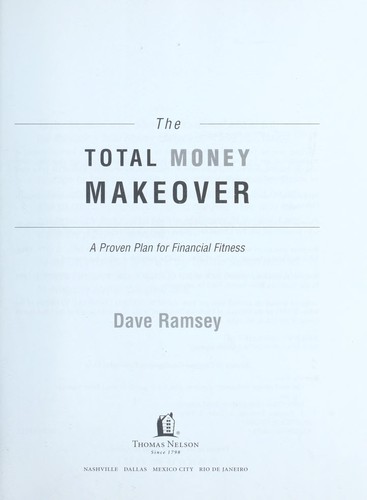
Households in active consumer-debt distress who need a non-negotiable shared script. Not for investors already past B…
Buy on Amazon →About Beth Akers
Read more from Beth Akers and explore the full bibliography on ClearValue Books.
View Beth Akers's page →Get an email if our take on Game of loans changes.
We re-review our picks. We'll email you if Game of loans's ranking or review changes — no checking back.
