

Generation earn

Curated by Brian Kim, CPA — every pick gets a plain-English summary and the key takeaways.
Brian Kim, CPA · 2.89M YouTube Subscribers →What this book actually teaches
- 01The book is structured as a life-stage sequence — first budget, employer benefits, rent vs. buy, student debt, marriage, children — rather than a topic-by-topic personal finance overview.
- 02Palmer takes the explicit position that retirement savings contributions come before aggressive student loan paydown, based on the time value of compound growth.
- 03The dual-income household chapter accounts for hidden costs of a second income (childcare, commuting, marginal tax rates) in a way more rigorous than most personal finance treatments.
- 04The book acknowledges structural income constraints and does not pretend that expense-cutting alone solves an earnings problem — a practical concession many personal finance books avoid.
- 05The 2010 publication date means key mechanics — index fund fees, income-driven repayment, gig-economy tax structures — need verification against current rules before acting.
What's in this book
Kimberly Palmer's argument in Generation Earn is that the financial landscape facing adults in their twenties and thirties is structurally different from the one their parents navigated — and that the personal finance advice calibrated to the postwar middle class does not adequately address it. The book is explicitly written for a generation entering the workforce amid the 2008 financial crisis, with weaker employer benefits, more variable income paths, student debt as a standard feature of early adulthood, and a defined-contribution retirement system that transfers investment risk from employer to employee.
The book covers the major financial domains in roughly the sequence they become relevant: managing irregular income and the first real budget, navigating employer benefits (the 401(k) contribution decision, health insurance selection, disability insurance as an overlooked gap), renting versus buying in an environment where homeownership is no longer the automatic financial win it appeared to be in the 1990s, managing student debt alongside retirement savings (Palmer takes the position that retirement savings come before aggressive debt paydown, given the time value of compound growth), freelance and side income, and the financial dynamics that come with marriage, children, and aging parents. The chapter on dual-income households covers the hidden costs of a second income — childcare, commuting, second car, marginal tax rate effects — and frames the calculation more rigorously than most personal finance writers do.
Palmer's voice is practical and specific without being preachy. She does not moralize about spending choices; she analyzes trade-offs. The book acknowledges that many readers have legitimate income constraints and does not pretend that budget-cutting solves a structural earnings problem.
The weaknesses are partly a function of publication year. The 2010 edition predates the full emergence of the gig economy as a dominant work structure, the rise of income-driven student loan repayment as a policy tool, and the fee-compression in index fund investing that has shifted the optimal 401(k) strategy. The robo-advisor category did not exist when Palmer was writing, and the tax-advantaged account options available to freelancers (SEP-IRA, Solo 401(k)) receive less attention than they now warrant. The housing analysis is also calibrated to the immediate post-crisis environment — useful as a framework, but the specific price-to-rent ratios and down payment mechanics need updating for current markets.
Worth reading as a life-stage map for people in their twenties and early thirties who want a single organized walkthrough of the financial decisions they will face in roughly the sequence they will face them. Verify the specific investment, loan repayment, and retirement account mechanics against current rules and fee structures.
Read next

For anyone whose financial education was "get a good job and save" — the book is most valuable for first-time readers…
Buy on Amazon →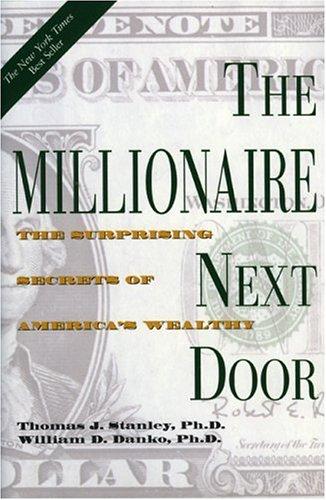
For anyone who confuses high income with wealth, or who feels behind because their lifestyle doesn't look like the we…
Buy on Amazon →
Anyone who earns enough to make discretionary spending choices but suspects their spending is not generating proporti…
Buy on Amazon →
Households in active consumer-debt distress who need a non-negotiable shared script. Not for investors already past B…
Buy on Amazon →About Kimberly Palmer
Read more from Kimberly Palmer and explore the full bibliography on ClearValue Books.
View Kimberly Palmer's page →Get an email if our take on Generation earn changes.
We re-review our picks. We'll email you if Generation earn's ranking or review changes — no checking back.
