

How not to get rich

Curated by Brian Kim, CPA — every pick gets a plain-English summary and the key takeaways.
Brian Kim, CPA · 2.89M YouTube Subscribers →What this book actually teaches
- 01Twain's investment in the Paige Compositor — a mechanically impressive but commercially doomed typesetting machine — consumed millions in modern-equivalent dollars because enthusiasm for technology displaced competitive and operational analysis.
- 02Controlling your own publishing or distribution to capture more margin works in theory but requires capital management competence the investor may not have; Twain's publishing company bankruptcy hurt his creditors alongside his own finances.
- 03Pattern recognition matters more than individual deal analysis: Twain backed inventor after inventor across different industries, suggesting the appeal was in the personality and novelty rather than the economics of each specific opportunity.
- 04A financial guardian who controls deal flow — in Twain's case Henry Rogers — can stabilize a situation that the principal alone cannot manage; delegating financial decisions is a legitimate tool when self-discipline fails.
- 05The book is diagnostic rather than prescriptive — it shows how the errors happened but does not offer a systematic framework for avoiding similar ones; supplement with behavioral finance resources if you want the mechanism explained.
What's in this book
How Not to Get Rich: The Financial Misadventures of Mark Twain by Alan Pell Crawford, published in 2017, examines one of American literature's most instructive financial catastrophes. Twain — Samuel Clemens — was a genuinely prolific earner for much of his adult life, and yet he died with his estate exhausted and his finances only recently rescued by his business manager Henry Rogers, a Standard Oil executive who spent the last decade of Twain's life untangling the damage. Crawford's book is neither a full biography nor a standard financial cautionary tale; it is a focused investigation of the specific mistakes Twain made, the psychological patterns that drove them, and why a man of considerable intelligence kept repeating them.
The core of the book is Twain's investment disasters. The most famous is the Paige Compositor, an automated typesetting machine in which Twain invested enormous sums across more than a decade, convinced he was backing the next transformative technology. The Compositor was mechanically brilliant and commercially failed — it was too complex, too expensive to maintain, and too slow to market, arriving just as Linotype made it obsolete. Twain's investment loss has been estimated at the equivalent of several million dollars in modern terms. Crawford traces how Twain's enthusiasm for technology blinded him to the practical and competitive questions that should have governed his decision: who else was working on the same problem, what would production and maintenance cost, and how long did he actually have before cheaper alternatives arrived.
Beyond the Compositor, Crawford documents a pattern of inventor-chasing. Twain backed an insurance company, a steam generator, a food supplement called Plasmon, and several publishing ventures, most of which failed. He was drawn to novelty, to personalities, and to the emotional appeal of being on the right side of the future — a pattern Crawford connects to Twain's background as a riverboat pilot and printer, where practical mastery of technology earned social status.
Twain's relationship with his publisher, Charles Webster and Company, which he owned, is the other major thread. Twain believed he could capture a larger share of his own book royalties by controlling the publisher — and he was right in theory, but the publishing business requires capital management skills and attention to the economics of book production and distribution that Twain did not bring to it. The company ultimately went bankrupt, wiping out creditors and damaging Twain's reputation alongside his finances.
Crawford also examines how Henry Rogers's intervention stabilized what remained — Rogers functioned as a financial guardian who separated Twain from his investment impulses and managed the lecture tour income that ultimately paid the debts.
This is for readers interested in financial decision-making through the lens of biography, or for anyone who recognizes the pattern of confidence outrunning competence in their own investment decisions.
The weaknesses are those of the format. Crawford is a journalist and the book reads briskly, but it sacrifices some analytical depth for narrative accessibility. The psychological explanation of Twain's behavior is suggestive rather than rigorous — Crawford identifies the patterns clearly but does not deeply interrogate the decision-theory mechanisms behind them. Readers looking for a systematic framework for identifying similar errors in their own thinking will find the book illustrative but not prescriptive. It is a story about how someone got things wrong, not a system for getting them right.
For readers who absorb financial lessons through narrative rather than frameworks, Twain's misadventures are unusually well-documented and unusually instructive.
Read next

For anyone whose financial education was "get a good job and save" — the book is most valuable for first-time readers…
Buy on Amazon →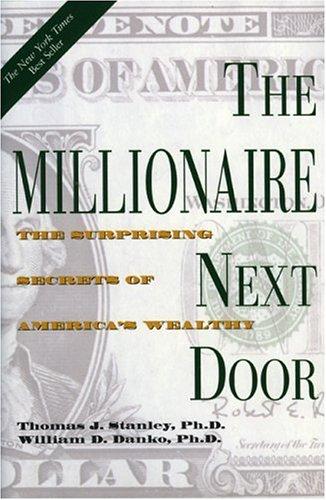
For anyone who confuses high income with wealth, or who feels behind because their lifestyle doesn't look like the we…
Buy on Amazon →
Anyone who earns enough to make discretionary spending choices but suspects their spending is not generating proporti…
Buy on Amazon →
Households in active consumer-debt distress who need a non-negotiable shared script. Not for investors already past B…
Buy on Amazon →About Alan Pell Crawford
Read more from Alan Pell Crawford and explore the full bibliography on ClearValue Books.
View Alan Pell Crawford's page →Get an email if our take on How not to get rich changes.
We re-review our picks. We'll email you if How not to get rich's ranking or review changes — no checking back.

Ready to read How not to get rich?
Buy the edition we recommend on Amazon.
Buy on Amazon →