

Jim Cramer's get rich carefully

Curated by Brian Kim, CPA — every pick gets a plain-English summary and the key takeaways.
Brian Kim, CPA · 2.89M YouTube Subscribers →What this book actually teaches
- 01Cramer's core pivot: the fast-money trading style he popularized on TV is not how retail investors should build wealth — patient, research-driven stock selection is the argument here.
- 02The 'one hour per stock per week' homework rule is the book's most practical contribution — own fewer stocks and know each one deeply, or own index funds instead.
- 03Sector rotation — knowing which industries outperform at different points in the economic cycle — is Cramer's framework for timing exposure, not individual stock picks.
- 04Academic research on Cramer's overall stock-picking record is unflattering; readers should weigh his frameworks independently of his track record.
- 05The book's implicit admission — that the Mad Money approach was wrong — is the most useful thing in it, even if Cramer does not state it quite that directly.
What's in this book
Jim Cramer spent years as the face of fast-money stock picking on CNBC's Mad Money, and "Get Rich Carefully" (2013) is his attempt to walk some of that back. The book's central argument is a pivot: the high-velocity, news-driven trading style that made Cramer famous is not how most investors should build wealth. Instead, the book advocates for a more methodical approach — buying quality companies at reasonable valuations, doing consistent homework, and maintaining the patience to hold through volatility.
The practical core of the book is Cramer's "homework" doctrine: if you own individual stocks, you owe each one an hour of research per week. That means reading earnings releases, listening to conference calls, and tracking sector trends — not just watching financial television. Cramer argues that most retail investors skip this work entirely, which is why they underperform. The prescription is not to invest passively but to invest seriously or not at all in individual stocks.
The book also covers sector rotation — the idea that different industries outperform at different stages of the economic cycle — and gives Cramer's framework for distinguishing speculative stocks (which he calls "junk") from investable companies with durable competitive advantages. A recurring device is the "Charitable Trust," the portfolio Cramer manages transparently with Action Alerts PLUS subscribers, which he references as evidence that his current, more careful approach produces results.
The audience is engaged retail investors who follow financial markets closely and want a framework for stock selection that is more disciplined than momentum trading but more active than index investing.
The weaknesses are significant and should be stated directly. Academic research on Cramer's stock-picking record — including studies published before and after this book — has generally found that his recommendations underperform the market over meaningful time horizons. The book acknowledges his past mistakes but does not engage seriously with the structural difficulty of consistently picking stocks that beat index funds. Readers should also note that the "homework" framework, while sound in principle, demands a time commitment that most retail investors will not sustain. And the pivot from "Mad Money" Cramer to "Get Rich Carefully" Cramer creates a credibility gap: the framework he now endorses implicitly indicts the approach he spent years promoting.
For an engaged retail investor who is committed to active stock selection and wants Cramer's current thinking rather than his television persona, the book offers a more grounded perspective than his earlier work. For investors still deciding between active and passive approaches, the honest answer is that this book does not resolve that debate in active management's favor.
Read next

For anyone whose financial education was "get a good job and save" — the book is most valuable for first-time readers…
Buy on Amazon →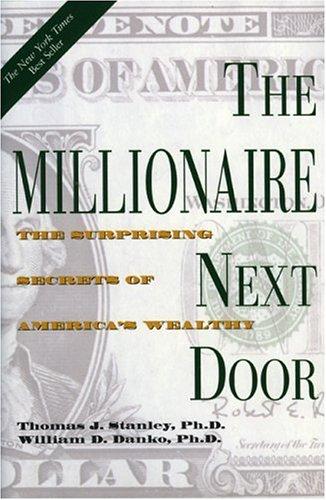
For anyone who confuses high income with wealth, or who feels behind because their lifestyle doesn't look like the we…
Buy on Amazon →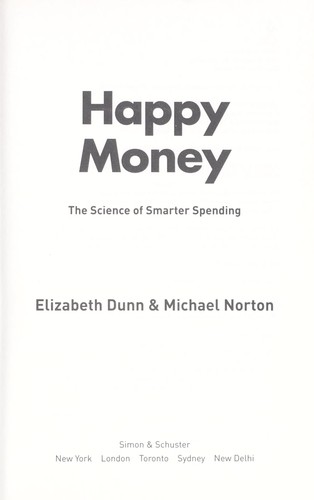
Anyone who earns enough to make discretionary spending choices but suspects their spending is not generating proporti…
Buy on Amazon →
Households in active consumer-debt distress who need a non-negotiable shared script. Not for investors already past B…
Buy on Amazon →About Jim Cramer
Read more from Jim Cramer and explore the full bibliography on ClearValue Books.
View Jim Cramer's page →Get an email if our take on Jim Cramer's get rich carefully changes.
We re-review our picks. We'll email you if Jim Cramer's get rich carefully's ranking or review changes — no checking back.

Ready to read Jim Cramer's get rich carefully?
Buy the edition we recommend on Amazon.
Buy on Amazon →