

Life matters

Curated by Brian Kim, CPA — every pick gets a plain-English summary and the key takeaways.
Brian Kim, CPA · 2.89M YouTube Subscribers →What this book actually teaches
- 01The time crunch most people report is not a scheduling problem — it is a clarity problem about what actually matters.
- 02The four-quadrant framework (work, family, self, community) argues that sustainable performance requires deliberate attention to all four, not serial sacrifice.
- 03Weekly planning starts from roles and values before filling in reactive tasks — a reflection loop, not a to-do list.
- 04The book extends Covey's First Things First framework, with more emphasis on family and personal domains than corporate productivity writing typically covers.
- 05Values-heavy and process-light: useful for orientation and values clarification, not for granular scheduling systems.
What's in this book
A. Roger Merrill and Rebecca Merrill's argument in Life Matters is that the productivity and time-management conversation of the late twentieth century produced a generation of people who were highly efficient at the wrong things. The book's central claim is that the standard work-life balance framing — treat career and personal life as competing demands, allocate time between them — misses the real problem: most people never stop to identify what actually matters to them, so optimizing their schedule only entrenches misalignment. The Merrills, drawing on Roger Merrill's earlier work with Stephen Covey on First Things First, push the problem back to values clarification before calendar management.
The arguments proceed in three movements. First, the diagnosis: the cultural bias toward busyness rewards the appearance of productivity while leaving the deeper questions (What are you working toward? What kind of parent, partner, or community member do you want to be?) unaddressed. The Merrills argue that the time crunch most people report is not primarily a scheduling problem — it is a clarity problem. People who know what matters to them make time-use decisions faster, with less regret, and with better outcomes across both work and family. Second, the framework: the book introduces a four-quadrant model of life domains (work, family, self, community) and argues that sustainable performance requires deliberate attention to all four rather than serial sacrifice of one for another. Third, the process: weekly planning is the practical mechanism — not a to-do list but a reflection loop that starts from roles and values, identifies the commitments that matter most in the coming week, and schedules those before filling in the reactive tasks.
The book was published in 2003 and draws on the wave of values-based planning that Covey's Seven Habits framework popularized in the 1990s. The Merrills were both closely tied to that tradition and the book reads as an extension of it, with particular attention to the family and personal domains that corporate productivity writing tends to skip.
The natural audience is professionals in mid-career who have achieved external markers of success but feel a persistent mismatch between how they spend their time and what they value — specifically those who want a structured reflection process rather than a new productivity tool.
The weaknesses are real. The book is values-heavy and process-light; readers who want granular scheduling systems will find it frustrating. The writing is motivational in register and leans toward anecdote over evidence. The four-domain framework, while useful, is not notably original compared to the Covey material it builds on. And the treatment of work-family dynamics, while sympathetic, largely assumes a dual-income professional household.
Worth reading if you want a structured prompt to examine whether your calendar reflects your values. Not the book for tactical productivity tools — use it for orientation, not implementation.
Read next

For anyone whose financial education was "get a good job and save" — the book is most valuable for first-time readers…
Buy on Amazon →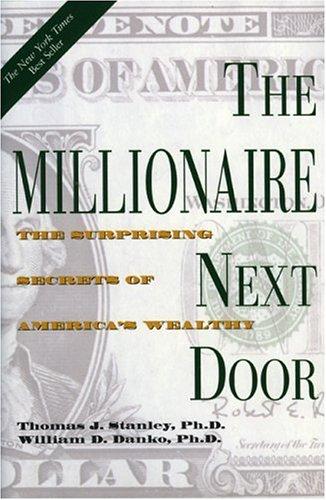
For anyone who confuses high income with wealth, or who feels behind because their lifestyle doesn't look like the we…
Buy on Amazon →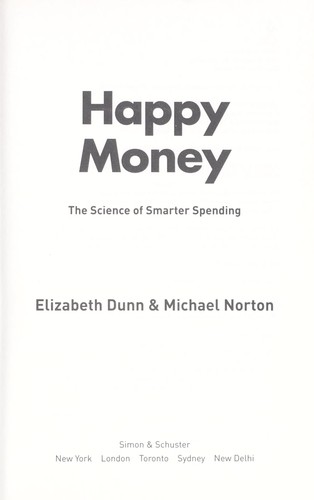
Anyone who earns enough to make discretionary spending choices but suspects their spending is not generating proporti…
Buy on Amazon →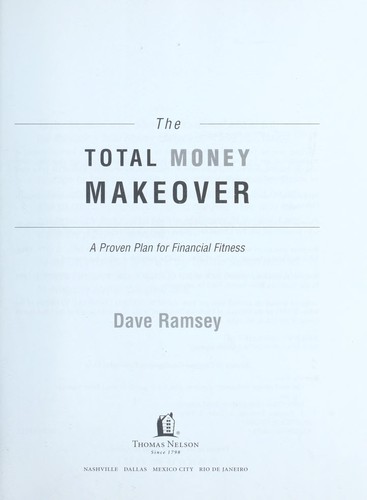
Households in active consumer-debt distress who need a non-negotiable shared script. Not for investors already past B…
Buy on Amazon →About A Roger Merrill
Read more from A Roger Merrill and explore the full bibliography on ClearValue Books.
View A Roger Merrill's page →Get an email if our take on Life matters changes.
We re-review our picks. We'll email you if Life matters's ranking or review changes — no checking back.
