

Making millions for dummies

Curated by Brian Kim, CPA — every pick gets a plain-English summary and the key takeaways.
Brian Kim, CPA · 2.89M YouTube Subscribers →What this book actually teaches
- 01Wealth accumulation is primarily a behavioral discipline problem — living below your means, maximizing tax-advantaged accounts, and avoiding high-interest debt — not an investment selection problem.
- 02The book treats small business ownership and entrepreneurship as legitimate wealth-building paths alongside investment portfolios, with practical coverage of valuation and seller financing.
- 03Doyen frames wealth-destroying habits (credit card balances, leasing depreciating assets, deferring retirement contributions) in terms of long-run dollar cost rather than abstract financial virtue.
- 04The 2008 publication date means specific product recommendations and interest rate assumptions are dated — the underlying framework is sounder than the particulars.
- 05Coverage is intentionally broad; readers who want deep expertise in any single area (real estate, stock investing, business valuation) will need dedicated texts beyond this one.
What's in this book
Robert Doyen's Making Millions for Dummies (2008) is a broad-scope personal finance and wealth-building guide aimed at readers who want a practical framework for accumulating significant net worth over a working lifetime. The book's central thesis is that building wealth is less about finding the right investment vehicle and more about establishing the right financial behaviors early — living below your means, maximizing tax-advantaged savings, avoiding high-interest debt, and letting compound returns work over decades. Doyen does not promise shortcuts; he frames wealth accumulation as a long-run discipline problem, not an investment selection problem.
The book covers the standard wealth-building pillars in sequence: managing income and spending before investing, understanding how different account types (401(k), IRA, taxable brokerage) interact with taxes, evaluating the primary investment asset classes (stocks, bonds, real estate, small business ownership), and protecting accumulated wealth through appropriate insurance and estate planning. The coverage is deliberate without being encyclopedic — each topic gets enough depth to be actionable but not so much that readers without financial backgrounds lose the thread.
Doyen is particularly direct about the wealth-destroying behaviors that slow most people down: carrying credit card balances, leasing depreciating assets instead of buying modestly, and deferring retirement contributions while waiting for a more convenient financial moment. These aren't novel points, but Doyen frames them in terms of long-run dollar cost rather than abstract virtue, which gives them practical weight.
The small business and entrepreneurship chapters stand out as relatively unusual for a book in this genre. Doyen treats starting or buying a business as a legitimate wealth-building path alongside investment portfolios, and he covers the mechanics of business valuation, seller financing, and leveraged buyouts at a level that is accessible without being superficial. For readers who are self-employed or considering it, this adds tangible value.
The weaknesses are mostly structural. The 2008 publication date predates the post-crisis interest rate environment, the proliferation of low-cost index ETFs as the dominant retail investment vehicle, and the shift toward remote work that has changed how many people think about housing costs and geographic flexibility. Some of the specific financial product recommendations feel dated. The book is also broad enough that specialists will find each section shallower than dedicated texts — this is a trade-off Doyen accepts explicitly.
For first-generation wealth builders who want a single book that maps the full terrain from spending habits to estate planning without requiring prior financial knowledge, Making Millions for Dummies covers the ground competently. It earns its place as an orientation text even if the specific numbers and product examples need updating.
Read next

For anyone whose financial education was "get a good job and save" — the book is most valuable for first-time readers…
Buy on Amazon →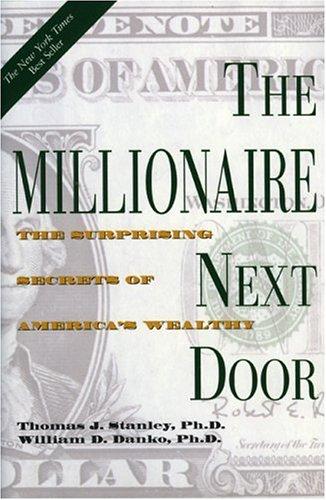
For anyone who confuses high income with wealth, or who feels behind because their lifestyle doesn't look like the we…
Buy on Amazon →
Anyone who earns enough to make discretionary spending choices but suspects their spending is not generating proporti…
Buy on Amazon →
Households in active consumer-debt distress who need a non-negotiable shared script. Not for investors already past B…
Buy on Amazon →About Robert Doyen
Read more from Robert Doyen and explore the full bibliography on ClearValue Books.
View Robert Doyen's page →Get an email if our take on Making millions for dummies changes.
We re-review our picks. We'll email you if Making millions for dummies's ranking or review changes — no checking back.

Ready to read Making millions for dummies?
Buy the edition we recommend on Amazon.
Buy on Amazon →