

Managing your money

Curated by Brian Kim, CPA — every pick gets a plain-English summary and the key takeaways.
Brian Kim, CPA · 2.89M YouTube Subscribers →What this book actually teaches
- 01The J.K. Lasser approach to personal finance is tax-first — understanding the after-tax return of financial decisions is the distinguishing lens throughout the book.
- 02Coverage spans budgeting, insurance, investment basics, and retirement preparation, but the tax treatment of each area receives more attention than in most personal finance generalist titles.
- 03Without a confirmed publication year, specific tax parameters (brackets, contribution limits, deductibility rules) must be verified against current IRS guidance before acting on them.
- 04The structural framework — protect income from tax drag, insure against catastrophic loss, invest consistently — remains sound even where specific numbers have changed.
- 05Readers with complex situations (business ownership, multi-state exposure, concentrated positions) will need specialized resources beyond what this survey-level text can provide.
What's in this book
The J.K. Lasser Institute's Managing Your Money is part of a long-running series of practical personal finance guides that became a staple of the American financial self-help shelf through the mid-twentieth century. The J.K. Lasser brand was particularly well-known for its annual tax guides, and Managing Your Money reflects that same orientation: plain-English explanations of financial concepts anchored in tax awareness, with an emphasis on keeping more of what you earn through legitimate planning rather than investment speculation.
The book covers household budgeting, insurance planning, investment basics, and retirement preparation — the standard personal finance curriculum — with particular attention to how tax treatment affects the real after-tax return of different financial decisions. The guidance on tax-advantaged savings vehicles, deductibility of various expenses, and the tax consequences of common financial moves reflects the Lasser Institute's core competency and distinguishes the book from more generic personal finance titles that treat taxes as an afterthought.
Without a confirmed publication year, it is impossible to assess how accurately the specific tax rules, contribution limits, or product recommendations reflect current law. The J.K. Lasser series has historically been updated to track tax code changes, but older editions may reference tax brackets, IRA contribution rules, or deduction limits that no longer apply. Any reader encountering this book should treat the underlying planning framework as sound while verifying every specific tax parameter against current IRS guidance.
The book's weaknesses reflect the constraints of any broad personal finance guide: the breadth necessary to cover budgeting through estate planning in a single volume limits how deep any single topic can go. Readers with specific complex situations — business ownership, concentrated investment positions, multi-state tax exposure — will need more specialized resources. The investment coverage is intentionally conservative and does not engage with portfolio construction theory or factor investing.
As an introduction to tax-aware personal financial management, the Lasser approach remains coherent: understand what you earn, protect it from unnecessary tax drag, insure against catastrophic loss, and invest the remainder consistently. That framework does not expire even when specific numbers do. Readers who find this edition and check publication date should prioritize the structural guidance while updating the specifics.
Read next

For anyone whose financial education was "get a good job and save" — the book is most valuable for first-time readers…
Buy on Amazon →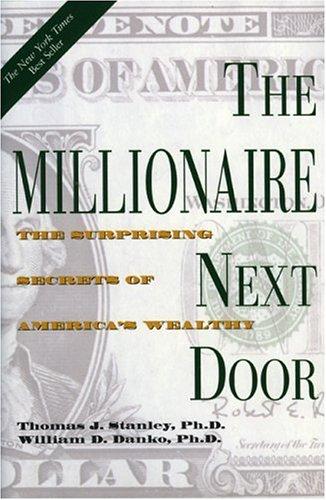
For anyone who confuses high income with wealth, or who feels behind because their lifestyle doesn't look like the we…
Buy on Amazon →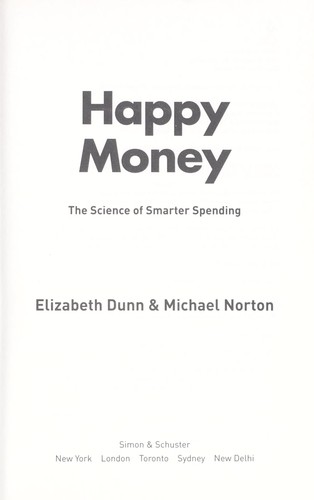
Anyone who earns enough to make discretionary spending choices but suspects their spending is not generating proporti…
Buy on Amazon →
Households in active consumer-debt distress who need a non-negotiable shared script. Not for investors already past B…
Buy on Amazon →About J K Lasser
Read more from J K Lasser and explore the full bibliography on ClearValue Books.
View J K Lasser's page →Get an email if our take on Managing your money changes.
We re-review our picks. We'll email you if Managing your money's ranking or review changes — no checking back.

Ready to read Managing your money?
Buy the edition we recommend on Amazon.
Buy on Amazon →