

Middle-class lifeboat

Curated by Brian Kim, CPA — every pick gets a plain-English summary and the key takeaways.
Brian Kim, CPA · 2.89M YouTube Subscribers →What this book actually teaches
- 01The book argues that the traditional middle-class economic model — employer-provided benefits, pension-backed retirement, stable corporate employment — has structurally eroded, and that resilience requires diversified income sources, reduced fixed costs, and location flexibility rather than dependence on a single employer.
- 02The Edwardses organize options around 'lifeboats' including home-based business development, regional relocation for cost-of-living arbitrage, skill-based income diversification, and cooperative economic structures such as co-housing and community land trusts.
- 03The home-based business chapters are the book's most practically grounded section, drawing on the authors' previous work and including a framework for assessing whether a skill can generate meaningful income outside traditional employment — with health insurance access identified as the dominant structural barrier.
- 04The survey format is a deliberate trade-off: broad enough to help readers identify which direction to investigate, but not deep enough to provide implementation guidance for any specific path — readers will need additional resources to act on most options.
- 05Published in 2007, the book was prescient about middle-class economic vulnerability but lacks the post-2008 financial crisis context that would have sharpened both its urgency and its practical guidance on specific strategies.
What's in this book
Middle-Class Lifeboat (2007) by Paul and Sarah Edwards — prolific authors of home-based business guides including Working from Home, with more than a dozen titles on self-employment and alternative careers — is a response to the economic anxiety that characterized the mid-2000s middle class well before the 2008 crisis made that anxiety mainstream. The book's central argument is that the traditional middle-class economic model — employer-provided benefits, pension-backed retirement, stable corporate employment — has structurally eroded, and that the families best positioned to maintain middle-class living standards are those who build economic resilience through diversified income sources, reduced fixed costs, and location flexibility rather than depending on a single employer.
The Edwardses organize the book around what they call "lifeboats" — alternative economic strategies that reduce exposure to the employment-income monoculture. These include home-based business development, relocation to lower-cost regions, skill-based income diversification, and community economic structures including intentional co-housing and cooperative buying arrangements. The book is more comprehensive in its survey of options than in its analysis of any single one, which is both a structural choice and a weakness: the coverage is broad enough to help readers identify which directions to investigate but not deep enough to provide implementation guidance for any specific path.
The home-based business chapters draw on the Edwardses' earlier work and are the book's most practically grounded section. Their framework for assessing whether a particular skill or service can generate meaningful income outside traditional employment is useful, as is their discussion of the infrastructure required to make home-based work viable (health insurance access being the dominant structural barrier they identify clearly). The relocation chapters present cost-of-living arbitrage — moving from high-cost metro areas to lower-cost regions — as an underutilized middle-class financial strategy, with illustrative data on cost differentials that were accurate for the period.
The intentional community and cooperative economics chapters are the most distinctive and the most uneven. The Edwardses present co-housing and community land trusts as viable middle-class economic strategies rather than as lifestyle choices, which is an interesting reframing; the practical guidance on how to evaluate or join such arrangements is thinner than the conceptual case for them.
The weaknesses are primarily about timing and specificity. The 2007 publication date means the book was prescient about the economic vulnerability it describes but lacks the post-2008 context that would have sharpened its urgency. The survey format prevents deep engagement with any single strategy. The tone oscillates between practical guide and survivalist manifesto in ways that may put off readers whose economic circumstances are not yet dire enough to motivate the more radical options the book surveys.
For middle-income households who want a structured survey of income diversification and cost reduction strategies beyond conventional personal finance advice — particularly those already sensing that employer-dependent economic models are precarious — this book provides a wider menu of options than most.
Read next

For anyone whose financial education was "get a good job and save" — the book is most valuable for first-time readers…
Buy on Amazon →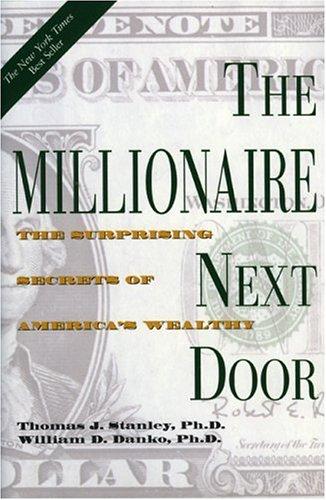
For anyone who confuses high income with wealth, or who feels behind because their lifestyle doesn't look like the we…
Buy on Amazon →
Anyone who earns enough to make discretionary spending choices but suspects their spending is not generating proporti…
Buy on Amazon →
Households in active consumer-debt distress who need a non-negotiable shared script. Not for investors already past B…
Buy on Amazon →About Edwards Paul
Read more from Edwards Paul and explore the full bibliography on ClearValue Books.
View Edwards Paul's page →Get an email if our take on Middle-class lifeboat changes.
We re-review our picks. We'll email you if Middle-class lifeboat's ranking or review changes — no checking back.

Ready to read Middle-class lifeboat?
Buy the edition we recommend on Amazon.
Buy on Amazon →