

Mind over money

Curated by Brian Kim, CPA — every pick gets a plain-English summary and the key takeaways.
Brian Kim, CPA · 2.89M YouTube Subscribers →What this book actually teaches
- 01"Money scripts" are unconscious beliefs about money formed in childhood that drive adult financial dysfunction without the person's awareness.
- 02The four script categories — avoidance, worship, status, vigilance — each correlate with distinct patterns of financial self-sabotage.
- 03The book provides self-assessment tools for identifying your dominant money script and tracing it to its source experiences.
- 04The therapeutic model involves surfacing the belief, evaluating it consciously, and installing a replacement paired with new behavior.
- 05The evidence base for money script theory is clinical rather than from large peer-reviewed studies — hold the specific findings with appropriate skepticism.
What's in this book
Brad Klontz and Ted Klontz's Mind Over Money (2009) takes a clinical psychology angle on financial behavior: the argument is that most chronic money problems are rooted in unconscious beliefs formed in childhood and adolescence, which the authors call "money scripts." These scripts — rules about money absorbed from family, culture, and formative experiences — operate below conscious awareness and drive self-sabotaging financial behavior in adulthood. The Klontzes are both financial therapists, and the book draws on their clinical practice.
The framework operates in three main layers. First, the authors introduce the money script concept and its four categories: money avoidance (money is bad, I don't deserve it), money worship (more money would solve my problems), money status (net worth equals self-worth), and money vigilance (money must be carefully guarded, never discussed). Each category correlates with documented financial dysfunctions — overspending, underearning, hoarding, financial enabling, and financial enmeshment within families. Second, the book provides a structured self-assessment process for identifying a reader's own dominant money scripts, tracing them back to their origins, and mapping the specific financial behaviors they produce. Third, the authors offer a therapeutic model for rewriting these scripts: surfacing the memory or belief, examining whether it still applies, and consciously installing a replacement belief paired with different behavior.
This is aimed at people who have read the standard personal-finance advice, know the right moves intellectually, and still can't follow through — or who find themselves in recurring financial patterns they can't explain rationally.
The weaknesses deserve acknowledgment. The clinical framework is compelling but the evidence base is thinner than the confidence of the prose suggests — money script theory is a clinical model developed by the authors, not a finding from large-scale peer-reviewed research programs. The book can feel like it pathologizes normal financial anxiety rather than distinguishing mild irrationality from genuine dysfunction. Some of the therapeutic exercises are useful; others read as simplified versions of CBT techniques. Readers looking for rigorous behavioral science should also read Kahneman; readers looking for practical financial planning should supplement with a concrete budgeting or investing framework, since this book does not provide one.
Worth reading for anyone stuck in a recurring financial pattern who has ruled out knowledge gaps as the cause. The money script framework is a useful clinical lens even if you hold the theory lightly.
Read next

For anyone whose financial education was "get a good job and save" — the book is most valuable for first-time readers…
Buy on Amazon →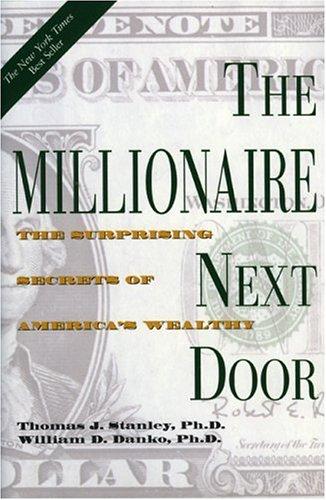
For anyone who confuses high income with wealth, or who feels behind because their lifestyle doesn't look like the we…
Buy on Amazon →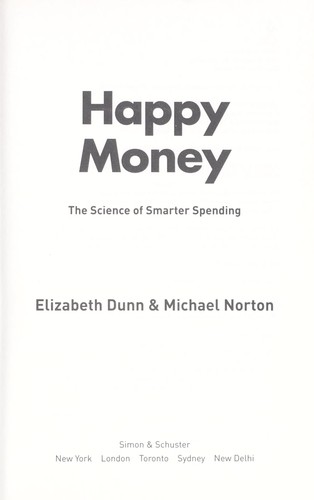
Anyone who earns enough to make discretionary spending choices but suspects their spending is not generating proporti…
Buy on Amazon →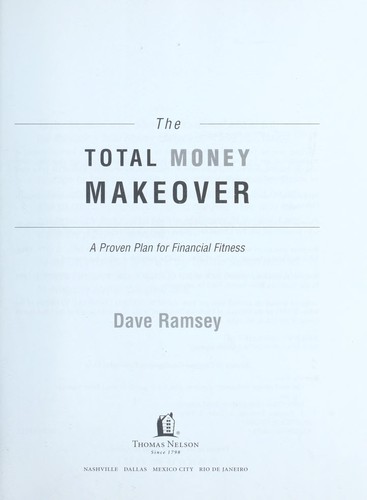
Households in active consumer-debt distress who need a non-negotiable shared script. Not for investors already past B…
Buy on Amazon →About Brad Klontz
Read more from Brad Klontz and explore the full bibliography on ClearValue Books.
View Brad Klontz's page →Get an email if our take on Mind over money changes.
We re-review our picks. We'll email you if Mind over money's ranking or review changes — no checking back.
