

Overcoming the saving slump

Curated by Brian Kim, CPA — every pick gets a plain-English summary and the key takeaways.
Brian Kim, CPA · 2.89M YouTube Subscribers →What this book actually teaches
- 01Behavioral barriers — present bias, inertia, financial illiteracy — explain more of the savings gap than rational models predict, and policy needs to account for them explicitly.
- 02Automatic enrollment in 401(k) plans dramatically raises participation by flipping the default; inertia works for savers when the default is set correctly.
- 03Financial literacy is unevenly distributed and the gap maps directly onto savings outcomes — low financial literacy is not a neutral fact but a driver of retirement insecurity.
- 04Women, lower-income households, and minority workers face distinct structural barriers to retirement saving that universal product design fails to address.
- 05Financial education programs show mixed results in the research — the evidence for structural defaults (automatic enrollment, escalation) is stronger than for education-only interventions.
What's in this book
Americans are not saving enough, and the policy levers that should help — tax-advantaged accounts, employer matches, automatic enrollment — are not working as well as economists assumed they would. That is the organizing premise of "Overcoming the Saving Slump," an edited volume assembled by Annamaria Lusardi in 2008 drawing together research from leading economists on household saving behavior, financial literacy, and retirement security.
Lusardi, a leading researcher on financial literacy and economic behavior at household level, structured the volume around a core insight: the gap between what households need to save and what they actually save cannot be explained by rational models alone. People face behavioral barriers — present bias, inertia, confusion about financial products, lack of basic financial knowledge — that prevent them from acting in their own long-term interest even when they intend to. The book examines these barriers empirically and evaluates interventions designed to overcome them.
The chapters cover a range of specific topics: why automatic enrollment in 401(k) plans dramatically increases participation (exploiting inertia in the right direction), why financial literacy is unevenly distributed and how that distribution maps onto savings outcomes, why different demographic groups — women, minorities, those with lower incomes — face distinct structural barriers to retirement saving, and what the evidence says about financial education programs and whether they work. Contributors include David Laibson, John Beshears, James Choi, and other prominent behavioral economists whose work shaped subsequent retirement policy.
The audience is researchers, policy professionals, and serious students of personal finance policy rather than individual savers looking for personal guidance. The book is a research volume, not a self-help guide — the recommendations are aimed at plan sponsors, employers, and policymakers, not at individuals navigating their own retirement accounts.
The limitations follow from its format. Academic edited volumes are uneven by nature, and some chapters are more technically demanding than others. The empirical work draws primarily on U.S. data from the early 2000s, and some of the policy landscape has shifted — automatic enrollment has become much more widespread since 2008, and the SECURE Act and SECURE 2.0 have restructured significant parts of the retirement system. The book does not address the defined contribution plan's adequacy problem from an asset sufficiency standpoint; it focuses on participation and contribution rates rather than whether those rates are actually sufficient for retirement income replacement.
For researchers and policy analysts working on retirement savings, financial literacy, or behavioral interventions in savings, this volume collects important work in one place and provides a solid empirical foundation for understanding why saving slumps persist despite available tools.
Read next

For anyone whose financial education was "get a good job and save" — the book is most valuable for first-time readers…
Buy on Amazon →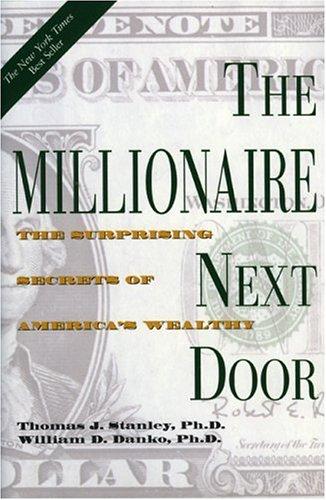
For anyone who confuses high income with wealth, or who feels behind because their lifestyle doesn't look like the we…
Buy on Amazon →
Anyone who earns enough to make discretionary spending choices but suspects their spending is not generating proporti…
Buy on Amazon →
Households in active consumer-debt distress who need a non-negotiable shared script. Not for investors already past B…
Buy on Amazon →About Annamaria Lusardi
Read more from Annamaria Lusardi and explore the full bibliography on ClearValue Books.
View Annamaria Lusardi's page →Get an email if our take on Overcoming the saving slump changes.
We re-review our picks. We'll email you if Overcoming the saving slump's ranking or review changes — no checking back.

Ready to read Overcoming the saving slump?
Buy the edition we recommend on Amazon.
Buy on Amazon →