

Owning Up

Curated by Brian Kim, CPA — every pick gets a plain-English summary and the key takeaways.
Brian Kim, CPA · 2.89M YouTube Subscribers →What this book actually teaches
- 01U.S. policy has long subsidized asset-building for the middle class while penalizing savings in means-tested programs for the poor.
- 02Individual Development Accounts (IDAs) extend matched-savings infrastructure to low-income households for homes, education, or small business.
- 03The American Dream Demonstration in the late 1990s moved IDAs from idea to federal program via the Assets for Independence Act.
- 04Asset-based welfare survived politically because it drew both left (mobility) and right (ownership) support, but that coalition capped its scale.
- 05The framework predates the housing crisis and underweights critiques about modest match amounts versus the underlying wealth gap.
What's in this book
Michelle Miller-Adams's argument is that the American anti-poverty conversation spent most of the twentieth century focused on income — wages, transfers, food stamps — and largely ignored the other side of the household balance sheet: assets. Owning Up traces the rise of asset-based welfare policy in the United States, centered on Individual Development Accounts (IDAs) and the broader project, associated with Michael Sherraden's Assets and the Poor, of helping low-income households accumulate savings, homes, education, and small-business capital rather than just smoothing consumption.
The arguments build in three layers. First, the historical critique: U.S. social policy has always subsidized asset-building for the middle and upper class — the mortgage interest deduction, employer-sponsored retirement plans, capital gains preferences — while offering the poor income support that explicitly phases out as savings accumulate. Asset tests in means-tested programs actively punished saving. Second, the policy innovation: matched savings accounts (IDAs), homeownership programs, and children's savings accounts attempt to extend the same asset-building scaffolding the middle class already enjoys to households that have been locked out of it. Miller-Adams walks through the demonstration projects of the 1990s — the American Dream Demonstration in particular — and the political coalition that pushed asset-based policy from think-tank idea to federal legislation in the Assets for Independence Act. Third, the political economy: asset-based welfare drew support from both left (mobility, inclusion) and right (ownership, responsibility), which is why it survived where pure transfer programs stalled, but that same coalition limited the program's scale.
The natural audience is policy researchers, social-work and public-policy students, and practitioners running community-development or financial-inclusion programs who want the intellectual history of why asset-building moved from the margin to the mainstream.
The weaknesses are worth naming. The book is a sympathetic insider account — Miller-Adams was close to the network of foundations and researchers driving the agenda — and it under-engages with the strongest critiques: that IDAs produce modest dollar amounts relative to the wealth gap, that matched savings can't substitute for higher wages or lower-cost housing, and that program take-up and persistence have been uneven. It is also a snapshot from the early 2000s, so it predates the housing crisis, which complicated the homeownership-as-mobility thesis significantly. Readers looking for a quantitative evaluation of IDA outcomes will need to supplement with the later research literature.
Worth reading as the readable narrative history of how asset-based welfare became a policy category in the U.S. Not the book for an empirical answer on whether IDAs actually move the needle on poverty.
Read next

For anyone whose financial education was "get a good job and save" — the book is most valuable for first-time readers…
Buy on Amazon →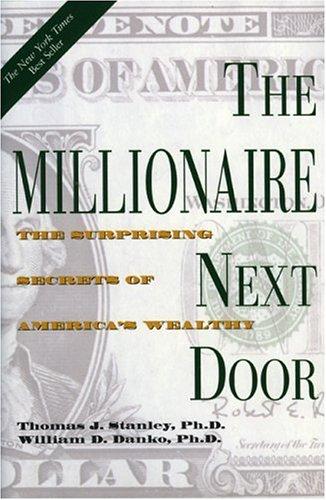
For anyone who confuses high income with wealth, or who feels behind because their lifestyle doesn't look like the we…
Buy on Amazon →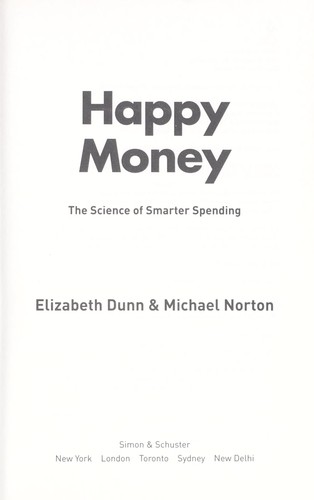
Anyone who earns enough to make discretionary spending choices but suspects their spending is not generating proporti…
Buy on Amazon →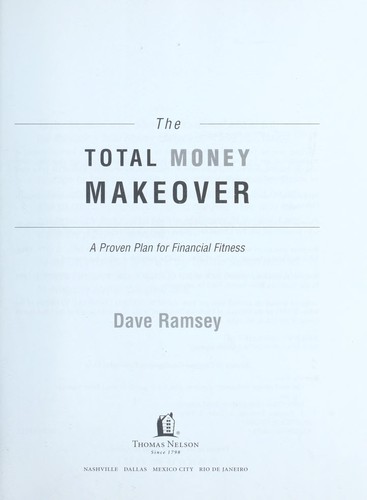
Households in active consumer-debt distress who need a non-negotiable shared script. Not for investors already past B…
Buy on Amazon →About Michelle Miller Adams
Read more from Michelle Miller Adams and explore the full bibliography on ClearValue Books.
View Michelle Miller Adams's page →Get an email if our take on Owning Up changes.
We re-review our picks. We'll email you if Owning Up's ranking or review changes — no checking back.
