

Patient Capital

Curated by Brian Kim, CPA — every pick gets a plain-English summary and the key takeaways.
Brian Kim, CPA · 2.89M YouTube Subscribers →What this book actually teaches
- 01Patient capital — genuinely long-horizon money free from short-term redemption pressure — enables investments that no shorter-horizon investor will fund, including infrastructure, basic research, and decade-scale turnarounds.
- 02Most institutions that claim to invest long — sovereign wealth funds, endowments, family offices — do not actually behave differently from shorter-horizon peers once governance pressures and agency costs are accounted for.
- 03Sovereign wealth funds lose their structural long-horizon advantage when political mandates and domestic-return requirements override investment discipline.
- 04Private equity fund structures, with their 10-year fixed lives and 2-and-20 compensation, create incentive horizons shorter than their marketing implies.
- 05The gap between the theory of patient capital and its practice is the book's central empirical finding — long-horizon investing is harder to execute institutionally than it looks from the outside.
What's in this book
Most capital flows to investments with short payback horizons because the investors who control that capital have short time horizons themselves. Victoria Ivashina and Josh Lerner's "Patient Capital" (2021) examines the exceptions: the institutions — sovereign wealth funds, endowments, family offices, some pension funds — that can credibly commit to long investment horizons and what that commitment makes possible.
The central argument is that patient capital — money committed for years or decades without the pressure to mark-to-market quarterly or satisfy near-term redemption demands — is a genuinely different input into the economy than ordinary capital. It enables investments that no short-horizon investor would fund: infrastructure with 30-year payback periods, basic research, venture bets in technology cycles that play out over a decade, turnarounds requiring operational transformation over five or more years. The book's empirical contribution is documenting the gap between the theory of patient capital and its practice — most institutions that claim to invest long do not actually behave differently from their shorter-horizon peers.
Ivashina and Lerner draw on Harvard Business School case research and proprietary data to examine how sovereign wealth funds, endowments, and large family offices actually deploy capital, where they succeed, and where governance problems, political interference, and agency costs undermine their structural advantage. The sovereign wealth fund section is particularly detailed, examining how political mandates and domestic-return pressures erode the long-horizon advantage that these funds nominally possess. The private equity and venture sections examine how fund structures — with their 10-year fixed lives and 2-and-20 compensation — create shorter incentive horizons than their marketing suggests.
The book is aimed at institutional investors, asset managers, policy professionals, and academics working at the intersection of finance and economic growth. It reads as a serious research synthesis, not a practitioner playbook.
The limitations are worth noting. The book's empirical base leans heavily on case studies and proprietary data sets that are not fully reproducible, which limits independent verification of some conclusions. The policy recommendations — improve governance of sovereign wealth funds, restructure incentives in long-horizon vehicles — are directionally correct but underspecified. And the book's scope, while intellectually rich, stops short of the most actionable question for most institutional investors: how exactly does a mid-sized pension fund or endowment practically lengthen its investment horizon given its existing obligations and governance structure?
For institutional investors, policy economists, and academics interested in the gap between long-horizon capital theory and practice, this is the most rigorous treatment of the subject available. It does not flatter the field — the finding that most patient capital is not actually patient is the book's most important and least comfortable conclusion.
Read next

For anyone whose financial education was "get a good job and save" — the book is most valuable for first-time readers…
Buy on Amazon →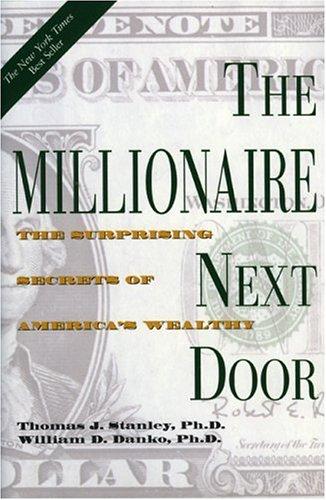
For anyone who confuses high income with wealth, or who feels behind because their lifestyle doesn't look like the we…
Buy on Amazon →
Anyone who earns enough to make discretionary spending choices but suspects their spending is not generating proporti…
Buy on Amazon →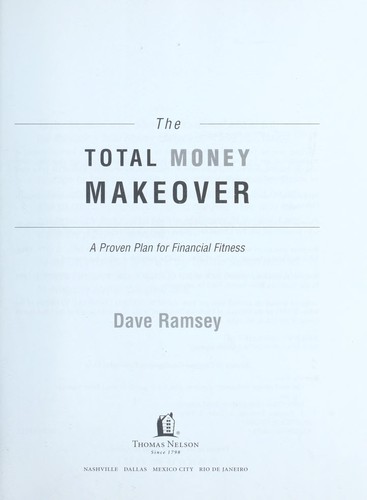
Households in active consumer-debt distress who need a non-negotiable shared script. Not for investors already past B…
Buy on Amazon →About Victoria Ivashina
Read more from Victoria Ivashina and explore the full bibliography on ClearValue Books.
View Victoria Ivashina's page →Get an email if our take on Patient Capital changes.
We re-review our picks. We'll email you if Patient Capital's ranking or review changes — no checking back.
