

Pay it down

Curated by Brian Kim, CPA — every pick gets a plain-English summary and the key takeaways.
Brian Kim, CPA · 2.89M YouTube Subscribers →What this book actually teaches
- 01The ten-dollars-a-day framework is designed to be specific enough to act on without requiring lifestyle upheaval — the premise is that the gap between current behavior and financial stability is smaller than most people believe.
- 02Chatzky covers avalanche versus snowball debt payoff methods pragmatically rather than dogmatically — avalanche wins mathematically, but snowball works better for readers who need early wins to sustain behavior change.
- 03The sequencing advice on debt versus investing is sound: capture any employer 401(k) match first (it is an immediate 50-100% return), then pay down debt aggressively, then rebuild savings — rather than waiting to invest until debt is fully cleared.
- 04The book is focused on the debt-payoff phase and does not provide meaningful guidance on wealth building after debt is cleared; readers will need supplementary resources for the post-debt stage.
- 05The 2004 publication date means specific rates, product examples, and financial landscape references are outdated — the payoff framework is durable, but the numerical examples need context-updating.
What's in this book
Pay It Down: From Debt to Wealth on $10 a Day by Jean Chatzky, published in 2004, makes a simple arithmetic argument: most American households can find ten dollars a day in spending they would not miss, and redirecting that ten dollars toward debt payoff and then savings produces a meaningful wealth trajectory over time. Chatzky — then the financial editor at Money magazine and a regular Today show contributor — frames the book around this specific number not because it is magic but because it is concrete and psychologically manageable. The thesis is that the gap between current financial behavior and financial stability is smaller than most people believe, and the obstacle is primarily psychological rather than arithmetic.
The book's opening sections document the state of American household debt at the time of publication and Chatzky's argument about why standard debt-payoff advice fails. Her diagnosis is that most people understand they should pay down debt but cannot sustain the behavior change required, because the prescriptions are either too abstract ("pay more than the minimum") or too severe ("cut everything and live like a monk"). The ten-dollars-a-day framework is designed to be specific enough to act on without requiring lifestyle upheaval. Chatzky provides a series of exercises for identifying where the ten dollars comes from in a specific household — coffee, subscriptions, restaurant meals, impulse purchases — and emphasizes that the source matters less than the consistency.
The payoff sequencing chapter is the book's most financially substantive section. Chatzky covers the avalanche method (highest interest rate first) versus the snowball method (smallest balance first) and comes down on the side of avalanche for mathematical efficiency while acknowledging that snowball works better for readers who need early wins to sustain motivation. She is pragmatic about this tradeoff rather than dogmatic, which distinguishes the book from more ideologically fixed debt payoff prescriptions.
The savings transition section — what to do once the debt is paid — addresses emergency funds, retirement accounts, and the sequencing question of whether to pay off debt versus invest simultaneously. Chatzky's position on simultaneous debt payoff and investing is nuanced: she recommends capturing any employer 401(k) match before aggressively paying debt (because the match is an immediate 50-100% return), then redirecting fully to debt, then rebuilding savings after debt is cleared. This is sound sequencing advice that has held up well since publication.
The book is short — around 200 pages — and written for a general audience rather than financially sophisticated readers. The tone is direct and encouraging without crossing into motivational-speaker territory.
This is for readers carrying consumer debt who have tried to pay it down before and stalled, or who have never made a systematic attempt and feel overwhelmed about where to start.
The weaknesses are scope and currency. The book was written in 2004 and the specific examples — interest rates, credit card terms, product recommendations — reflect that era's financial landscape. The core arithmetic remains valid, but the specific numbers have changed. More substantively, the book is focused entirely on the debt-payoff phase and does not provide meaningful guidance on what to do once debt is cleared beyond pointing toward standard savings vehicles. Readers who want a complete personal finance framework rather than a focused debt-payoff guide will need to supplement it. The book also does not address the income side — the ten-dollars-a-day framework assumes there is discretionary spending to redirect, which is not true for all households.
For readers with consumer debt who need a concrete, psychologically grounded starting point rather than another abstract exhortation to spend less, Pay It Down remains a practical and honest guide — dated in its specifics but sound in its framework.
Read next

For anyone whose financial education was "get a good job and save" — the book is most valuable for first-time readers…
Buy on Amazon →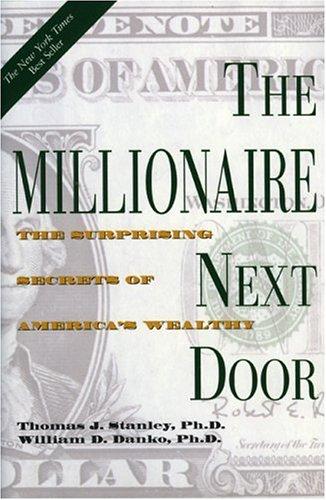
For anyone who confuses high income with wealth, or who feels behind because their lifestyle doesn't look like the we…
Buy on Amazon →
Anyone who earns enough to make discretionary spending choices but suspects their spending is not generating proporti…
Buy on Amazon →
Households in active consumer-debt distress who need a non-negotiable shared script. Not for investors already past B…
Buy on Amazon →About Jean Sherman Chatzky
Read more from Jean Sherman Chatzky and explore the full bibliography on ClearValue Books.
View Jean Sherman Chatzky's page →Get an email if our take on Pay it down changes.
We re-review our picks. We'll email you if Pay it down's ranking or review changes — no checking back.
