

Paying the Price

Curated by Brian Kim, CPA — every pick gets a plain-English summary and the key takeaways.
Brian Kim, CPA · 2.89M YouTube Subscribers →What this book actually teaches
- 01The Pell Grant has lost so much purchasing power since the 1970s that it no longer covers basic attendance costs at low-cost public institutions — low-income students regularly face choices between tuition and food, or between class attendance and work shifts.
- 02The financial aid system is built around a model student who is an 18-22 year old dependent with financially stable parents; this model does not describe most low-income first-generation college students, and the mismatch drives attrition rather than lack of ability or motivation.
- 03The FAFSA process itself is a documented barrier to aid access — complexity, documentation requirements, and processing delays cause eligible students to leave money on the table; the FAFSA Simplification Act of 2020 addressed some but not all of these issues.
- 04Goldrick-Rab's longitudinal case studies show students dropping out not because they failed academically but because the financial math stopped working — a distinction that should change how institutions measure and respond to attrition.
- 05The book is a structural critique and policy argument, not a consumer planning guide; it explains why the system fails but does not offer strategies for navigating it as currently designed.
What's in this book
Paying the Price: College Costs, Financial Aid, and the Betrayal of the American Dream by Sara Goldrick-Rab, published in 2016, is a sociological study of how financial aid policy actually functions for low-income college students versus how policymakers assume it functions. Goldrick-Rab is a sociologist at Temple University who spent years tracking hundreds of students through the Wisconsin higher education system, and the book's argument is built from that longitudinal data: the financial aid system is designed around an idealized model of the college student that does not match the actual circumstances of low-income students, and the gap between the model and reality produces systematic attrition that costs students years of their lives and leaves them with debt and no degree.
The central finding is that the federal Pell Grant — the largest need-based federal grant program — has lost so much purchasing power relative to actual college costs since the 1970s that it no longer covers the basic expenses of attendance even at low-cost public institutions. The students Goldrick-Rab tracked regularly faced choices between paying tuition and paying for food, between attending class and working the extra shift that would cover rent, between staying enrolled and transferring to a cheaper school that might not accept their credits. These are not edge cases in her data; they are modal experiences for low-income college students at public institutions. The financial aid system assumes students will fill the gap between aid and cost with parental contributions that many of their families cannot provide.
Goldrick-Rab's structural critique is that financial aid policy is built around a concept of the "college student" as an 18-22 year old dependent of parents with income and assets above the poverty line, a stable living situation, and no competing financial responsibilities. The students in her study are often first-generation college students whose families are themselves financially fragile, who work 20-30 hours a week while enrolled, and who drop out not because they lack ability or motivation but because the financial math stops working. The book documents this with case studies — named, detailed, longitudinal — that are among the most readable portions of an otherwise rigorously academic text.
The policy recommendations include significantly increasing Pell Grant funding, simplifying the FAFSA process (which she identifies as a significant barrier to aid access in itself), providing emergency aid programs at the institutional level, and rethinking how institutions calculate "cost of attendance" to reflect actual student living expenses including food and housing insecurity. Several of these recommendations have been partially implemented since 2016 — the FAFSA Simplification Act of 2020 simplified the form significantly — but the core funding gap Goldrick-Rab documents remains.
This is for policymakers, higher education administrators, financial aid professionals, and readers trying to understand why college completion rates for low-income students are so much lower than for higher-income students despite nominal financial aid.
The weaknesses are audience and prescription. The book is academically rigorous but written accessibly enough for a policy audience; pure consumer readers looking for advice on paying for their own child's college will find it illuminating on the systemic problem but not useful as a planning guide. The policy prescriptions, while well-grounded, are broad — Goldrick-Rab argues for systemic change rather than individual workarounds, which is honest but means the book does not offer actionable strategies for families navigating the current system. The Wisconsin data is also geographically bounded, and state-level policy variation means some findings do not transfer directly to other contexts.
For readers who want to understand why the American college affordability system fails the students it was designed to help, Paying the Price is the most rigorously documented account available — uncomfortable, specific, and persuasive.
Read next

For anyone whose financial education was "get a good job and save" — the book is most valuable for first-time readers…
Buy on Amazon →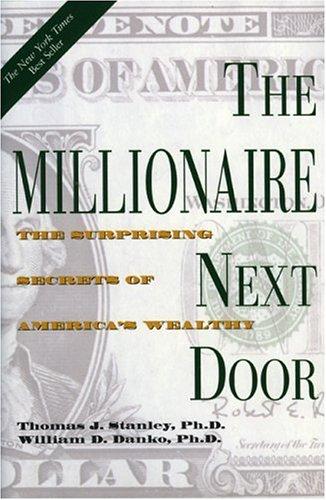
For anyone who confuses high income with wealth, or who feels behind because their lifestyle doesn't look like the we…
Buy on Amazon →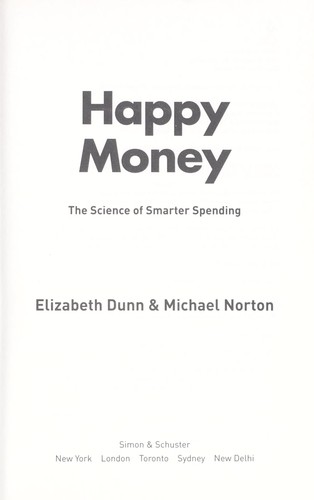
Anyone who earns enough to make discretionary spending choices but suspects their spending is not generating proporti…
Buy on Amazon →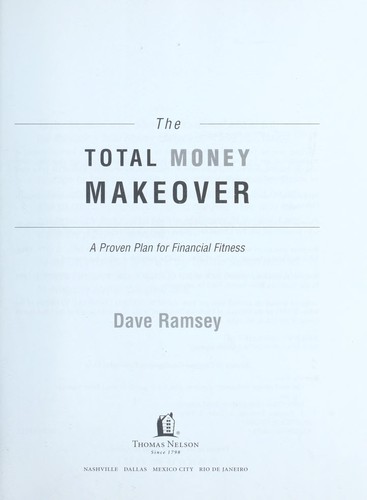
Households in active consumer-debt distress who need a non-negotiable shared script. Not for investors already past B…
Buy on Amazon →About Sara Goldrick Rab
Read more from Sara Goldrick Rab and explore the full bibliography on ClearValue Books.
View Sara Goldrick Rab's page →Get an email if our take on Paying the Price changes.
We re-review our picks. We'll email you if Paying the Price's ranking or review changes — no checking back.
