

Personal finance for Canadians for dummies

Curated by Brian Kim, CPA — every pick gets a plain-English summary and the key takeaways.
Brian Kim, CPA · 2.89M YouTube Subscribers →What this book actually teaches
- 01Track every dollar spent for 30 days before making any financial plan — the audit is the plan.
- 02RRSP-versus-TFSA sequencing depends on current versus expected future tax rates, not a single rule that fits everyone.
- 03CPP deferral to age 70 provides a meaningful actuarial benefit most Canadians leave on the table by claiming early.
- 04Emergency funds belong in high-interest savings, not in a TFSA invested in equities — liquidity without volatility is the goal.
- 05Rent-versus-buy is a math problem, not a values problem — in high price-to-rent markets the numbers often don't favor buying.
What's in this book
Eric Tyson's Personal Finance for Canadians for Dummies makes one argument from cover to cover: the gap between what Canadians know about managing money and what they need to know is wide, and most of that gap can be closed with a handful of consistent habits rather than financial sophistication. Tyson, who built the U.S. Personal Finance for Dummies franchise, adapted the framework with co-authors for the Canadian tax and regulatory landscape — RRSP and TFSA mechanics, CPP and OAS projections, provincial tax differences, and CMHC mortgage insurance rules replace their American equivalents throughout.
The budgeting and spending section opens with a cash-flow audit that most readers will find uncomfortable: tracking every dollar spent for 30 days before doing anything else. Tyson is unromantic about this step — the point is not to feel good about your spending, it is to see where the leaks are. From there, the book walks through a debt-reduction sequence (highest-interest first, with a concession to the psychological argument for small-balance wins), an emergency fund framework (three to six months of essential expenses in a high-interest savings account, not in a TFSA invested in equities), and a systematic approach to insurance — life, disability, and property — sized to actual income-replacement needs rather than salespeople's projections.
The investing section is deliberately conservative. Tyson's preference is low-cost, broadly diversified vehicles — Canadian index funds and ETFs — held inside tax-advantaged accounts (RRSP first if current-year taxes are high; TFSA first if you expect higher income in retirement than now). He spends real pages on the RRSP-versus-TFSA sequencing decision, which is one of the most commonly misunderstood optimization problems in Canadian personal finance. The advice is practical and rule-of-thumb driven, not model-portfolio driven.
The real estate chapter takes a measured stance — homeownership is not automatically superior to renting, and the rent-versus-buy calculation depends heavily on local price-to-rent ratios, expected tenure, and transaction costs that most buyers underestimate. In high-cost markets like Toronto and Vancouver, Tyson leans toward acknowledging the math doesn't always work for buying.
Retirement planning covers CPP deferral (the book is straightforward about the actuarial benefit of waiting to age 70), RRSP contribution room mechanics, and the conversion to a RRIF at 71. The estate chapter covers wills, powers of attorney, and beneficiary designations — basic but important.
Who this is for: Canadians in their 30s and 40s who feel behind on the fundamentals and want a single, credible reference covering all the major life-stage decisions. Also a strong starting point for new immigrants navigating the Canadian tax and retirement system for the first time.
Weaknesses
the Dummies format trades depth for breadth, and specialists will find every chapter a little thin. The 2018 edition is getting dated — TFSA contribution limits, CPP enhancement rules, and federal tax brackets have all changed since publication. Readers who want more on investing specifically will need to follow up with a dedicated Canadian investing book (like Andrew Hallam's Millionaire Teacher, which goes deeper on the ETF mechanics). The tone occasionally oversimplifies genuinely complex decisions (particularly the home-buying chapter) in ways that could steer readers wrong in edge cases.
Verdict
the most practical single-volume Canadian personal finance reference for anyone who wants a map, not a masterclass. Read it once, act on the accounts and insurance gaps it surfaces, then go deeper on investing.
Read next

For anyone whose financial education was "get a good job and save" — the book is most valuable for first-time readers…
Buy on Amazon →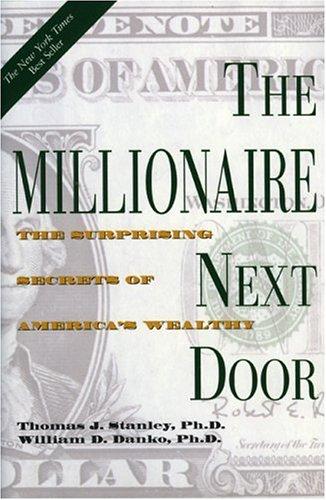
For anyone who confuses high income with wealth, or who feels behind because their lifestyle doesn't look like the we…
Buy on Amazon →
Anyone who earns enough to make discretionary spending choices but suspects their spending is not generating proporti…
Buy on Amazon →
Households in active consumer-debt distress who need a non-negotiable shared script. Not for investors already past B…
Buy on Amazon →About Eric Tyson
Read more from Eric Tyson and explore the full bibliography on ClearValue Books.
View Eric Tyson's page →Get an email if our take on Personal finance for Canadians for dummies changes.
We re-review our picks. We'll email you if Personal finance for Canadians for dummies's ranking or review changes — no checking back.

Ready to read Personal finance for Canadians for dummies?
Buy the edition we recommend on Amazon.
Buy on Amazon →