

Puzzles of Finance

Curated by Brian Kim, CPA — every pick gets a plain-English summary and the key takeaways.
Brian Kim, CPA · 2.89M YouTube Subscribers →What this book actually teaches
- 01The time diversification fallacy — the belief that equities become safer over long horizons — is challenged rigorously: probability of loss decreases over time but magnitude of potential loss increases, and conflating the two distorts allocation decisions.
- 02Currency hedging's value depends on investment time horizon in a non-obvious way: short-horizon investors typically benefit more from hedging foreign exposure than long-horizon investors.
- 03Arithmetic returns and compound returns measure different things and lead to different performance assessments; conflating them is a common and consequential analytical error.
- 04Each chapter follows a consistent structure: identify the conventional wisdom, demonstrate its flaw, and work through the correct framework — making the book useful for stress-testing financial intuitions.
- 05At roughly 140 pages covering six specific puzzles, the book is a sampler rather than a comprehensive framework — valuable as a complement to, not a replacement for, fuller investment texts.
What's in this book
Puzzles of Finance (2000) by Mark P. Kritzman is an unusual entry in financial literature: a short, analytically precise book structured around six specific paradoxes and puzzles that arise in financial practice and that standard theory either handles poorly or fails to explain at all. Kritzman is a practitioner-scholar — he spent decades at State Street and Windham Capital Management while publishing academic research — and the book reflects that dual identity. The writing is accessible to educated non-specialists, but the arguments are grounded in quantitative finance rather than financial self-help.
The puzzles Kritzman selects are genuinely interesting and non-obvious. One of the most compelling addresses the fallacy of time diversification — the widespread belief that equities become safer over long investment horizons. Kritzman argues carefully that while the probability of loss decreases with time, the magnitude of potential loss increases, and that treating these two facts selectively (emphasizing probability while ignoring magnitude) leads to systematically over-risky allocation decisions for long-horizon investors. This is a counterintuitive but well-supported argument that runs against much conventional financial planning advice.
Another puzzle addresses the currency hedging question: when does hedging foreign currency exposure add value in a portfolio, and when does it reduce it? The answer turns out to depend on time horizon in a non-obvious way, with short-horizon investors generally benefiting from hedging more than long-horizon investors. Kritzman walks through the mathematics at a level that rewards careful reading without requiring graduate-level statistics.
Additional chapters cover the resolution of Siegel's paradox in currency markets, the mathematics of compounding versus arithmetic returns in evaluating investment performance, and the question of how to think about the probability of ruin under different return and volatility assumptions. Each chapter follows a similar structure: state the received wisdom, demonstrate the problem with it, and work through the correct framing.
The weaknesses are primarily about scope. At roughly 140 pages, the book is deliberately short, and the six puzzles do not add up to a comprehensive treatment of any topic — they are a carefully curated sampler. Readers looking for a full framework for investment decision-making will need to supplement this book significantly. The 2000 publication date also means some of the market examples feel dated, though the mathematical arguments are time-independent.
For quantitatively oriented investors, analysts, and finance students who want to stress-test their understanding of how standard financial concepts actually work under formal scrutiny, Puzzles of Finance delivers six reliably useful challenges to conventional thinking in a concise package.
Read next

For anyone whose financial education was "get a good job and save" — the book is most valuable for first-time readers…
Buy on Amazon →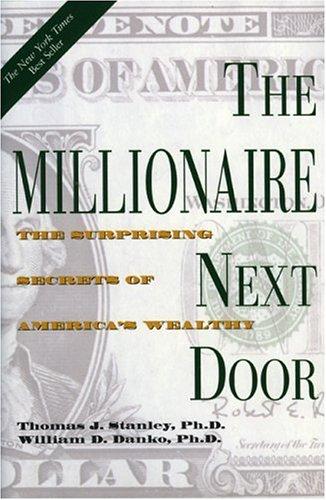
For anyone who confuses high income with wealth, or who feels behind because their lifestyle doesn't look like the we…
Buy on Amazon →
Anyone who earns enough to make discretionary spending choices but suspects their spending is not generating proporti…
Buy on Amazon →
Households in active consumer-debt distress who need a non-negotiable shared script. Not for investors already past B…
Buy on Amazon →About Mark P Kritzman
Read more from Mark P Kritzman and explore the full bibliography on ClearValue Books.
View Mark P Kritzman's page →Get an email if our take on Puzzles of Finance changes.
We re-review our picks. We'll email you if Puzzles of Finance's ranking or review changes — no checking back.

Ready to read Puzzles of Finance?
Buy the edition we recommend on Amazon.
Buy on Amazon →