

Rich on paper poor on life

Curated by Brian Kim, CPA — every pick gets a plain-English summary and the key takeaways.
Brian Kim, CPA · 2.89M YouTube Subscribers →What this book actually teaches
- 01The "paper rich" pattern — high income, accumulating assets, hollow satisfaction — is common and underreported because it lacks a socially acceptable name.
- 02McKernan's core diagnostic asks whether your daily allocation of time, energy, and relationships actually tracks your stated values — or someone else's.
- 03The book traces financial ambitions back to their origin: whose goals are you actually pursuing?
- 04This is a values-clarity and coaching book, not a financial planning book — it provides no budgeting, investing, or tax guidance.
- 05Case studies are drawn from McKernan's coaching clients and selected to support his thesis, which limits how much they generalize.
What's in this book
Philip McKernan's Rich on Paper, Poor on Life makes an argument that sits slightly outside standard personal-finance territory: that optimizing for net worth at the expense of meaning, relationships, and genuine engagement is a trap — not a strategy — and that many financially successful people are running a life they don't actually want. McKernan, an Irish-born speaker and coach, builds the book around case studies of high-earning, high-net-worth individuals who arrived at wealth and found it hollow, and uses those cases to argue that financial planning disconnected from values clarity produces a specific kind of quiet dissatisfaction.
The book's central diagnostic tool is what McKernan calls the "paper rich" pattern: high income, accumulating assets, markers of external success, and an underlying sense that something is wrong that money can't fix. He argues this pattern is common and underreported because the people experiencing it have no socially acceptable framework for naming it — you cannot easily tell people you are unhappy when the external evidence says you should be satisfied. The book then works through the internal audit McKernan uses with coaching clients: identifying what you actually value versus what you have been told to value, tracing the origin of your financial ambitions, and examining whether your daily life allocation (time, energy, relationships) tracks your stated priorities. The framework is closer to values-based coaching than financial planning, and the book is honest about that distinction.
This is aimed at people who have achieved conventional financial success and feel vaguely dissatisfied — or people approaching that point who want to course-correct before they arrive — rather than people working on foundational money management.
The weaknesses are worth naming. The book does not offer financial planning guidance — it is explicitly not a money-mechanics book. Readers looking for investment strategies, budgeting tools, or tax planning will find nothing here. The case studies, while compelling, are from McKernan's coaching client base and selected to illustrate his thesis, which creates a sample bias problem. The prescriptions — live intentionally, align your money with your values, ask hard questions — are sound but not novel, and readers who have encountered values-based coaching elsewhere may find the material familiar. The absence of a structured framework or assessment tool makes the book more inspirational than operational.
Worth reading for high-income earners who suspect they are optimizing for the wrong things and want a structured prompt to examine what they actually want. Not a substitute for financial planning.
Read next

For anyone whose financial education was "get a good job and save" — the book is most valuable for first-time readers…
Buy on Amazon →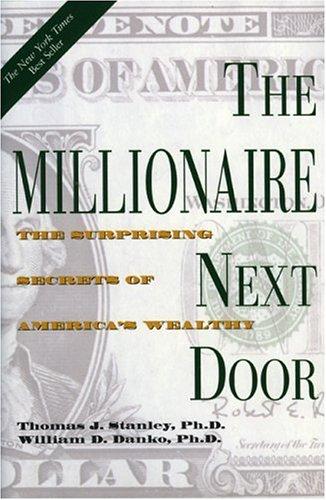
For anyone who confuses high income with wealth, or who feels behind because their lifestyle doesn't look like the we…
Buy on Amazon →
Anyone who earns enough to make discretionary spending choices but suspects their spending is not generating proporti…
Buy on Amazon →
Households in active consumer-debt distress who need a non-negotiable shared script. Not for investors already past B…
Buy on Amazon →About Philip Mckernan
Read more from Philip Mckernan and explore the full bibliography on ClearValue Books.
View Philip Mckernan's page →Get an email if our take on Rich on paper poor on life changes.
We re-review our picks. We'll email you if Rich on paper poor on life's ranking or review changes — no checking back.

Ready to read Rich on paper poor on life?
Buy the edition we recommend on Amazon.
Buy on Amazon →