

Routledge Handbook of Financial Literacy

Curated by Brian Kim, CPA — every pick gets a plain-English summary and the key takeaways.
Brian Kim, CPA · 2.89M YouTube Subscribers →What this book actually teaches
- 01The handbook surfaces a core problem in financial literacy research: inconsistent definitions across studies make cross-program comparisons unreliable.
- 02The Lusardi-Mitchell "Big Three" financial literacy questions — compound interest, inflation, and risk diversification — are the dominant measurement instrument, with documented limitations.
- 03Evidence on whether financial education programs change financial behavior is more equivocal than advocates typically acknowledge — the handbook synthesizes what the research actually shows.
- 04International comparison chapters cover the U.S., UK, Italy, Germany, Brazil, and others — useful for policy analysts working across jurisdictions.
- 05This is a graduate-level academic reference, not a consumer personal finance title; practical takeaways for individuals are minimal.
What's in this book
The Routledge Handbook of Financial Literacy (2021), edited by Gianni Nicolini, is an academic reference volume — not a consumer personal finance book. It assembles contributions from researchers across economics, education, psychology, and public policy to map the current state of knowledge about financial literacy: what it is, how it is measured, how it is taught, whether financial education programs work, and what policy frameworks have emerged across different countries. Nicolini and the contributors are working in the peer-reviewed research tradition, and the handbook is designed as a graduate-level reference and literature survey.
The volume is organized thematically. The definitional section grapples with a genuine problem in the field: financial literacy means different things in different research programs, and the lack of a consistent definition makes cross-study comparisons unreliable. The measurement section surveys the major instruments — including the "Big Three" financial literacy questions developed by Annamaria Lusardi and Olivia Mitchell, which test compound interest understanding, inflation effects, and risk diversification — and their limitations. The financial education effectiveness section is where the handbook is most valuable for policy audiences: it synthesizes the evidence on whether financial education programs — in schools, workplaces, and community settings — actually change financial behavior, and the findings are more equivocal than advocates of financial education typically acknowledge. The international comparisons section covers financial literacy measurement and education policy across multiple countries, with chapters on the U.S., UK, Italy, Germany, Brazil, and others. The final section covers emerging areas: digital financial literacy, retirement savings behavior, and the specific financial literacy gaps facing vulnerable populations.
This is aimed at researchers, graduate students, policy analysts, and financial educators — not consumers seeking personal finance guidance.
The weakness for most catalog readers is obvious and structural: this is an academic reference work, not a readable personal finance title. The writing is technical, the chapters assume familiarity with econometric methods, and the practical takeaways for individuals are thin. The price point reflects its academic market. Even policy-interested general readers will find the going slow.
Not a reading recommendation for consumers. Worth noting for researchers or educators who need a literature-survey starting point for the financial literacy field.
Read next

For anyone whose financial education was "get a good job and save" — the book is most valuable for first-time readers…
Buy on Amazon →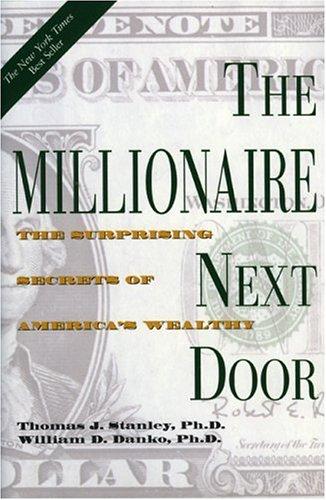
For anyone who confuses high income with wealth, or who feels behind because their lifestyle doesn't look like the we…
Buy on Amazon →
Anyone who earns enough to make discretionary spending choices but suspects their spending is not generating proporti…
Buy on Amazon →
Households in active consumer-debt distress who need a non-negotiable shared script. Not for investors already past B…
Buy on Amazon →About Gianni Nicolini
Read more from Gianni Nicolini and explore the full bibliography on ClearValue Books.
View Gianni Nicolini's page →Get an email if our take on Routledge Handbook of Financial Literacy changes.
We re-review our picks. We'll email you if Routledge Handbook of Financial Literacy's ranking or review changes — no checking back.

Ready to read Routledge Handbook of Financial Literacy?
Buy the edition we recommend on Amazon.
Buy on Amazon →