

Second chance

Curated by Brian Kim, CPA — every pick gets a plain-English summary and the key takeaways.
Brian Kim, CPA · 2.89M YouTube Subscribers →What this book actually teaches
- 01Kiyosaki argues the 2008 crisis was an early signal of a larger systemic collapse, not a corrected anomaly — and the "second chance" is the window individuals have to reposition before the next disruption.
- 02The book applies the core Rich Dad asset/liability framework to the post-2008 environment: a primary residence, savings account, and 401(k) are liabilities in Kiyosaki's model because their real value is eroded by inflation and currency debasement.
- 03Kiyosaki's prescription diverges sharply from conventional planning — he advocates cash-flowing real estate, business ownership, and exposure to gold, silver, and oil over diversified paper-asset portfolios.
- 04The macro predictions are unfalsifiable as presented: no specific timeframe is given for the projected crash, which means the argument can never be disproven — only "not yet proven."
- 05Implementation specifics are thin — the book is more useful as an ideological frame for questioning conventional financial planning than as an actionable guide for building a cash-flow portfolio.
What's in this book
Second Chance: For Your Money, Your Life and Our World by Robert T. Kiyosaki, published in 2015, argues that the global financial system built after World War II is approaching the end of its life cycle and that the 2008 financial crisis was not a corrected anomaly but an early signal of a larger collapse to come. Kiyosaki's central claim is that individuals who understand this shift can use the moment — the "second chance" of the title — to reset their financial lives before the next, larger disruption arrives. The book is equal parts macro-economic argument and personal finance prescription, though the macro argument carries more of the weight.
Kiyosaki opens with his intellectual debt to R. Buckminster Fuller, framing the book around Fuller's concept of "invisible generalized principles" — the underlying forces that shape economies independently of the narratives most people use to explain them. Kiyosaki uses this framing to argue that most personal finance advice is built on assumptions appropriate to an earlier era (stable employment, defined-benefit pensions, appreciating real estate across all markets, sound currency) that no longer hold. His prescription follows directly: rather than following the conventional advice to get a good education, get a good job, save money, invest in a diversified portfolio of paper assets, and wait for a company pension, readers should develop financial education, invest in cash-flowing assets (real estate and business), and reduce dependence on the dollar through exposure to gold, silver, and oil.
The book's most substantive sections are the chapters on financial education versus academic education and the extended discussion of assets versus liabilities — the core Rich Dad framework applied to the post-2008 environment. Kiyosaki is consistent across his catalog on the asset/liability distinction (assets put money in your pocket; liabilities take it out), and here he applies it explicitly to the argument that a primary residence, a savings account, and a 401(k) are liabilities in the current environment because their real value is being eroded by inflation and currency debasement. Whether readers accept this argument determines how useful they find the book.
Kiyosaki is clear-eyed about his own polarizing reputation and addresses critics directly, acknowledging that his predictions have been wrong on timing before (he predicted a crash in 2012; the book was published in 2015). His response — that the general direction is more important than the specific timing — is defensible but provides no actionable framework for calibrating when to act on his macro arguments.
This is for readers already familiar with the Rich Dad framework who want Kiyosaki's updated macro thesis applied to the post-2008 environment, and for readers skeptical of conventional financial planning who want an articulate argument for why the standard advice may be insufficient.
The book's weaknesses are significant. The macro predictions are unfalsifiable as presented — Kiyosaki argues a crash is coming without specifying a timeframe, which means the prediction can never be proven wrong, only "not yet right." The investment prescriptions (real estate, gold, silver, oil) are stated with confidence but without the risk disclosures or implementation specifics that would make them actionable. Readers who have no experience with real estate investing, precious metals, or business ownership will find the book long on conviction and short on process. There is also a self-promotional quality to the chapter structure — several chapters serve primarily to establish Kiyosaki's credibility and catalog rather than advance the argument.
For readers open to the Rich Dad worldview and seeking a macro frame for why the conventional financial path feels increasingly precarious, Second Chance is a coherent if unfalsifiable argument. For readers who need implementation guidance rather than ideological framing, it will frustrate more than it helps.
Read next

For anyone whose financial education was "get a good job and save" — the book is most valuable for first-time readers…
Buy on Amazon →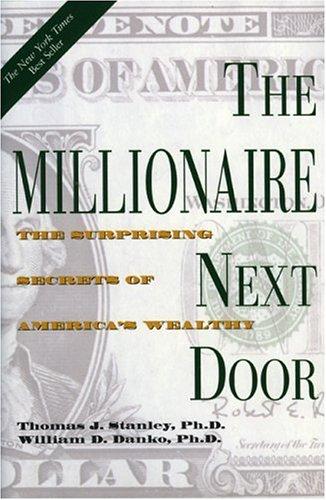
For anyone who confuses high income with wealth, or who feels behind because their lifestyle doesn't look like the we…
Buy on Amazon →
Anyone who earns enough to make discretionary spending choices but suspects their spending is not generating proporti…
Buy on Amazon →
Households in active consumer-debt distress who need a non-negotiable shared script. Not for investors already past B…
Buy on Amazon →About Robert T Kiyosaki
Read more from Robert T Kiyosaki and explore the full bibliography on ClearValue Books.
View Robert T Kiyosaki's page →Get an email if our take on Second chance changes.
We re-review our picks. We'll email you if Second chance's ranking or review changes — no checking back.
