

Sold My Soul for a Student Loan

Curated by Brian Kim, CPA — every pick gets a plain-English summary and the key takeaways.
Brian Kim, CPA · 2.89M YouTube Subscribers →What this book actually teaches
- 01Student debt restructures how borrowers think about career risk, housing, and life milestones — the financial damage and the psychological damage are distinct problems.
- 02Income-driven repayment programs reduce monthly payments but often extend interest accrual for years, increasing total debt before forgiveness ever applies.
- 03The shame architecture around student debt — treating repayment struggles as personal failure — is a feature of the system, not an accident.
- 04Standard personal finance advice (live frugally, refinance, make extra payments) is insufficient when the debt load exceeds what individual behavior can realistically close.
- 05Consent to student loan terms is extracted at the point of least financial sophistication, typically age 17-18, which is a structural feature of how the system sustains itself.
What's in this book
Sold My Soul for a Student Loan by Daniel T. Kirsch makes a sharp argument through a deliberately unusual form: it is a satirical novel, not a self-help guide, and its target is the moral logic embedded in the American student loan system. Kirsch's thesis is that student debt does not merely create financial hardship — it restructures how borrowers relate to their own ambitions, forcing them to retrofit their sense of self-worth to fit debt-service math they agreed to at 18 without understanding the consequences.
The book follows a young professional navigating post-college life under the weight of student loans while watching peers who avoided or exited debt move faster in every measurable dimension — career risk, housing, relationships, family planning. Kirsch uses the satirical frame to make arguments a straightforward personal finance book would struggle to land: that the system is designed to extract maximum consent at the point of lowest sophistication (17-18 year olds), that the language of investment and human capital is doing ideological work to keep borrowers from questioning what they signed, and that the shame architecture around student debt — the sense that struggling with it is a personal failure rather than a predictable outcome of a specific policy design — is itself part of the system's function.
The novel's most pointed material concerns the bureaucratic experience of income-driven repayment and forgiveness programs: the recertification paperwork, the servicer errors, the years of interest accrual while on an income-driven plan, and the tax treatment of forgiven balances as ordinary income. Kirsch depicts these not as bugs but as design features that increase lifetime revenue extraction from borrowers who believe they are on a path to resolution.
The book does not offer a debt-payoff system or a chapter-by-chapter financial framework. Readers looking for a tactical guide to getting out from under student loans will not find one here. What the book offers instead is vocabulary and context for understanding why conventional advice — live frugally, make extra payments, refinance to a lower rate — often feels inadequate against the emotional and structural weight of six-figure educational debt.
Who this is for: borrowers who feel like the standard personal finance advice doesn't account for how the student loan system actually works, and who want a book that names the system rather than just offering workarounds for it. Also useful for policy-minded readers, educators, and parents trying to understand what the college finance conversation misses.
Weaknesses
the satirical novel format limits the book's usefulness as a reference. Readers who want tactics — refinancing strategy, income-driven repayment navigation, PSLF eligibility analysis — will need to supplement with a dedicated student loan guide. The satire occasionally tips into broad strokes that make the argument feel less rigorous than it could be in a nonfiction format. The 2019 publication date predates the COVID payment pause and subsequent policy debates, which shifted the student loan landscape significantly.
Verdict
a useful corrective to the individualist framing that dominates student loan advice, best read as context alongside a practical guide rather than instead of one.
Read next

For anyone whose financial education was "get a good job and save" — the book is most valuable for first-time readers…
Buy on Amazon →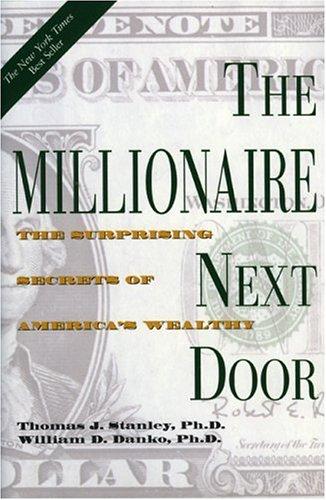
For anyone who confuses high income with wealth, or who feels behind because their lifestyle doesn't look like the we…
Buy on Amazon →
Anyone who earns enough to make discretionary spending choices but suspects their spending is not generating proporti…
Buy on Amazon →
Households in active consumer-debt distress who need a non-negotiable shared script. Not for investors already past B…
Buy on Amazon →About Daniel T Kirsch
Read more from Daniel T Kirsch and explore the full bibliography on ClearValue Books.
View Daniel T Kirsch's page →Get an email if our take on Sold My Soul for a Student Loan changes.
We re-review our picks. We'll email you if Sold My Soul for a Student Loan's ranking or review changes — no checking back.
Across the site
Featured in lists

Ready to read Sold My Soul for a Student Loan?
Buy the edition we recommend on Amazon.
Buy on Amazon →