

Spirit driven success

Curated by Brian Kim, CPA — every pick gets a plain-English summary and the key takeaways.
Brian Kim, CPA · 2.89M YouTube Subscribers →What this book actually teaches
- 01Johnson argues that poverty mindsets and debt cycles trace to broken belief systems, not just bad financial habits — the fix requires both skill and mindset work.
- 02The debt-elimination sequence starts with smallest balances for psychological momentum, then shifts to highest-interest once the behavioral pattern is established.
- 03Consistent generosity, even under financial pressure, is framed as a mechanism for disrupting scarcity thinking — not just an ethical choice but a strategic one.
- 04Character traits like punctuality, follow-through, and service orientation are presented as economically productive, not just morally good.
- 05The sales and closing scripts are the most practically differentiated content in the book, reflecting Johnson's direct sales background.
What's in this book
Spirit Driven Success by Dani Johnson argues that financial achievement and spiritual faith are not in tension — they are causally linked, and the failure to integrate them explains why most people cycle through self-improvement programs without lasting results. Johnson's core claim is that debt, poverty mindsets, and chronic underperformance trace back to broken belief systems, and that rebuilding those systems requires both practical skill-building and what she calls spirit-alignment: operating according to biblical principles of generosity, integrity, and service.
Johnson's own story is central to the book's argument. She describes going from homeless at age 21 — living out of her car, having fled an abusive relationship — to building a multi-million-dollar business within 18 months through direct sales. The book is not structured as a memoir but the arc is present throughout: she frames her financial turnaround as inseparable from a spiritual one, and uses her story as evidence that the principles she outlines are repeatable.
The practical framework centers on what Johnson calls the War on Debt: a debt-elimination system with a specific sequencing logic (smallest balance first — the psychological wins argument Dave Ramsey also makes — then avalanche once momentum is established). The savings and income-building material is presented alongside regular chapters on generosity, tithing, and what Johnson frames as the spiritual economics of giving — the argument that scarcity thinking is self-reinforcing, and that consistent generosity, even when resources are tight, disrupts that loop.
The sales and business-building chapters are heavily influenced by her direct sales background. Johnson teaches scripts, objection handling, and the psychology of closing in a way that is more granular than most personal finance books attempt. For readers with a business or sales component to their finances, these sections are the most practically differentiated content in the book.
The character-building chapters are harder to evaluate empirically. Johnson argues that traits like punctuality, follow-through, and service orientation are not just ethical goods but economically productive — that employers and clients and customers reward character consistently enough that cultivating it is a career and financial strategy. This is an argument, not a proven framework, but it is made specifically enough to be useful.
Who this is for: readers who are motivated by faith-based framing and find secular personal finance books emotionally flat or insufficient as a change mechanism. Particularly useful for readers in direct sales, network marketing, or early-stage entrepreneurship who want a book that integrates character and spiritual development with financial tactics.
Weaknesses
the faith framing is present throughout and non-negotiable — readers without a Christian orientation will find significant portions of the book to be background noise rather than actionable content. The debt-elimination framework is not original; it closely mirrors Dave Ramsey's approach without the extensive supporting infrastructure Ramsey provides. Johnson's direct sales success is treated as a generalizable model that may not translate to different economic contexts or income types. The prosperity gospel adjacent framing — spiritual alignment as a path to financial reward — raises theological questions the book does not engage seriously.
Verdict
a coherent integration of faith and finance for readers who want exactly that combination; for everyone else, the practical content exists in more secular alternatives without the theological overlay.
Read next

For anyone whose financial education was "get a good job and save" — the book is most valuable for first-time readers…
Buy on Amazon →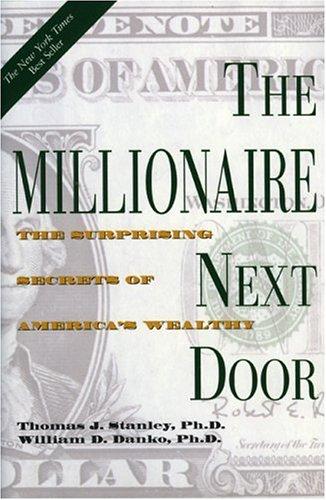
For anyone who confuses high income with wealth, or who feels behind because their lifestyle doesn't look like the we…
Buy on Amazon →
Anyone who earns enough to make discretionary spending choices but suspects their spending is not generating proporti…
Buy on Amazon →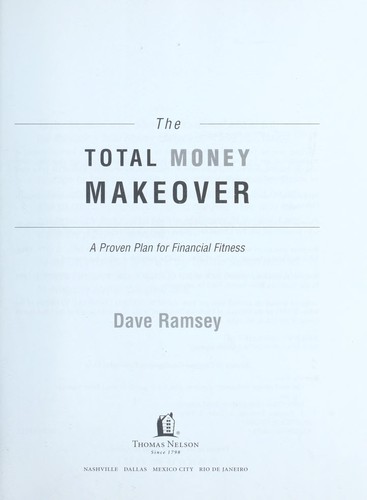
Households in active consumer-debt distress who need a non-negotiable shared script. Not for investors already past B…
Buy on Amazon →About Dani Johnson
Read more from Dani Johnson and explore the full bibliography on ClearValue Books.
View Dani Johnson's page →Get an email if our take on Spirit driven success changes.
We re-review our picks. We'll email you if Spirit driven success's ranking or review changes — no checking back.

Ready to read Spirit driven success?
Buy the edition we recommend on Amazon.
Buy on Amazon →