

Squandering aimlessly

Curated by Brian Kim, CPA — every pick gets a plain-English summary and the key takeaways.
Brian Kim, CPA · 2.89M YouTube Subscribers →What this book actually teaches
- 01Money decisions are embedded in family obligations, social identity, and community relationships — the textbook answer is often the wrong answer for the actual situation.
- 02The $50,000 windfall framing gets more honest answers than abstract financial questions; specificity unlocks candor in conversations about money.
- 03The moral vocabulary around financial failure (irresponsible, undisciplined) strips context in ways that obscure the real decision-making conditions people face.
- 04Financial humility — understanding what you actually value before optimizing for returns — is the practical takeaway Brancaccio surfaces through dozens of interviews.
- 05American financial behavior diverges from financial advisor recommendations not because of irrationality but because the rational choice depends on context the advisor doesn't have.
What's in this book
Squandering Aimlessly by David Brancaccio — the public radio journalist and Marketplace host — is structured around a road trip across America with a premise that sounds gimmicky but lands as serious reporting: Brancaccio comes into a modest unexpected windfall ($50,000 in the framing) and uses the journey to explore what Americans actually do with money and what they wish they had done differently. The book is equal parts travel narrative, oral history, and financial journalism.
Brancaccio's method is interviewing. He drives to communities defined by specific economic relationships — a casino town, a former steel mill city, a stretch of rural land where families have held property across generations — and asks the people he meets what money has done to them and for them. The question behind all the conversations is the same: what does financial choice look like from inside the life that made it, rather than from the spreadsheet view that personal finance books typically occupy?
The most valuable chapters are the ones that surface the emotional and social architecture around money that rational-choice models miss. Brancaccio documents the persistent gap between what financial advisors recommend and what people actually do — not because people are irrational, but because money decisions are embedded in family obligations, social identity, and community relationships that make the textbook answer the wrong answer for the actual situation. The casino chapter, in particular, is a sharp piece of reporting on how leisure spending and financial self-destruction can look identical from the outside and mean different things from the inside.
The windfall framing — what would you do with $50,000? — gives each conversation a concrete anchor. Brancaccio gets more honest answers by making the question specific, and the variety of responses (pay off the house, invest it, start a business, give it away, lose it at the track) creates a de facto portrait of American financial values that is more honest than survey data.
The personal finance takeaways are embedded in the narrative rather than organized as a framework. Readers who want a systematic debt-reduction plan or investing sequence will not find one. What the book offers instead is a kind of financial humility — an argument that money decisions should be evaluated in context, that the right choice depends on what you actually value and what your actual life demands, and that the moral vocabulary around financial failure (irresponsible, undisciplined) tends to strip context in ways that obscure more than they illuminate.
Who this is for: readers who are intellectually curious about the cultural and psychological dimensions of money rather than looking for a how-to framework. Strong fit for journalists, social scientists, policy thinkers, and anyone who has found standard personal finance advice emotionally uninhabited.
Weaknesses
the 2000 publication date shows — economic conditions, financial product availability, and the cultural moment have all shifted significantly. The narrative structure means key insights are buried in the middle of long reported scenes and are not extractable as action items. Readers who want to do something with money advice will leave this book with perspective but no plan. Brancaccio's own windfall decision is deliberately understated, which is a journalistic virtue but an anticlimactic ending.
Verdict
genuinely good financial journalism from a reporter who understands that money is a social phenomenon, not just a mathematical one — worth reading for perspective, not for a framework.
Read next

For anyone whose financial education was "get a good job and save" — the book is most valuable for first-time readers…
Buy on Amazon →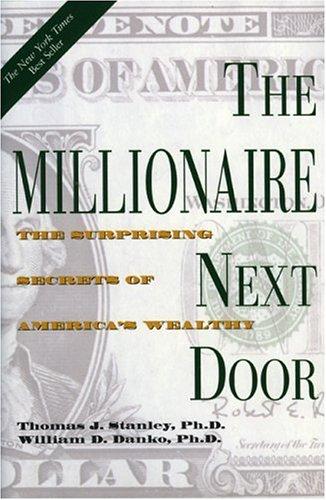
For anyone who confuses high income with wealth, or who feels behind because their lifestyle doesn't look like the we…
Buy on Amazon →
Anyone who earns enough to make discretionary spending choices but suspects their spending is not generating proporti…
Buy on Amazon →
Households in active consumer-debt distress who need a non-negotiable shared script. Not for investors already past B…
Buy on Amazon →About David Brancaccio
Read more from David Brancaccio and explore the full bibliography on ClearValue Books.
View David Brancaccio's page →Get an email if our take on Squandering aimlessly changes.
We re-review our picks. We'll email you if Squandering aimlessly's ranking or review changes — no checking back.

Ready to read Squandering aimlessly?
Buy the edition we recommend on Amazon.
Buy on Amazon →