

Sylvia Porter's Your own money

Curated by Brian Kim, CPA — every pick gets a plain-English summary and the key takeaways.
Brian Kim, CPA · 2.89M YouTube Subscribers →What this book actually teaches
- 01The 1974 Equal Credit Opportunity Act had just given women the right to credit in their own names when this book was published — Porter's credit chapters reflect genuinely new legal terrain for readers of that era.
- 02Porter treats advertised prices and listed rents as opening positions, not final numbers — young adults who don't negotiate leave money on the table in every significant transaction.
- 03Saving a percentage of income before any discretionary spending is the budgeting principle Porter returns to repeatedly, predating the 'pay yourself first' framing that became standard.
- 04The book's double-digit interest rate examples are historical artifacts, not guidance — use it for framing and decision logic, not for specific numbers.
- 05As a primary source on the state of American financial literacy education in 1981, the book has research and historical value that its practical obsolescence doesn't diminish.
What's in this book
Sylvia Porter's Your Own Money, published in 1981, is a comprehensive personal finance guide aimed at young adults — the teenagers and college-age readers who were, in Porter's framing, about to make the most consequential financial decisions of their lives without any systematic preparation for them. Porter was already the most widely read financial journalist in America when the book was published, and the guide reflects decades of translating economic complexity into language that ordinary readers could act on.
The book's structure follows the life-stage logic that organizes most personal finance curricula: earning a first paycheck, opening a bank account, managing credit for the first time, budgeting, car buying, apartment renting, early investing, and planning for education costs. Each chapter is written as a standalone unit with specific decision frameworks rather than as a chapter in a single narrative argument. The tone is direct, occasionally sharp, and consistently treats the reader as capable of understanding the relevant concepts if explained without jargon.
Porter's treatment of credit is historically interesting because the book was published just after the Fair Credit Billing Act (1974) and the Equal Credit Opportunity Act (1974) had changed the legal landscape significantly — women could obtain credit in their own names for the first time in the early 1970s, and Porter's coverage of credit rights reflects a moment when those rights were newly established and not yet widely understood. The chapters on credit card mechanics, interest calculation, and disputing billing errors have the quality of genuinely new information in 1981 rather than repetition of familiar advice.
The banking and savings chapters are dated by design — passbook savings accounts, NOW accounts, and money market funds were the landscape of 1981. The interest rates Porter uses in examples were double-digit, which was accurate for the early 1980s but creates confusion for contemporary readers about what returns to expect. The underlying concepts (shop for the best rate, understand what you're paying in fees, read the fine print before opening an account) remain valid even when the specific products and rates are historical artifacts.
The budgeting framework is envelope-adjacent — Porter organizes spending into fixed and variable categories and argues for allocating a percentage to savings before any discretionary spending. The car and apartment chapters are structured as negotiation guides as much as financial guides — Porter is explicit that the sticker price and the listed rent are opening positions, not final prices, and that young adults who don't know this leave money on the table in every significant transaction.
Who this is for: readers interested in the history of American personal finance education, or anyone curious about how advice to young adults on financial basics was framed before the internet, the 401(k), and the proliferation of personal finance media. As a practical guide for 2024, it functions better as a primary source than a reference.
Weaknesses
the 1981 publication date is the dominant caveat. The financial products, regulatory environment, interest rate assumptions, and available tools are almost entirely obsolete. There is no coverage of IRAs in a meaningful way (they had just been introduced), no 401(k) guidance, no discussion of index funds, and no treatment of tax-advantaged retirement accounts as the primary savings vehicle they became. The book is historically significant and well-written, but it cannot substitute for current personal finance guidance.
Verdict
a well-crafted snapshot of what financial literacy education looked like at a specific historical moment, and valuable reading for that reason — but not a current guide to any practical financial decision a young adult faces today.
Read next

For anyone whose financial education was "get a good job and save" — the book is most valuable for first-time readers…
Buy on Amazon →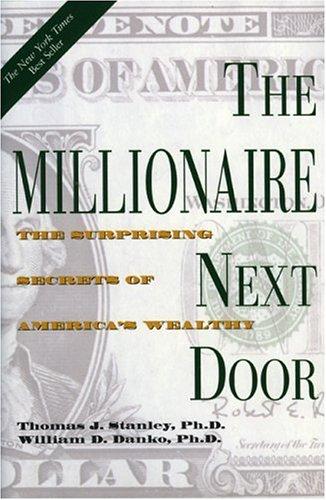
For anyone who confuses high income with wealth, or who feels behind because their lifestyle doesn't look like the we…
Buy on Amazon →
Anyone who earns enough to make discretionary spending choices but suspects their spending is not generating proporti…
Buy on Amazon →
Households in active consumer-debt distress who need a non-negotiable shared script. Not for investors already past B…
Buy on Amazon →About Sylvia Field Porter
Read more from Sylvia Field Porter and explore the full bibliography on ClearValue Books.
View Sylvia Field Porter's page →Get an email if our take on Sylvia Porter's Your own money changes.
We re-review our picks. We'll email you if Sylvia Porter's Your own money's ranking or review changes — no checking back.

Ready to read Sylvia Porter's Your own money?
Buy the edition we recommend on Amazon.
Buy on Amazon →