

The capitalist code

Curated by Brian Kim, CPA — every pick gets a plain-English summary and the key takeaways.
Brian Kim, CPA · 2.89M YouTube Subscribers →What this book actually teaches
- 01The book's primary argument is persuasive rather than instructional: Stein is trying to convince skeptical or inactive investors to start participating in equity markets through low-cost index funds, not to teach them implementation mechanics.
- 02Stein frames passive investing as a participation in capitalism's proven long-run return record — a deliberate reframing aimed at readers who have absorbed the message that markets are rigged against ordinary investors.
- 03Core investment principles mirror established passive investing consensus: broad diversification via low-cost index funds, holding through downturns, dividend reinvestment, and extending time horizons — correct in direction but covered with more depth by Bogle, Malkiel, and Bernstein.
- 04The book is explicitly short and non-technical; readers who need guidance on specific implementation questions — asset allocation, account types, withdrawal sequencing, sequence-of-returns risk — will need to supplement with more comprehensive resources.
- 05The political framing occasionally oversimplifies the legitimate structural critiques of financial markets that Stein is responding to, which may limit the book's persuasive reach with readers who hold those critiques on evidence-based rather than ideological grounds.
What's in this book
The Capitalist Code: It Can Save Your Life and You Don't Have to Be Rich to Use It (2017) by Ben Stein — economist, lawyer, actor, and longtime financial columnist — is a short, plainly argued case for passive equity investing as the correct long-term strategy for most Americans. Stein's central contention is that the capitalist system, whatever its political critics say about it, has produced sustained compound returns for equity owners over long periods, and that ordinary individuals can participate in those returns through low-cost index funds without the skills, connections, or time required to successfully pick individual securities or time the market.
The book is structured as an argument rather than an instruction manual. Stein begins with a defense of American capitalism as a system — its productive record, its wealth generation, and its ability to self-correct over long cycles — before shifting to the investment application. The defense is explicitly political in places: Stein is responding to what he sees as a rhetorical environment that discourages ordinary people from participating in equity markets by characterizing the financial system as rigged against them. His counterargument is that passive broad-market exposure captures returns that accrue to capital regardless of those critiques.
The investment content is concentrated in a few core principles: diversify broadly through low-cost index funds, hold through market downturns rather than selling into them, reinvest dividends, and extend the time horizon as far as the investor's circumstances permit. Stein draws on standard long-run equity return data and on the documented underperformance of actively managed funds relative to index benchmarks to support these principles. The argument is not novel — Bogle, Malkiel, and Bernstein cover the same ground with more depth — but Stein's tone is more accessible and his framing more conversational than those authors.
The book is short (under 200 pages) and explicitly avoids the chapter-and-verse detail of comprehensive personal finance guides. Readers looking for specific guidance on asset allocation, account types, tax-advantaged structures, or withdrawal sequencing will not find it here. Stein's goal is simpler: to convince readers who are skeptical of markets or passively avoiding them to start investing in low-cost index funds and stay invested.
The weaknesses are primarily about depth. The political framing, while accessible, occasionally oversimplifies the legitimate critiques of financial system structure that motivated it. The investment guidance, while correct in its broad strokes, does not engage with the practical implementation questions — how much to save, how to structure a 401(k), when to rebalance, how to handle sequence-of-returns risk in retirement — that most readers need answered.
For investors who are psychologically resistant to markets or persuadable but not yet acting, The Capitalist Code is a readable argument for participation. For those already convinced of passive investing's merits, it adds little beyond Bogle and Malkiel.
Read next

For anyone whose financial education was "get a good job and save" — the book is most valuable for first-time readers…
Buy on Amazon →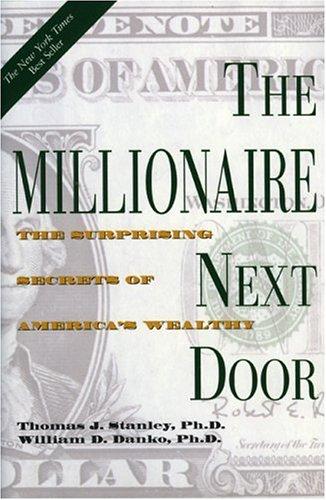
For anyone who confuses high income with wealth, or who feels behind because their lifestyle doesn't look like the we…
Buy on Amazon →
Anyone who earns enough to make discretionary spending choices but suspects their spending is not generating proporti…
Buy on Amazon →
Households in active consumer-debt distress who need a non-negotiable shared script. Not for investors already past B…
Buy on Amazon →About Stein Benjamin
Read more from Stein Benjamin and explore the full bibliography on ClearValue Books.
View Stein Benjamin's page →Get an email if our take on The capitalist code changes.
We re-review our picks. We'll email you if The capitalist code's ranking or review changes — no checking back.
Across the site
Featured in lists
- Best Dividend Investing Books (2026) (#4 pick)
- The Best Investing Books of the 2020s (#4 pick)

Ready to read The capitalist code?
Buy the edition we recommend on Amazon.
Buy on Amazon →