

The Courage to Be Rich

Curated by Brian Kim, CPA — every pick gets a plain-English summary and the key takeaways.
Brian Kim, CPA · 2.89M YouTube Subscribers →What this book actually teaches
- 01Orman's central argument is that fear, shame, and limiting beliefs are the primary barriers to financial security — practical knowledge alone does not change behavior without addressing these psychological roots.
- 02The estate planning content is more developed than most books at this level, framed as an act of self-respect and dignity rather than a legal formality, covering wills, trusts, and beneficiary designations in accessible terms.
- 03The book was an early clear popular explanation of the Roth IRA's advantages over traditional IRAs, written when the account type was still relatively new to most readers.
- 04The investment philosophy is conservative and appropriate for beginners — low-cost mutual funds in tax-advantaged accounts — without advocacy for market timing or speculative strategies.
- 05Specific financial figures including contribution limits and tax thresholds reflect 1999 law and should not be used as current guidance; the behavioral framework is more durable than the numerical specifics.
What's in this book
The Courage to Be Rich (1999) by Suze Orman is a personal finance book that argues the primary obstacles to financial security are psychological rather than mathematical. Orman's central thesis is that most people's relationship with money is shaped by fear, shame, and beliefs about what they deserve — and that changing financial outcomes requires confronting those internal barriers before addressing the mechanics of saving, investing, or debt reduction. The book is structured around the concept of financial courage: the willingness to look honestly at one's money situation, have difficult conversations with partners and family about finances, and make decisions that feel uncomfortable in the short term in service of long-term security.
Orman covers a range of practical financial topics through this psychological lens: building an emergency fund, evaluating whether to carry debt or invest, understanding basic investment vehicles including mutual funds and Roth IRAs, and the mechanics of estate planning including wills, trusts, and beneficiary designations. The estate planning content is more detailed than what most personal finance books at this level provide, and Orman treats it as a dignity and self-respect issue — not just a legal formality — connecting it to the book's broader argument about valuing one's own financial life seriously enough to plan for it.
The advice on debt is blunt: Orman is not a proponent of carrying consumer debt under any circumstances. Her framing of high-interest credit card balances as a form of financial self-sabotage is consistent throughout the book. The investment philosophy is conservative and broadly accessible — she recommends low-cost mutual funds held in tax-advantaged accounts and does not advocate for market timing or speculative strategies.
The Roth IRA discussion reflects the account type's relative newness in 1999 (the Roth was created by the Taxpayer Relief Act of 1997), and Orman was among the early popular finance communicators to explain its advantages clearly — particularly the tax-free growth and flexibility around withdrawals that distinguishes it from traditional IRAs.
The weaknesses are partly a function of the genre and the period. The psychological framing, while genuinely useful for readers who are stuck due to fear or avoidance, can feel repetitive by the midpoint of the book. The investment content is introductory and has been covered more thoroughly and with more current data in subsequent works. Some specific numbers — contribution limits, tax thresholds — are dated and should not be used as current guidance without verification. Orman's voice is direct and occasionally preachy, which readers either respond to or find grating depending on their own tolerance for prescriptive personal finance advice.
For readers who recognize that their financial problems are as much behavioral as mechanical — particularly those who avoid looking at account statements, fight with partners about money, or feel shame around financial mistakes — the psychological framing offers a useful entry point. Readers who want primarily technical guidance will find more current and comprehensive options elsewhere.
Read next

For anyone whose financial education was "get a good job and save" — the book is most valuable for first-time readers…
Buy on Amazon →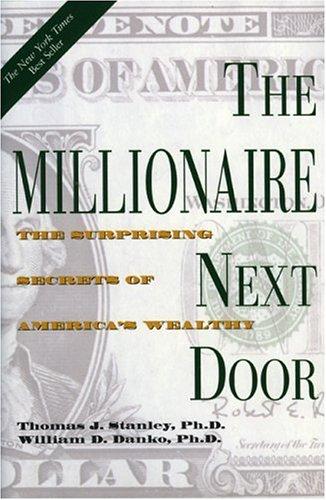
For anyone who confuses high income with wealth, or who feels behind because their lifestyle doesn't look like the we…
Buy on Amazon →
Anyone who earns enough to make discretionary spending choices but suspects their spending is not generating proporti…
Buy on Amazon →
Households in active consumer-debt distress who need a non-negotiable shared script. Not for investors already past B…
Buy on Amazon →About Suze Orman
Read more from Suze Orman and explore the full bibliography on ClearValue Books.
View Suze Orman's page →Get an email if our take on The Courage to Be Rich changes.
We re-review our picks. We'll email you if The Courage to Be Rich's ranking or review changes — no checking back.

Ready to read The Courage to Be Rich?
Buy the edition we recommend on Amazon.
Buy on Amazon →