

The death of the banker

Curated by Brian Kim, CPA — every pick gets a plain-English summary and the key takeaways.
Brian Kim, CPA · 2.89M YouTube Subscribers →What this book actually teaches
- 01The book's central argument is that the great private banking dynasties — Morgan, Rothschild, Warburg — exercised personal control over corporate capital allocation that created relationship accountability, and that securitization replaced this model with a transaction model where underwriters no longer held the paper they issued.
- 02The democratization of investment through mutual funds and the 401(k) system transferred corporate ownership to diffuse institutional shareholders whose aggregate ownership was large but whose governance influence was structurally weak — a shift Chernow identifies as a root cause of the agency problems that would define corporate governance debates.
- 03Chernow's banker profiles — Morgan's personal credit assessment style, the Rothschilds' information network as competitive advantage — are analytically grounded rather than purely biographical, connecting individual behavior to broader structural incentives.
- 04The 1997 publication date means the book lacks the 2008 financial crisis as evidence for its thesis about securitization's displacement of relationship accountability — a gap that makes the argument feel incomplete given how dramatically that crisis confirmed and complicated his claims.
- 05At under 150 pages, the essay is a provocation and orientation rather than a complete argument; it works best read alongside Chernow's full-length biographies for institutional and biographical depth.
What's in this book
The Death of the Banker (1997) by Ron Chernow — biographer of Ulysses Grant, Alexander Hamilton, and John D. Rockefeller, and winner of the Pulitzer Prize — is a short historical essay arguing that the dominant form of financial intermediation in Western economies had fundamentally changed over the course of the twentieth century, and that the change carried significant consequences for how capital markets would function going forward. The book, originally delivered as a series of lectures, traces the transition from a world in which powerful individual bankers and banking families personally controlled capital allocation — J.P. Morgan, the Rothschilds, the Warburgs — to a world in which that function had been displaced by institutional investors, public capital markets, and the securitization of financial assets that once required banking relationships to access.
Chernow's central historical argument is that the great private banking dynasties of the nineteenth and early twentieth centuries — Morgan, Kuhn Loeb, Goldman Sachs in its partnership form, the European banking families — exercised a degree of personal control over corporate finance that gave them both extraordinary economic power and genuine accountability to the relationships they built. A company that needed capital had to convince a banker who would stake personal reputation on the recommendation. The securitization revolution that accelerated in the 1980s replaced this relationship model with a transaction model: underwriters no longer held the paper they issued, and the discipline of relationship banking gave way to the fees-and-volume logic of capital market intermediation.
The book's second historical arc covers the democratization of investment — the rise of mutual funds, the 401(k) system, and the transformation of millions of ordinary Americans into capital market participants — and what this shift meant for corporate governance. Power moved from private bankers who could call a CEO personally to diffuse institutional shareholders whose governance influence was structurally weak despite their aggregate ownership stakes. Chernow identifies this diffusion as a key driver of the agency problem that would define corporate governance debates for the next two decades.
The essay's strengths are characteristic of Chernow's work: precise historical narrative, clear identification of the mechanisms driving structural change, and the ability to connect specific biographical and institutional detail to broader economic shifts. The banker profiles — Morgan's personal style of credit assessment, the Rothschilds' information network as a competitive advantage — are vivid and analytically grounded.
The weaknesses are inherent to the format. At under 150 pages, the essay is more a provocation than a complete argument; the historical threads are suggestive rather than rigorously supported. The 1997 publication date precedes the 2008 financial crisis, which would provide both dramatic confirmation and important complications of Chernow's thesis about securitization's displacement of relationship accountability. The book also understates the degree to which the very institutional investors he identifies as displacing the bankers would themselves develop governance tools in subsequent decades.
For readers interested in the historical sociology of financial intermediation — how capital allocation moved from personal relationships to public markets over a century — this is a characteristically well-written Chernow essay, best read alongside his full-length biographies for context rather than as a standalone treatment of modern finance.
Read next

For anyone whose financial education was "get a good job and save" — the book is most valuable for first-time readers…
Buy on Amazon →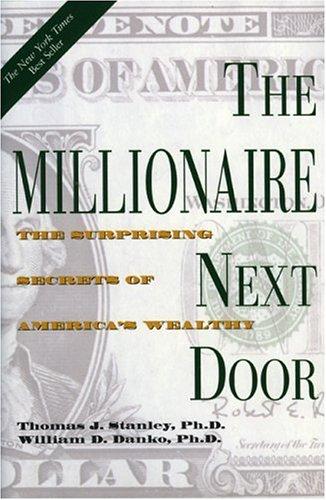
For anyone who confuses high income with wealth, or who feels behind because their lifestyle doesn't look like the we…
Buy on Amazon →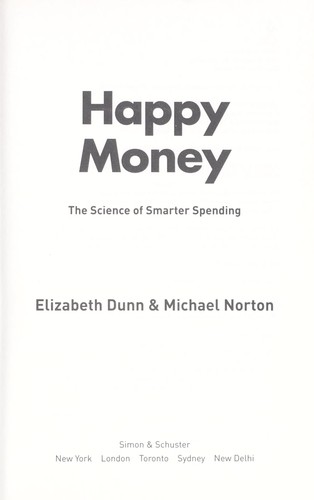
Anyone who earns enough to make discretionary spending choices but suspects their spending is not generating proporti…
Buy on Amazon →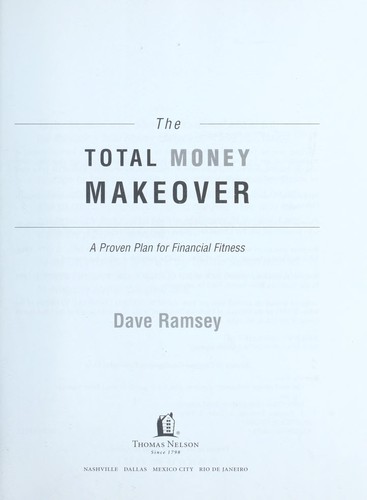
Households in active consumer-debt distress who need a non-negotiable shared script. Not for investors already past B…
Buy on Amazon →About Ron Chernow
Read more from Ron Chernow and explore the full bibliography on ClearValue Books.
View Ron Chernow's page →Get an email if our take on The death of the banker changes.
We re-review our picks. We'll email you if The death of the banker's ranking or review changes — no checking back.

Ready to read The death of the banker?
Buy the edition we recommend on Amazon.
Buy on Amazon →