

The feel rich project

Curated by Brian Kim, CPA — every pick gets a plain-English summary and the key takeaways.
Brian Kim, CPA · 2.89M YouTube Subscribers →What this book actually teaches
- 01The book's central argument is that most financial dissatisfaction comes not from mismanagement but from pursuing goals that belong to someone else — parents, peers, culture — rather than goals that reflect genuinely examined personal values.
- 02Kay's exercises push beyond generic values statements to identify the specific feelings, relationships, and freedoms money is meant to enable — and then test whether current financial behavior is actually moving toward them.
- 03The external influence chapter examines parental money messages, peer comparison pressure, and media wealth portrayals as financial programming people absorbed rather than chose — identifying which programs align with actual values is a prerequisite to changing financial behavior.
- 04Risk tolerance is framed as dynamic and context-dependent, not a static personality trait — the same person may have meaningfully different risk tolerance across different financial goals, suggesting a single portfolio risk profile is an inadequate representation.
- 05The book diagnoses the values-financial misalignment problem clearly but is short on specific financial planning mechanics — readers who need savings rate guidance, allocation strategies, or retirement projections will need additional resources alongside it.
What's in this book
The Feel Rich Project by Michael F. Kay, published in 2016, argues that most people pursue financial goals that belong to someone else — the life their parents expected, the wealth their peers display, the security their fears demand — and that this misalignment between genuine values and financial behavior is the root cause of persistent financial dissatisfaction, regardless of income or net worth. Kay, a fee-only financial planner, frames the book as an exercise in values clarification first and financial planning second, on the grounds that a technically correct financial plan built around the wrong goals will not produce the sense of financial wellbeing it promises.
The book's opening section is devoted to what Kay calls "authentic wealth" — distinguishing between money itself and the feelings and experiences people actually want money to provide. Kay uses structured exercises throughout the book to help readers articulate what they genuinely value: not "financial security" as an abstraction, but the specific feelings, relationships, activities, and freedoms that money might enable or protect. The exercises are more specific than the journaling prompts most values-based financial books include — Kay pushes readers to identify not just what they want but why they want it, and to test whether their current financial behavior is actually moving them toward it.
The external influence chapter is among the book's most practically valuable sections. Kay systematically examines the sources of financial beliefs and goals that people carry without examining: parental messages about money (often contradictory — money is security; money corrupts; there's never enough; spending is pleasure), cultural and peer comparison pressure, media portrayals of wealth, and workplace norms around spending and lifestyle. His argument is that most people are operating on financial programming they absorbed rather than chose, and that the first step in building a financial life that feels satisfying is identifying which of those programs actually align with their values and which are running in the background without examination.
The financial planning section applies the values framework to concrete decisions. Kay covers goal-setting, spending alignment, and investment philosophy at a level appropriate for a general audience rather than as a technical manual. His treatment of risk tolerance is notable: rather than framing risk tolerance as a static personality trait, he argues it is dynamic and context-dependent — the same person will have different risk tolerance relative to money earmarked for their child's education versus money earmarked for discretionary spending in retirement. The implication for investment allocation is that a single portfolio risk profile may be an inadequate representation of what a person actually needs.
The life transitions chapter extends this to major financial events — job change, divorce, inheritance, retirement — arguing that each transition disrupts the values-financial alignment that may have existed before it and requires re-examination rather than continuity. This is a useful frame for readers who find themselves financially comfortable but dissatisfied at a life transition point.
This is for readers who are financially stable enough that basic money management is not the primary challenge, but who find that financial comfort has not produced the sense of security or satisfaction they expected — particularly those approaching or in mid-career, and those navigating major life transitions.
The weaknesses are depth and implementation. The book is long on values clarification and framework and short on the specific financial planning mechanics that would help readers translate clarified values into concrete financial plans. Readers who need help with savings rates, investment allocation, debt reduction, or retirement projections will need additional resources — this book diagnoses the misalignment problem more than it solves the financial mechanics. The self-help register is genuine but the exercises require sustained engagement that some readers will not maintain through the full book.
For readers who have enough financial stability that the problem is no longer "how do I manage money" but "why doesn't managing money well make me feel the way I expected," The Feel Rich Project offers a structured examination of the values gap that most financial planning processes skip entirely.
Read next

For anyone whose financial education was "get a good job and save" — the book is most valuable for first-time readers…
Buy on Amazon →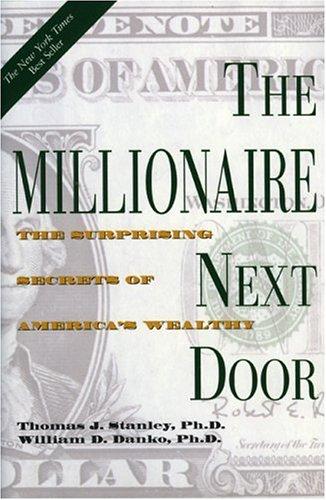
For anyone who confuses high income with wealth, or who feels behind because their lifestyle doesn't look like the we…
Buy on Amazon →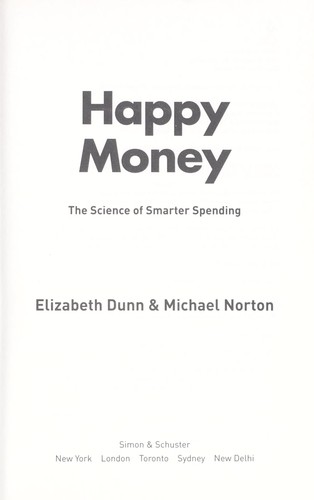
Anyone who earns enough to make discretionary spending choices but suspects their spending is not generating proporti…
Buy on Amazon →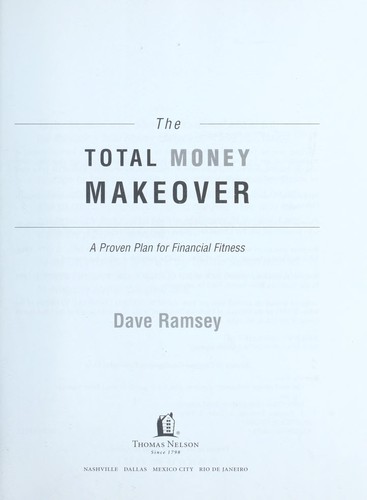
Households in active consumer-debt distress who need a non-negotiable shared script. Not for investors already past B…
Buy on Amazon →About Michael F Kay
Read more from Michael F Kay and explore the full bibliography on ClearValue Books.
View Michael F Kay's page →Get an email if our take on The feel rich project changes.
We re-review our picks. We'll email you if The feel rich project's ranking or review changes — no checking back.

Ready to read The feel rich project?
Buy the edition we recommend on Amazon.
Buy on Amazon →