

The Financial Diaries: How American Families Cope in a World of Uncertainty

Curated by Brian Kim, CPA — every pick gets a plain-English summary and the key takeaways.
Brian Kim, CPA · 2.89M YouTube Subscribers →What this book actually teaches
- 01Income volatility — not just low income — is the defining financial stress for a large segment of American households, and timing mismatch between irregular income and fixed bills creates acute distress even at reasonable annual incomes.
- 02Most financial products are designed for salaried professionals with predictable cash flows; this design actively disadvantages households with variable income.
- 03Informal financial systems — family lending, layaway, prepaid cards — are sophisticated adaptations to volatility that formal banking products were not built to accommodate.
- 04Financial health is distinct from net worth or income level: a household can earn an adequate annual income and still experience severe financial stress if the income arrives unpredictably.
- 05Earned income smoothing — products that let workers access wages as they are earned rather than on a fixed pay cycle — addresses the timing mismatch problem more directly than most financial literacy education.
What's in this book
The Financial Diaries by Jonathan Morduch and Rachel Schneider is built on a simple but underused methodology: rather than surveying how American households manage money in the abstract, the authors tracked 235 low- and moderate-income families in fine-grained financial detail for a full year, capturing every dollar that came in and went out. The result is one of the most honest accounts of how ordinary American financial lives actually work, as opposed to how personal finance advice assumes they work.
The book's central argument is that income volatility — not just low income — is the defining financial stress for a large segment of American households. The families in the study were not living paycheck to paycheck in the way that phrase is usually understood (steady but insufficient income against steady bills). Many of them earned reasonable annual incomes that, spread across twelve months, looked workable on paper. The problem was that the income arrived unpredictably: high months followed by near-zero months, seasonal work cycles, irregular freelance or gig income, one-time windfalls and sudden expenses. The bills, by contrast, arrived on fixed schedules. The mismatch between irregular income and regular obligations is the structural stress the book documents in granular detail.
Morduch and Schneider introduce the concept of the "financial health" framework as distinct from net worth or income level. A household can have an annual income that looks adequate and still experience acute financial distress if income volatility is high and financial buffers are thin. This reframing has policy implications: the conventional poverty narrative focused on insufficient total resources misses the distinct problem of timing mismatch, which affects households well above the poverty line.
The participant profiles are the book's strongest material. The authors give extended attention to specific families — a cleaning worker with variable hours, a truck driver whose income swung sharply by season, a family running a small food business — and trace how each household improvised financial tools (informal lending from family, layaway, prepaid cards) to smooth income volatility that formal financial products were not designed to address. The informal financial systems Americans operate outside the banking sector emerge as a significant and largely undocumented topic.
The policy chapters argue that most financial products are designed for the financial lives of salaried professionals — predictable monthly income, predictable monthly bills, the ability to commit to automatic contributions and withdrawals — and that this product design effectively excludes or penalizes the volatile-income majority. The authors propose specific product design changes and argue that treating income smoothing as a core financial product function (rather than a nice-to-have feature) would be more useful for this population than most financial literacy education.
Who this is for: policy thinkers, financial product designers, researchers, and anyone who has wondered why financial advice that works for salaried households seems to produce poor outcomes for households with irregular income. Also genuinely useful for financial advisors whose clients include gig workers, seasonal workers, or self-employed individuals.
Weaknesses
the 2017 publication date precedes the COVID-19 pandemic and the subsequent normalization of gig work and remote freelancing, which accelerated the income-volatility trends the book describes. The specific product recommendations have dated unevenly — some have been partially implemented (earned wage access products) while others remain unbuilt. The policy framing is more developed than the individual-level advice, which limits practical takeaways for readers looking to manage their own volatile income rather than fix the system.
Verdict
the most empirically rigorous account of how American households with volatile income actually manage money, and essential reading for anyone who works on financial products, policy, or advice for populations outside the salaried professional norm.
Read next

For anyone whose financial education was "get a good job and save" — the book is most valuable for first-time readers…
Buy on Amazon →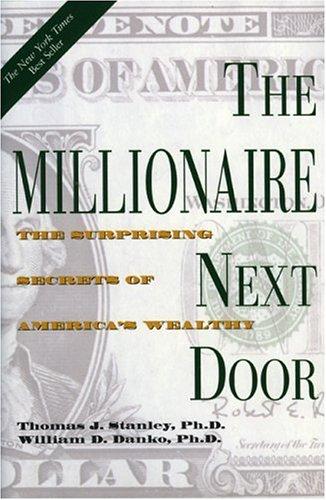
For anyone who confuses high income with wealth, or who feels behind because their lifestyle doesn't look like the we…
Buy on Amazon →
Anyone who earns enough to make discretionary spending choices but suspects their spending is not generating proporti…
Buy on Amazon →
Households in active consumer-debt distress who need a non-negotiable shared script. Not for investors already past B…
Buy on Amazon →About Jonathan Morduch
Read more from Jonathan Morduch and explore the full bibliography on ClearValue Books.
View Jonathan Morduch's page →Get an email if our take on The Financial Diaries: How American Families Cope in a World of Uncertainty changes.
We re-review our picks. We'll email you if The Financial Diaries: How American Families Cope in a World of Uncertainty's ranking or review changes — no checking back.

Ready to read The Financial Diaries: How American Families Cope in a World of Uncertainty?
Buy the edition we recommend on Amazon.
Buy on Amazon →