

The laws of money, the lessons of life

Curated by Brian Kim, CPA — every pick gets a plain-English summary and the key takeaways.
Brian Kim, CPA · 2.89M YouTube Subscribers →What this book actually teaches
- 01Orman structures the book around five laws of money — principles for thinking about financial decisions correctly — rather than tactical investment advice, arguing that most financial mistakes originate in unexamined emotional patterns rather than lack of information.
- 02The case study format grounds each law in recognizable real-world scenarios — investment losses, insurance avoidance, estate planning delays — making abstract principles easier to recognize and apply to analogous personal situations.
- 03The chapter on estate planning and insurance is particularly effective because emotional avoidance in those areas produces significant financial harm that technical knowledge alone does not prevent.
- 04The five-laws framework is more useful for diagnosing past financial mistakes than as a precise forward-looking decision tool; readers who need specific product guidance or investment allocation frameworks will need to supplement with technical resources.
- 05Specific product recommendations and insurance guidance reflect 2003 conditions and should be verified against current options before acting on them.
What's in this book
The Laws of Money, the Lessons of Life (2003) by Suze Orman builds on the framework she established in earlier books — The 9 Steps to Financial Freedom and The Courage to Be Rich — to argue that financial decisions are inseparable from the psychological and emotional patterns that drive them. Orman's central thesis is that money does not behave according to cold logic alone; people make financially self-defeating choices because they have not examined the beliefs, fears, and emotional attachments they bring to financial decisions. The book proposes five laws — structured as principles for thinking about money correctly — that she argues will realign behavior with actual financial interest.
The five laws Orman presents are: (1) Truth creates money and lies destroy it; (2) Look at what you have, not at what you've lost; (3) Do what is right for you before you do what is right for your money; (4) Invest in the known before the unknown; and (5) Always remember money has no power of its own. These are not investment strategies in the conventional sense — they are operating principles for financial decision-making. Orman uses each law as a lens through which she examines specific situations: investment losses, insurance choices, estate planning, real estate decisions, and the financial dynamics of relationships.
The case study format is one of the book's practical strengths. Each chapter uses real-scenario examples to illustrate how the law applies — and, critically, how violating it produces outcomes people later regret. This approach makes abstract principles concrete and helps readers recognize analogous situations in their own financial lives. Orman is particularly effective in the chapters on estate planning and insurance, areas where emotional avoidance frequently produces serious financial harm.
Orman's background as a financial advisor and her focus on the emotional dimensions of money decisions distinguish this book from purely technical personal finance writing. The combination is both the book's strength and its limitation. Readers who have already internalized disciplined financial behavior and are looking for analytical frameworks for investment allocation will find the content too psychological in orientation. The laws themselves, while structurally sound, are not precise enough to resolve specific financial decisions without considerable additional judgment.
The book's weaknesses include a reliance on Orman's signature authoritative tone, which occasionally shuts down rather than opens up the complexity of the financial situations she addresses. Some of the specific product recommendations and insurance guidance reflect 2003 conditions and should be verified against current options. The five-laws framework is also more coherent as a way of diagnosing past financial mistakes than as a forward-looking decision-making tool.
For readers who recognize that their financial outcomes are being shaped by emotional patterns they have not fully examined — overspending, avoidance of estate planning, reluctance to hold investments through downturns — The Laws of Money, the Lessons of Life provides a structured framework for understanding why those patterns persist and what reorientation looks like. It is complementary to, rather than a substitute for, technical personal finance guidance.
Read next

For anyone whose financial education was "get a good job and save" — the book is most valuable for first-time readers…
Buy on Amazon →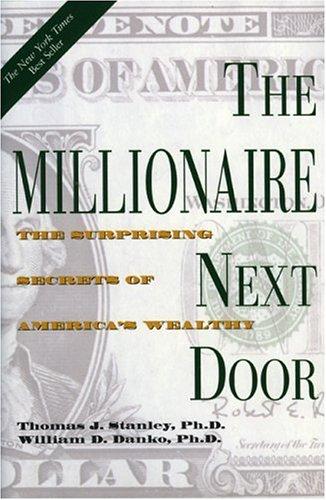
For anyone who confuses high income with wealth, or who feels behind because their lifestyle doesn't look like the we…
Buy on Amazon →
Anyone who earns enough to make discretionary spending choices but suspects their spending is not generating proporti…
Buy on Amazon →
Households in active consumer-debt distress who need a non-negotiable shared script. Not for investors already past B…
Buy on Amazon →About Suze Orman
Read more from Suze Orman and explore the full bibliography on ClearValue Books.
View Suze Orman's page →Get an email if our take on The laws of money, the lessons of life changes.
We re-review our picks. We'll email you if The laws of money, the lessons of life's ranking or review changes — no checking back.

Ready to read The laws of money, the lessons of life?
Buy the edition we recommend on Amazon.
Buy on Amazon →