

The little book of the shrinking dollar

Curated by Brian Kim, CPA — every pick gets a plain-English summary and the key takeaways.
Brian Kim, CPA · 2.89M YouTube Subscribers →What this book actually teaches
- 01The dollar's reserve currency status rests on two pillars — petrodollar recycling and U.S. economic dominance — that Wiggin argues are actively eroding, not permanently fixed.
- 02The 1971 Nixon shock removed the gold exchange backing from the dollar and made reserve status dependent on geopolitical relationships rather than commodity anchors.
- 03Hard assets — gold, silver, commodity-producing equities — are the portfolio implementation the book recommends for investors who accept the dollar-debasement thesis.
- 04Central banks in BRIC nations were visibly reducing dollar reserve concentration in the years surrounding the book's publication, which is documented as evidence rather than inference.
- 05The contrarian macro framework has a long time horizon; many near-term predictions from 2012 have not materialized, which matters for evaluating how actionable the investment advice is today.
What's in this book
The Little Book of the Shrinking Dollar by Addison Wiggin — co-author of Financial Reckoning Day and a longtime collaborator with Bill Bonner at Agora Financial — argues that the U.S. dollar's status as the world's reserve currency is not a permanent feature of the global financial system but an increasingly fragile arrangement that is actively being undermined by federal spending, Federal Reserve monetary policy, and the rising economic power of competing nations. Published in 2012 in the aftermath of the financial crisis and multiple rounds of quantitative easing, the book belongs to the contrarian macro-investing tradition that views dollar debasement as the central financial risk of the era.
Wiggin's core argument runs as follows: the Bretton Woods agreement of 1944 established the dollar as the global reserve currency, backed by a fixed gold exchange rate. When Nixon closed the gold window in 1971, the dollar became a fiat currency sustained not by commodity backing but by petrodollar recycling agreements and the military-economic dominance of the United States. Wiggin argues that both pillars are eroding — that OPEC pricing power has shifted, that U.S. fiscal deficits are structurally unsustainable, and that China, Russia, and emerging market economies are actively building mechanisms to reduce dollar dependency in global trade.
The investment implications Wiggin draws from this thesis center on hard assets: gold and silver as direct hedges against dollar debasement, commodity-producing equities as indirect plays on the same thesis, and foreign currency exposure as a diversification away from single-currency concentration. The book is explicitly a retail investor guide to implementing these positions, not just a macro argument.
The historical material — covering the Bretton Woods conference, the Nixon shock, the petrodollar system, and the evolution of U.S. monetary policy through multiple Fed chairs — is the most educational content in the book. Wiggin traces how the dollar accumulated its reserve status and argues that the structural supports that created that status are not self-sustaining. The chapter on the BRIC nations and their reserve accumulation patterns documents real shifts in central bank behavior that were occurring as the book was written.
Who this is for: retail investors who are concerned about inflation, dollar debasement, and U.S. fiscal trajectory, and who want a lay-accessible framework for understanding how reserve currency dynamics affect portfolio construction. Particularly relevant for readers who have exposure primarily to U.S. dollar-denominated assets and want to understand the argument for diversifying internationally.
Weaknesses
the book was written at a specific moment of maximum macro anxiety (2012, post-financial crisis, peak QE fears), and many of the imminent collapse predictions embedded in the framing have not materialized as of this writing. The dollar has remained the dominant reserve currency. Gold has not replaced it. The predicted hyperinflationary dynamic has not occurred. The book's thesis is long-duration and may ultimately prove correct, but the time horizon uncertainty makes the investment advice difficult to act on with confidence. Wiggin's publishing context — Agora Financial, which produces investment newsletters — means the book functions partly as marketing for a broader content ecosystem, which colors the product recommendations.
Verdict
a readable introduction to the reserve currency argument for dollar skeptics, most useful as context for understanding contrarian macro investing rather than as an actionable portfolio guide — particularly given that the most alarming near-term predictions have not played out in the decade-plus since publication.
Read next

For anyone whose financial education was "get a good job and save" — the book is most valuable for first-time readers…
Buy on Amazon →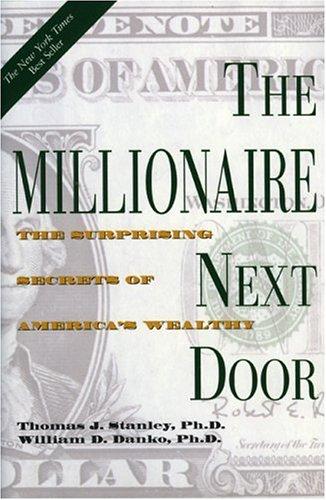
For anyone who confuses high income with wealth, or who feels behind because their lifestyle doesn't look like the we…
Buy on Amazon →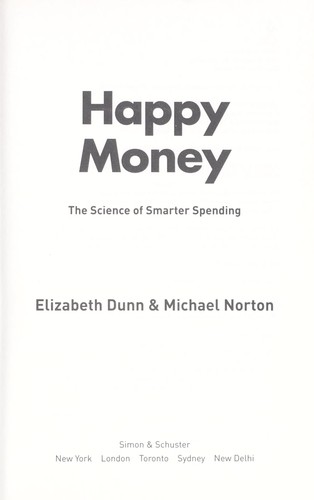
Anyone who earns enough to make discretionary spending choices but suspects their spending is not generating proporti…
Buy on Amazon →
Households in active consumer-debt distress who need a non-negotiable shared script. Not for investors already past B…
Buy on Amazon →About Addison Wiggin
Read more from Addison Wiggin and explore the full bibliography on ClearValue Books.
View Addison Wiggin's page →Get an email if our take on The little book of the shrinking dollar changes.
We re-review our picks. We'll email you if The little book of the shrinking dollar's ranking or review changes — no checking back.

Ready to read The little book of the shrinking dollar?
Buy the edition we recommend on Amazon.
Buy on Amazon →