

The Money book of personal finance

Curated by Brian Kim, CPA — every pick gets a plain-English summary and the key takeaways.
Brian Kim, CPA · 2.89M YouTube Subscribers →What this book actually teaches
- 01The book's organizing premise is that personal finance is a system of interconnected decisions rather than isolated domains — and Eisenberg explicitly connects how choices about debt, insurance, savings, and tax interact, rather than treating each as a standalone subject.
- 02The insurance chapters are unusually thorough for a general personal finance guide — health, life, disability, homeowners, and auto coverage are addressed with specific gap analysis between minimum coverage and adequate coverage, which most books in this category skip.
- 03The asset allocation treatment is more nuanced than typical popular personal finance guides: time horizon, risk tolerance, and tax treatment are discussed together in a way that supports actual portfolio decision-making rather than endorsing generic diversification principles.
- 04The tax planning section covers how savings, investment, and estate planning decisions interact with tax outcomes — this cross-domain integration is the book's most distinctive contribution relative to single-topic personal finance guides.
- 05The 1996 publication date dates the specific figures and product recommendations substantially; the index fund revolution and behavioral finance research that have reshaped mainstream investment advice since then are absent, and contribution limits, tax brackets, and insurance cost ranges all require verification against current sources.
What's in this book
The Money Book of Personal Finance (1996) by Richard Eisenberg, senior editor at Money magazine, is a comprehensive personal finance reference that grew out of Money's editorial coverage. The book's organizing argument is that personal finance is not a single subject but a sequence of decisions — about income, spending, debt, insurance, savings, investing, taxes, retirement, and estate planning — and that most people manage each of these in isolation rather than as an integrated system. Eisenberg's approach is to present each domain with enough depth to be actionable while connecting decisions across domains so readers understand how choices in one area affect outcomes in another.
The book's coverage is genuinely comprehensive. Early chapters address cash flow management: the mechanics of budgeting, the structure of a useful emergency fund, and the specific behaviors (automatic transfers, target-date savings accounts) that make savings goals more likely to stick. The debt management section covers credit card debt, auto loans, and mortgage management with specific payoff strategies and cost comparison frameworks. The insurance chapters — health, life, disability, homeowners, auto — are unusually thorough for a general personal finance guide and address the gap between minimum coverage and adequate coverage with specificity that most books avoid.
The investment chapters cover the full spectrum from savings products through stocks, bonds, mutual funds, and retirement accounts. Eisenberg's treatment of asset allocation is more nuanced than the typical popular personal finance guide: he discusses the interaction between time horizon, risk tolerance, and tax treatment in a way that supports actual portfolio decision-making rather than simply endorsing diversification as a general principle. The 401(k) and IRA chapters are detailed on the mechanics of contribution limits, investment options, and rollover procedures.
The tax planning section covers the interaction between savings, investment, and tax decisions in a structured way — addressing how tax-advantaged account contributions affect current tax liability, how investment gains are taxed, and how estate planning documents interact with tax outcomes. This integration across domains is the book's most distinctive contribution relative to single-topic personal finance guides.
The weaknesses are primarily about the 1996 publication date and breadth-versus-depth trade-offs inherent to comprehensive references. The specific contribution limits, tax brackets, insurance cost ranges, and mortgage rates are all dated and require verification against current sources. More substantively, the investment landscape has changed: index funds are more accessible and more central to mainstream investment advice than they were in 1996, and the behavioral finance research that has reshaped investment guidance since then is entirely absent. The comprehensive format means that readers with specific questions about any individual topic will find more depth in a dedicated guide.
For readers who want a single-volume reference across the full scope of personal finance decisions — and who are willing to verify specific figures against current sources — The Money Book of Personal Finance provides unusually thorough coverage for a popular guide. The integrated framework connecting decisions across domains remains useful even where specific product details have changed.
Read next

For anyone whose financial education was "get a good job and save" — the book is most valuable for first-time readers…
Buy on Amazon →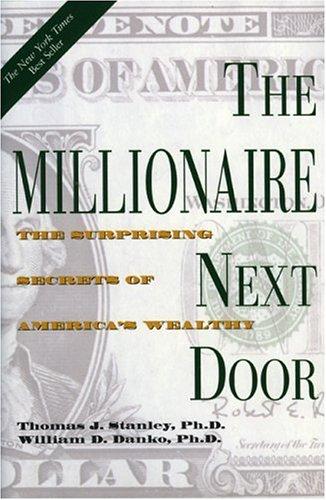
For anyone who confuses high income with wealth, or who feels behind because their lifestyle doesn't look like the we…
Buy on Amazon →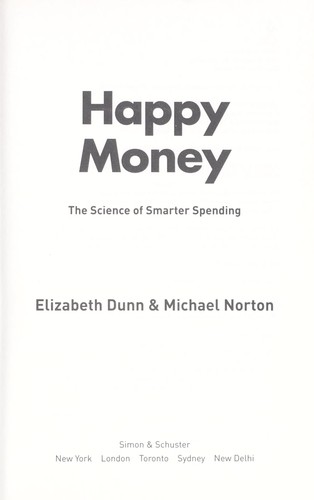
Anyone who earns enough to make discretionary spending choices but suspects their spending is not generating proporti…
Buy on Amazon →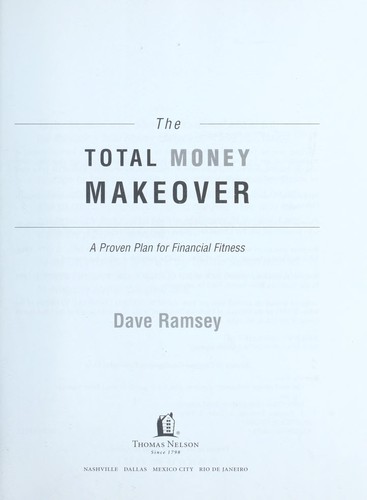
Households in active consumer-debt distress who need a non-negotiable shared script. Not for investors already past B…
Buy on Amazon →About Richard Eisenberg
Read more from Richard Eisenberg and explore the full bibliography on ClearValue Books.
View Richard Eisenberg's page →Get an email if our take on The Money book of personal finance changes.
We re-review our picks. We'll email you if The Money book of personal finance's ranking or review changes — no checking back.

Ready to read The Money book of personal finance?
Buy the edition we recommend on Amazon.
Buy on Amazon →