

The Money Class

Curated by Brian Kim, CPA — every pick gets a plain-English summary and the key takeaways.
Brian Kim, CPA · 2.89M YouTube Subscribers →What this book actually teaches
- 01Recovery from financial disruption requires replacing a broken belief system — not just waiting for asset values to recover — and starts with an accurate accounting of what you actually owe, own, and earn.
- 02The decision to walk away from an underwater mortgage is not purely mathematical; credit consequences, moral considerations, and practical servicer negotiation realities all factor into the analysis.
- 03The Social Security claiming decision is a break-even calculation: early claiming provides more total checks, but delayed claiming provides larger checks that eventually exceed the early-claiming total around age 78-80.
- 04Financial obligations to adult children are often felt rather than chosen; Orman provides a framework for distinguishing what parents actually owe from what social pressure implies they should provide.
- 05The 2011 program-specific guidance — HAMP, HARP, loan modification — is outdated; the methodological framework for evaluating housing decisions under financial stress remains applicable.
What's in this book
The Money Class by Suze Orman was written in 2011 and addressed explicitly to readers navigating the aftermath of the 2008 financial crisis — adults who had done the right things by conventional financial wisdom (bought a home, saved in a 401(k), planned on rising home equity as a retirement cushion) and found those plans destroyed by events outside their control. Orman's argument is that the financial crisis exposed not just the fragility of specific assets but the fragility of an entire financial belief system, and that recovery requires replacing that belief system with a different set of principles rather than just waiting for markets to recover.
The book is organized as a series of "money classes" — chapters that address a specific financial domain in the sequence Orman thinks Americans most urgently need to address post-crisis. The opening classes cover the psychological work of facing financial reality without denial: Orman is direct that the first step is an accurate accounting of what you owe, what you own, and what you earn, and that most people in financial distress are operating on an incomplete or distorted picture of their own situation.
The home ownership sections are the most substantive and time-specific content in the book. Orman addresses underwater mortgages directly — households that owe more than their homes are worth and are evaluating whether to keep paying, walk away, or pursue a short sale. She makes a nuanced case that the purely financial analysis (when does strategic default make mathematical sense?) must be weighed against credit consequences, moral considerations, and the practical realities of short sale negotiation with servicers. The chapter on loan modification programs — HAMP, HARP, and servicer hardship programs — was accurate for 2011 but reflects a regulatory environment that has since changed significantly.
The retirement chapters engage directly with the painful reality many pre-retirees faced in 2011: 401(k) balances significantly reduced, Social Security claiming ages being reconsidered, and the home equity cushion they had expected to rely on gone. Orman provides a framework for recalculating retirement readiness with the actual numbers rather than the pre-crisis assumptions, and addresses the Social Security claiming decision — specifically the cost of claiming early versus the break-even analysis for delaying — in useful detail.
The family and children chapters cover the conversation Orman argues most families were not having: what financial obligations parents actually have to adult children versus what they feel pressured to provide, and how to restructure those conversations without destroying relationships. The approach is more practically oriented than most financial books that touch family dynamics.
Who this is for: adults in their 40s and 50s who came through the 2008-2011 period with damaged retirement savings, underwater mortgages, or both, and who need a framework for recalculating their financial future with realistic current numbers rather than the assumptions that no longer apply. Also useful for financial advisors whose clients are still processing the after-effects of the crisis.
Weaknesses
the 2011 publication date is the dominant caveat. The housing market sections — particularly the loan modification and short sale material — reflect regulations and servicer practices that were in flux in 2011 and have changed substantially. Many of the crisis-specific programs discussed are no longer available. The Social Security analysis is methodologically sound but uses 2011 benefit projections. The emotional-recovery framing, while appropriate for the original audience, may feel less urgent to readers who did not experience the crisis as an acute personal financial event.
Verdict
a honest and practically grounded response to a specific historical moment in American personal finance; most useful today as a framework for reset-and-recalibrate thinking in any period of financial disruption, even though the specific programs and market conditions it addresses no longer apply.
Read next

For anyone whose financial education was "get a good job and save" — the book is most valuable for first-time readers…
Buy on Amazon →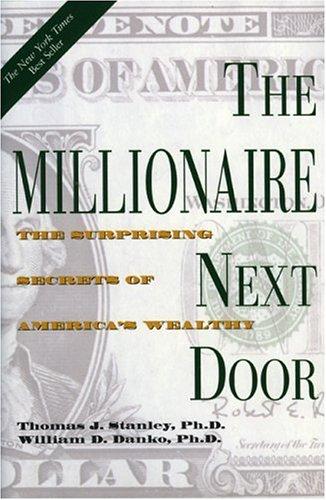
For anyone who confuses high income with wealth, or who feels behind because their lifestyle doesn't look like the we…
Buy on Amazon →
Anyone who earns enough to make discretionary spending choices but suspects their spending is not generating proporti…
Buy on Amazon →
Households in active consumer-debt distress who need a non-negotiable shared script. Not for investors already past B…
Buy on Amazon →How The Money Class stacks up
About Suze Orman
Read more from Suze Orman and explore the full bibliography on ClearValue Books.
View Suze Orman's page →Get an email if our take on The Money Class changes.
We re-review our picks. We'll email you if The Money Class's ranking or review changes — no checking back.
