

The money compass

Curated by Brian Kim, CPA — every pick gets a plain-English summary and the key takeaways.
Brian Kim, CPA · 2.89M YouTube Subscribers →What this book actually teaches
- 01The book's diagnostic framework focuses on money leakage — the systematic ways households lose wealth through banking fees, insurance inefficiencies, investment cost drag, and missed tax strategies — rather than on earning or investing more.
- 02Investment cost analysis is the most substantive section: Grimaldi illustrates how fee drag from mutual fund expense ratios and variable annuity charges compounds over 30 years to produce dramatically different terminal wealth outcomes.
- 03The tax optimization content covers asset location, tax-loss harvesting basics, and the treatment of different investment vehicles — practical enough for a general audience to orient themselves, but requiring supplemental research for full implementation.
- 04Debt optimization is handled with a calculation-oriented approach — the cost of carrying high-interest debt versus deploying capital to investments — which is appropriate for the book's diagnostic and quantitative framing.
- 05Published in 2014, specific product recommendations, fee structures, and tax rules may be outdated; the diagnostic framework is durable but specific guidance requires verification against current sources before acting.
What's in this book
The Money Compass: Where Your Money Went and How to Get It Back (2014) by Mark A. Grimaldi is a personal finance guide focused on the practical problem of money leakage — the systematic ways that households lose money through fees, inefficient products, missed tax strategies, and behavioral patterns that erode wealth over time without the household noticing. Grimaldi, who has worked as a financial advisor and money manager, structures the book as a diagnostic tool for identifying where money is disappearing and a practical guide for recovering it.
The book organizes its content around several major leakage categories. Banking fees — overdraft charges, account maintenance fees, ATM fees — are the entry point; Grimaldi documents how these fees add up across a household over years and provides specific alternatives that eliminate or reduce them. The treatment of insurance is similarly diagnostic: Grimaldi walks through auto, home, life, and health insurance to identify where households are over-insured, under-insured, or paying for coverage that provides poor value relative to alternatives.
The investment cost sections are the book's most substantive. Grimaldi examines mutual fund expense ratios, 12b-1 fees, surrender charges on variable annuities, and the compounding effect of fee drag over long time periods. He uses concrete illustrations to show how a 1% versus 2% annual expense ratio produces dramatically different terminal values over 30 years — the same kind of fee-sensitivity argument that index fund advocates have made, extended here to the broader product landscape that many retail investors own without fully understanding the cost structure.
The tax optimization content covers strategies for reducing tax drag on investment portfolios: asset location (placing tax-inefficient investments in tax-advantaged accounts), tax-loss harvesting basics, and the tax treatment of different investment vehicles. This material is handled at a level appropriate for a general audience rather than a tax professional.
Grimaldi also covers debt optimization — the logic of prioritizing high-interest debt payoff, the mechanics of refinancing, and the cost analysis of carrying credit card balances versus deploying capital to investments. The treatment is practical and calculation-oriented, which is appropriate for the diagnostic framing the book establishes.
The weaknesses are about scope and currency. Published in 2014, specific product recommendations, fee structures, and tax rules may be outdated. The book covers a wide range of topics at a level of depth that is useful for awareness but insufficient for implementation without additional research. Some readers may find the diagnostic framing repetitive — the book returns consistently to the theme of money leakage without always providing the level of specific guidance needed to fix the identified problem.
For households that have accumulated some savings but have never systematically audited where their money is going — through fees, inefficient products, and missed optimizations — The Money Compass provides a structured framework for that audit. Specific product and tax details should be verified against current sources.
Read next

For anyone whose financial education was "get a good job and save" — the book is most valuable for first-time readers…
Buy on Amazon →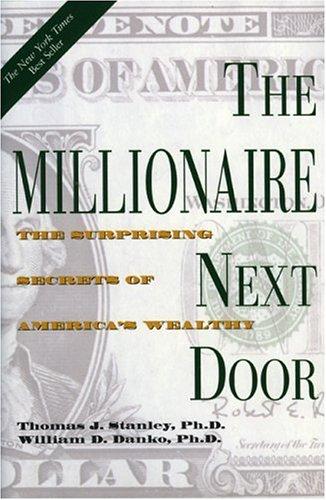
For anyone who confuses high income with wealth, or who feels behind because their lifestyle doesn't look like the we…
Buy on Amazon →
Anyone who earns enough to make discretionary spending choices but suspects their spending is not generating proporti…
Buy on Amazon →
Households in active consumer-debt distress who need a non-negotiable shared script. Not for investors already past B…
Buy on Amazon →About Mark A Grimaldi
Read more from Mark A Grimaldi and explore the full bibliography on ClearValue Books.
View Mark A Grimaldi's page →Get an email if our take on The money compass changes.
We re-review our picks. We'll email you if The money compass's ranking or review changes — no checking back.

Ready to read The money compass?
Buy the edition we recommend on Amazon.
Buy on Amazon →