

The new finance

Curated by Brian Kim, CPA — every pick gets a plain-English summary and the key takeaways.
Brian Kim, CPA · 2.89M YouTube Subscribers →What this book actually teaches
- 01Haugen builds an empirical case that the efficient market hypothesis fails on its own terms — the predicted relationship between beta and expected return doesn't hold in the data.
- 02Low-volatility stocks have historically outperformed high-volatility ones, contradicting the core CAPM prediction that more risk means more return.
- 03Momentum and earnings-surprise effects are systematic enough to exploit, according to Haugen — the market overreacts to recent news in predictable directions.
- 04The book is an intellectual ancestor of the factor-investing and smart-beta industry that grew significantly after publication.
- 05The anomaly evidence has been contested since publication — some effects have attenuated after being widely traded against, so treat the specific claims with appropriate skepticism.
What's in this book
Robert Haugen's argument is that the efficient market hypothesis — the idea that stock prices accurately reflect all available information and that beating the market is therefore impossible without taking on additional risk — is empirically wrong in ways that matter to investors. The New Finance is a short, dense polemic written in 1995 that distills Haugen's two earlier academic volumes (Modern Investment Theory and The New Finance: Overreaction, Complexity, and Uniqueness) into a case accessible to practitioners: markets are not efficient, but they are not efficient in predictable ways that a disciplined investor can exploit.
The core case runs on anomaly evidence. Haugen catalogs the statistical patterns that contradict the capital asset pricing model's central prediction — that higher expected returns require higher beta exposure. He documents the low-volatility anomaly (low-beta, low-volatility stocks outperform over the long run), the momentum effect (past winners continue to outperform in the near term), and the earnings surprise effect (stocks with positive earnings surprises continue to drift upward). These patterns, he argues, are not artifacts of data mining — they are robust across markets and time periods, and they are inconsistent with a world where prices instantaneously and accurately absorb all information.
Haugen's deeper claim is that market overreaction — investors chasing recent winners and fleeing recent losers — creates the mispricings. The market is not a passive discounting machine but an emotional one, and that emotion is systematic enough to be mapped and traded against. He anticipated the behavioral finance wave that Shiller, Thaler, and others would develop more fully in the years that followed.
For investors, the book's practical implications are factor-based: tilt toward cheap, profitable, low-volatility stocks rather than running a passive index or chasing growth. Haugen was an early advocate of what is now called quantitative factor investing, and the book reads as an intellectual precursor to the smart-beta and factor-investing industry that would grow significantly in the 2000s and 2010s.
For investors who want empirical evidence that passive indexing isn't the only rational strategy, and who are willing to engage with the academic literature it draws on.
Weaknesses
the book is short — about 100 pages — and reads more as a series of empirical points than as a full investment framework. It tells you the market is inefficient without giving much guidance on how to construct a portfolio around that belief. The anomaly evidence Haugen cites has also been contested: critics argue that some effects are partly explained by risk (the value premium) and others have attenuated after being published and traded against (the small-cap premium). And Haugen's own quantitative fund, run through Haugen Custom Financial Systems, had a mixed performance record, which is worth knowing when evaluating how far his theory translated into practice.
Verdict
a useful, short challenge to orthodox efficient-market thinking, best read alongside the later academic literature — Fama and French's factor papers, Shiller's Irrational Exuberance — to see how the debate evolved. For serious investors willing to engage with the evidence, not for casual readers.
Read next

For anyone whose financial education was "get a good job and save" — the book is most valuable for first-time readers…
Buy on Amazon →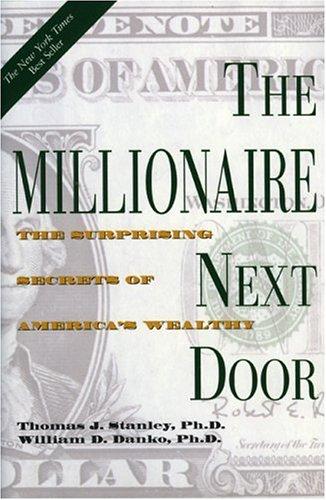
For anyone who confuses high income with wealth, or who feels behind because their lifestyle doesn't look like the we…
Buy on Amazon →
Anyone who earns enough to make discretionary spending choices but suspects their spending is not generating proporti…
Buy on Amazon →
Households in active consumer-debt distress who need a non-negotiable shared script. Not for investors already past B…
Buy on Amazon →About Robert A Haugen
Read more from Robert A Haugen and explore the full bibliography on ClearValue Books.
View Robert A Haugen's page →Get an email if our take on The new finance changes.
We re-review our picks. We'll email you if The new finance's ranking or review changes — no checking back.
