

The pledge

Curated by Brian Kim, CPA — every pick gets a plain-English summary and the key takeaways.
Brian Kim, CPA · 2.89M YouTube Subscribers →What this book actually teaches
- 01The central mechanism is a personal pledge to yourself: a kept promise that rebuilds self-trust incrementally, starting with small and genuinely keepable commitments.
- 02The daily critical task — one priority task completed before everything else — is the pledge applied to productivity.
- 03The financial application of the pledge framework emphasizes building portable skills and multiple income streams not dependent on a single employer.
- 04The book is motivational and integrity-framed rather than technical; it reframes execution failures as broken self-promises rather than missing systems.
- 05The pledge concept has deeper roots in behavioral psychology literature on commitment devices and implementation intentions, which the book doesn't engage directly.
What's in this book
Michael Masterson's argument in The Pledge is that the difference between people who achieve financial and professional success and those who don't is not intelligence, talent, or even hard work in the abstract — it is the specific discipline of keeping promises to yourself. The book is built around what Masterson calls the pledge: a personal commitment to prioritize your most important long-term goals over the short-term comfort of doing what is easy, familiar, or immediately gratifying.
Masterson, a serial entrepreneur and pen name of Mark Ford who has written extensively on direct-response marketing and business building, approaches this through three interlocking arguments. First, the psychology of self-trust: most people make and break commitments to themselves so routinely that they have stopped believing their own intentions. The pledge framework is designed to rebuild that self-trust incrementally, starting with small, specific promises that are genuinely keepable and expanding over time. Second, the productivity framework: Masterson argues that the single most valuable daily habit is to identify the one critical task that would advance your most important goal and complete it before anything else. This is not a new idea — the literature on prioritized daily scheduling is well established — but Masterson ties it explicitly to the pledge mechanism: the promise you are keeping is specifically to that one task, daily. Third, the entrepreneurial and financial application: the pledge applied to income means building at least one income stream that does not depend on a single employer, developing a skill set that is portable and marketable, and consistently reinvesting a portion of income into income-producing assets.
The natural audience is people who have read enough motivational and productivity material to know what they should be doing but still find themselves not doing it — and who want a reframe around personal integrity rather than a new system or technique.
The weaknesses are honest. The pledge concept is not original — behavioral psychology has extensive literature on commitment devices, implementation intentions, and self-control — and Masterson does not engage with that research directly. The book is more inspirational than instructional, and readers expecting a concrete financial plan or business playbook will find it thin. The writing has the characteristics of Masterson's direct-response background: clear and propulsive, but not subtle. The examples draw heavily from his own entrepreneurial career, and the income-building advice assumes a level of entrepreneurial aptitude that not every reader has or wants. The financial content is general and secondary to the mindset argument.
Worth reading for readers who respond to integrity-based reframing of productivity and financial discipline. Not the book if you want a technical financial plan or an original behavioral-science framework.
Read next

For anyone whose financial education was "get a good job and save" — the book is most valuable for first-time readers…
Buy on Amazon →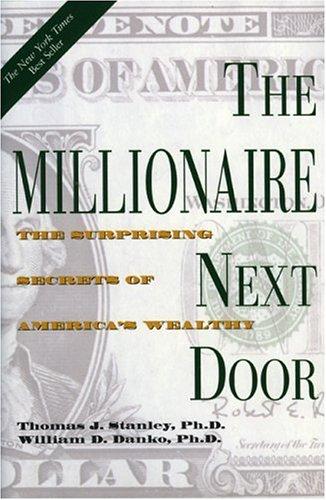
For anyone who confuses high income with wealth, or who feels behind because their lifestyle doesn't look like the we…
Buy on Amazon →
Anyone who earns enough to make discretionary spending choices but suspects their spending is not generating proporti…
Buy on Amazon →
Households in active consumer-debt distress who need a non-negotiable shared script. Not for investors already past B…
Buy on Amazon →About Michael Masterson
Read more from Michael Masterson and explore the full bibliography on ClearValue Books.
View Michael Masterson's page →Get an email if our take on The pledge changes.
We re-review our picks. We'll email you if The pledge's ranking or review changes — no checking back.
