

The poor and their money

Curated by Brian Kim, CPA — every pick gets a plain-English summary and the key takeaways.
Brian Kim, CPA · 2.89M YouTube Subscribers →What this book actually teaches
- 01The core argument challenges the assumption that poor households don't save — Rutherford documents that they save persistently but need mechanisms to convert small periodic flows into usable lump sums, which he categorizes as going backward (borrowing against future savings), forward (accumulating first), or sideways (pooling through informal clubs).
- 02The fieldwork documents the actual financial instruments poor households use simultaneously: ROSCAs, ASCAs, moneylenders, deposit collectors — demonstrating that using multiple instruments reflects sophisticated cash flow management, not financial disorder.
- 03The book is a conceptual precursor to Portfolios of the Poor (2009) — Rutherford establishes the analytical framework that the later financial diary research would validate at scale across multiple countries.
- 04The policy argument is that savings access matters as much as credit access, a direct counterweight to the credit-first orthodoxy that dominated microfinance thinking in the 1990s through the Grameen Bank model.
- 05The analysis predates the randomized controlled trial literature on microfinance outcomes that emerged in the 2000s and 2010s — readers wanting current evidence on what financial products improve household welfare need to consult that body of research as a supplement.
What's in this book
The Poor and Their Money (2000) by Stuart Rutherford is a short, research-grounded book that challenges a widely held assumption in development economics and policy: that poor people in low-income countries are too poor to save. Rutherford, a British development practitioner with decades of fieldwork in Bangladesh, India, and East Africa, argues that the poor not only save but that financial intermediation — helping money move through time from small periodic contributions to larger lump sums — is among the most valuable financial services that can be offered to low-income households. The book's central conceptual contribution is the framework of converting small savings into usable lump sums: going backward (borrowing against future savings), going forward (accumulating savings before spending), or going sideways (pooling with others through informal clubs or rotating credit associations).
The fieldwork underlying the book is granular and specific. Rutherford documents the financial instruments that poor households in his research sites actually use: ROSCA (rotating savings and credit associations), ASCA (accumulating savings and credit associations), moneylenders, informal deposit collectors known as moneyguards or susu collectors, and the earliest versions of what would become the BRAC and Grameen Bank-style group lending products. The pattern he finds consistently is that households use multiple financial instruments simultaneously — not because they lack discipline but because each instrument solves a different problem in their cash flow management.
The concept of the financial diary — tracking every financial transaction a household makes over an extended period — appears in this book as a method rather than a result; the fuller execution of financial diaries as a research methodology came in the later Portfolios of the Poor (2009) by Collins, Morduch, Rutherford, and Ruthven. The Poor and Their Money functions as a precursor: it establishes the analytical framework that financial diaries would later validate at scale.
The policy implications Rutherford draws are direct: financial services for the poor should focus on safe, accessible savings products as much as credit. The microfinance movement that had emerged through the 1980s and 1990s was dominated by the group lending and credit delivery model associated with Grameen Bank and its replicators. Rutherford's argument — that savings access may matter as much as credit access, and that the existing informal sector demonstrates persistent demand for savings products — was a conceptual counterweight to the credit-first orthodoxy of 1990s microfinance.
The book's weaknesses are a function of its format and scope. At roughly 150 pages, it reads as a conceptual essay with fieldwork illustrations rather than a comprehensive empirical study. The populations represented are primarily South Asian and East African, and generalizations beyond those contexts require caution. The analysis predates the substantial body of randomized controlled trial research on microfinance that emerged in the 2000s and 2010s — readers who want current evidence on what financial products actually improve household welfare should consult that literature.
For development economists, practitioners working in financial inclusion, policymakers designing savings programs for low-income populations, and readers who want to understand the intellectual foundations of the shift from credit-first to savings-and-credit microfinance, this is a foundational text.
Read next

For anyone whose financial education was "get a good job and save" — the book is most valuable for first-time readers…
Buy on Amazon →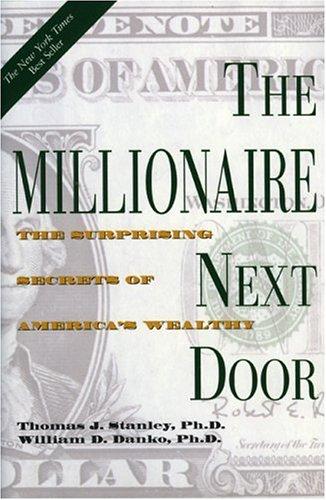
For anyone who confuses high income with wealth, or who feels behind because their lifestyle doesn't look like the we…
Buy on Amazon →
Anyone who earns enough to make discretionary spending choices but suspects their spending is not generating proporti…
Buy on Amazon →
Households in active consumer-debt distress who need a non-negotiable shared script. Not for investors already past B…
Buy on Amazon →About Stuart Rutherford
Read more from Stuart Rutherford and explore the full bibliography on ClearValue Books.
View Stuart Rutherford's page →Get an email if our take on The poor and their money changes.
We re-review our picks. We'll email you if The poor and their money's ranking or review changes — no checking back.

Ready to read The poor and their money?
Buy the edition we recommend on Amazon.
Buy on Amazon →