

The portfolio theorists

Curated by Brian Kim, CPA — every pick gets a plain-English summary and the key takeaways.
Brian Kim, CPA · 2.89M YouTube Subscribers →What this book actually teaches
- 01The book covers the four foundational portfolio theorists — Markowitz (mean-variance optimization), Tobin (separation theorem and the risk-free asset), Sharpe (Capital Asset Pricing Model), and the independent parallel derivations by Lintner and Mossin — as an intellectual lineage rather than independent contributions.
- 02Markowitz's 1952 insight that investors should optimize portfolio variance, not just expected return, and that covariance across assets determines diversification benefit, was ignored for nearly a decade before Sharpe's CAPM gave it a general equilibrium grounding.
- 03The CAPM's distinction between systematic risk (market risk, which cannot be diversified away) and idiosyncratic risk (firm-specific risk, which can be) is covered clearly, alongside acknowledgment of the model's well-documented empirical problems including the Fama-French findings that beta alone does not explain cross-sectional returns.
- 04The Great Minds series format interweaves biographical narrative with intellectual history — useful for understanding how ideas developed in conversation and competition, but potentially disruptive for readers who want a clean technical treatment of the theory.
- 05Coverage stops at the foundational theories and does not extend into the factor model literature (Fama-French three-factor, Carhart momentum, more recent multi-factor models) that built on and empirically challenged CAPM in the decades following its development.
What's in this book
The Portfolio Theorists (2012) by Colin Read is the seventh volume in Palgrave Macmillan's Great Minds in Finance series, which profiles the intellectual architects of modern finance theory. Read, an economist and finance professor, focuses this volume on the figures who built the theoretical foundation of portfolio construction: Harry Markowitz, whose 1952 paper introduced mean-variance optimization and gave modern portfolio theory its mathematical structure; James Tobin, who extended Markowitz's framework to include the risk-free asset and derived the separation theorem; William Sharpe, who developed the Capital Asset Pricing Model as a general equilibrium extension of Markowitz's work; and the contributions of others including John Lintner and Jan Mossin who independently derived similar results.
The book traces the intellectual lineage that connects these figures in a sequence that is anything but obvious in retrospect. Markowitz's insight — that investors should care about portfolio variance, not just expected return, and that covariance across assets determines how combining them affects total risk — was largely ignored for a decade before Sharpe's CAPM gave it a general equilibrium grounding and made it tractable for practical application. Read reconstructs the intellectual environment of 1950s and 1960s academic finance, when the field was transitioning from the descriptive institutional approach that had dominated before World War II to the mathematical and theoretical orientation that would define it through the rest of the century.
The Markowitz chapters cover the mean-variance framework in conceptual terms accessible to readers without deep mathematical training: the efficient frontier, the minimum variance portfolio, the role of correlation in diversification, and the computational challenge that limited practical application of the framework until computing power caught up in the 1970s and 1980s. Read is good at explaining why the framework was theoretically important without requiring readers to work through the matrix algebra.
The Sharpe and CAPM sections cover the development of the security market line, the concept of beta as a measure of systematic risk, and the distinction between systematic risk (market risk, which cannot be diversified away) and idiosyncratic risk (firm-specific risk, which can be). The CAPM's empirical problems — which were well-documented by the time Read was writing, including the Fama-French findings that beta alone does not explain the cross-section of returns — are acknowledged, and Read situates the CAPM as a theoretical benchmark rather than an empirically validated description of how markets actually price risk.
The biographical sections on each theorist provide context for the intellectual work: Markowitz's trajectory from Chicago economics through the RAND Corporation to the work that eventually won him a Nobel Prize in 1990; Sharpe's dissertation under Markowitz and the publication history of the CAPM; Tobin's broader contributions across macroeconomics and the specific portfolio theory contributions that earned him a Nobel Prize in 1981. The intellectual biography format illuminates how the ideas developed in conversation and competition rather than isolation.
The weaknesses are consistent with the Great Minds series format. The biographical frame sometimes interrupts the development of the theory — readers who want a clean technical treatment of portfolio theory will find the biographical interjections disruptive. The coverage stops at the foundational theories and does not extend deeply into the subsequent factor model literature that built on and in many cases empirically challenged CAPM.
For readers who want to understand the intellectual history of how modern portfolio theory was built — who the theorists were, what problems they were solving, and how their ideas connected — this is a readable and accurate treatment.
Read next

For anyone whose financial education was "get a good job and save" — the book is most valuable for first-time readers…
Buy on Amazon →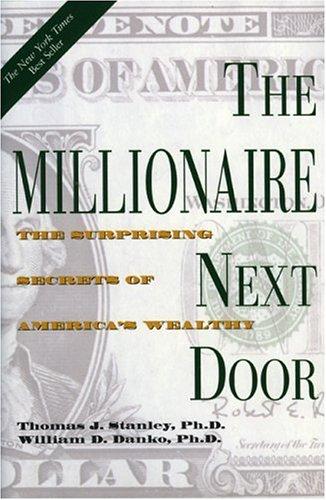
For anyone who confuses high income with wealth, or who feels behind because their lifestyle doesn't look like the we…
Buy on Amazon →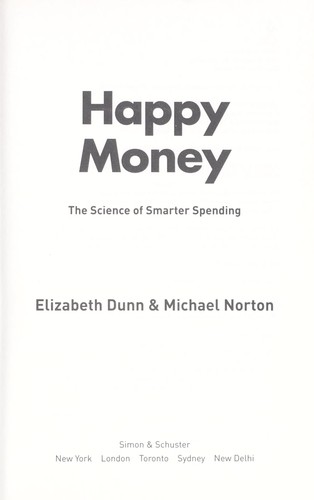
Anyone who earns enough to make discretionary spending choices but suspects their spending is not generating proporti…
Buy on Amazon →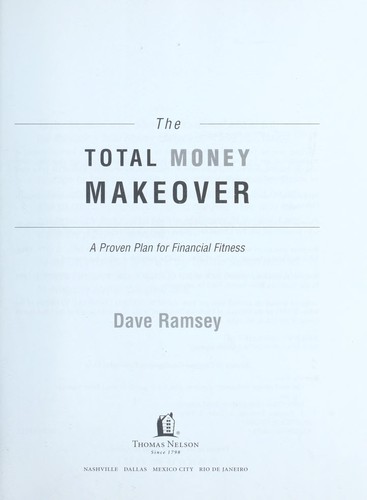
Households in active consumer-debt distress who need a non-negotiable shared script. Not for investors already past B…
Buy on Amazon →About Colin Read
Read more from Colin Read and explore the full bibliography on ClearValue Books.
View Colin Read's page →Get an email if our take on The portfolio theorists changes.
We re-review our picks. We'll email you if The portfolio theorists's ranking or review changes — no checking back.

Ready to read The portfolio theorists?
Buy the edition we recommend on Amazon.
Buy on Amazon →