

The Real Cost of Living

Curated by Brian Kim, CPA — every pick gets a plain-English summary and the key takeaways.
Brian Kim, CPA · 2.89M YouTube Subscribers →What this book actually teaches
- 01The "real cost" framework extends financial analysis to include health impact, time cost, relationship strain, stress burden, and long-term opportunity cost.
- 02Housing analysis goes beyond the mortgage payment to commuting time, maintenance burden, and psychological weight of ownership versus renting.
- 03Career chapters ask whether the premium pay of a demanding job is worth its real costs in time, flexibility, and health — and whether a low-paying job's real cost includes compounding lost savings.
- 04The compounding penalty of procrastination on retirement saving and debt payoff is illustrated with specific calculations.
- 05The framework is the durable contribution; specific rates and product costs are dated to 2009 and should be verified before acting on them.
What's in this book
Carmen Wong Ulrich's argument in The Real Cost of Living is that most personal-finance advice is incomplete because it treats financial decisions in isolation from their true costs — the hidden, non-monetary, and long-term costs that rarely appear in a budget spreadsheet. Ulrich, a journalist and personal finance commentator who appeared regularly on CNBC and CNN, builds a framework around what she calls the "real cost": the full price of a financial choice when you factor in health impact, relationship strain, time lost, opportunity cost, stress burden, and the downstream consequences of each decision.
The book is organized as a series of cost categories, each examined through the real-cost lens. Housing gets a chapter that goes beyond mortgage payment to address the commuting time, maintenance burden, and psychological weight of homeownership versus renting. Career chapters examine the real cost of a higher-paying job that requires sacrifice of time, flexibility, or health — and the real cost of staying in a low-paying job that leaves you financially stuck. Chapters on relationships cover the financial cost of divorce, the real cost of financially enabling family members, and the hidden expense of social spending driven by peer pressure. A chapter on convenience spending — the premium paid for time-saving products and services — asks whether the time savings are real and worth the price. The book also addresses the cost of procrastination on financial decisions: Ulrich calculates the compounding penalty of delayed retirement saving and delayed debt payoff with specific illustrations.
The natural audience is people in their 20s and 30s who are making the foundational decisions — where to live, what job to take, whether to buy or rent, how much to spend on a lifestyle — and who want a framework for thinking through those decisions more completely than a standard budget analysis allows.
The weaknesses are honest. The real-cost framework is a useful lens, but the book applies it unevenly — some chapters are analytically rigorous, others are more anecdotal. The financial calculations, while illustrative, are simplified, and readers who want to run the math precisely on their own situation will need to build their own models. The book was published in 2009, and some of the product costs, interest rates, and lifestyle examples feel dated. Ulrich's background is in journalism and TV commentary rather than financial planning, and the depth of the financial advice reflects that — it is more conceptual than technical.
Worth reading for the real-cost lens, which is genuinely useful and underrepresented in standard personal-finance literature. The framework is the contribution; the specific numbers are illustrative, not authoritative.
Read next

For anyone whose financial education was "get a good job and save" — the book is most valuable for first-time readers…
Buy on Amazon →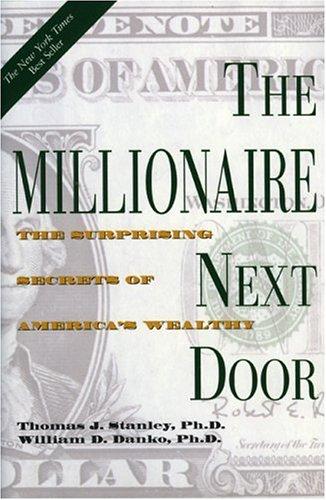
For anyone who confuses high income with wealth, or who feels behind because their lifestyle doesn't look like the we…
Buy on Amazon →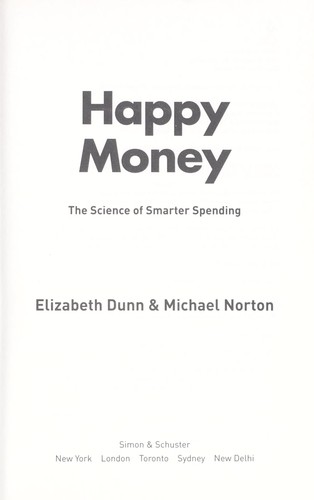
Anyone who earns enough to make discretionary spending choices but suspects their spending is not generating proporti…
Buy on Amazon →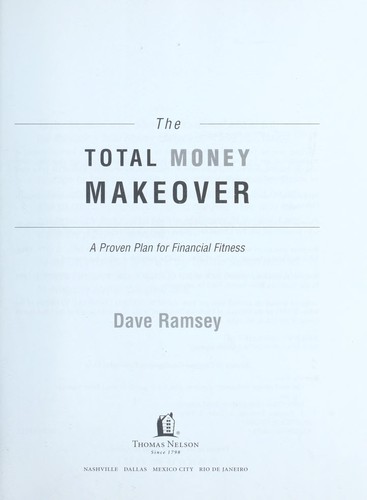
Households in active consumer-debt distress who need a non-negotiable shared script. Not for investors already past B…
Buy on Amazon →How The Real Cost of Living stacks up
About Carmen Wong Ulrich
Read more from Carmen Wong Ulrich and explore the full bibliography on ClearValue Books.
View Carmen Wong Ulrich's page →Get an email if our take on The Real Cost of Living changes.
We re-review our picks. We'll email you if The Real Cost of Living's ranking or review changes — no checking back.

Ready to read The Real Cost of Living?
Buy the edition we recommend on Amazon.
Buy on Amazon →