

The truth about money

Curated by Brian Kim, CPA — every pick gets a plain-English summary and the key takeaways.
Brian Kim, CPA · 2.89M YouTube Subscribers →What this book actually teaches
- 01Starting to invest early matters more than picking the right investments — the compounding advantage of an 8-year head start can outrun 35 years of later contributions, which is the book's central argument for acting now regardless of portfolio size.
- 02Edelman argues that paying off a low-rate mortgage early is often a financial mistake if the alternative is investing in diversified equities over long time horizons — a consistent position across editions that becomes more nuanced in high-rate environments.
- 03Maximizing tax-advantaged accounts (401(k), IRA, Roth IRA) before investing in taxable accounts is treated as close to a universal rule for middle-income earners, with detailed mechanics for each vehicle type.
- 04Asset allocation is more important than security selection for most investors, and most individuals are systematically over-concentrated in familiar assets — their employer's stock, domestic equities, local real estate — at the expense of diversification.
- 05Edition-year staleness is a real limitation: specific tax brackets, contribution limits, and rate benchmarks in the book reflect the year it was printed, and readers should verify current numbers before acting on any specific figures.
What's in this book
The Truth About Money by Ric Edelman is a comprehensive mass-market personal finance reference that has gone through multiple editions since its original 1996 publication — readers should confirm they have a recent edition, as specific numbers (tax brackets, contribution limits, interest rate benchmarks) update with each revision. Edelman's core argument is that financial planning is not complicated by nature; it only feels complicated because financial institutions benefit from keeping consumers confused. The book aims to strip that confusion away and replace it with a systematic framework any working adult can follow.
Edelman's key arguments center on the mechanics of compounding and long time horizons. The book makes the case that starting early matters more than picking the right investment — a point Edelman illustrates with the classic twin-investor comparison showing how a 22-year-old who invests for eight years and stops can end up ahead of a 30-year-old who invests for 35 straight years. This framing is intentionally dramatic, but the underlying math is accurate and the lesson holds: time in the market compounds wealth in ways that active stock selection rarely matches.
The book devotes substantial space to asset allocation, arguing that most individual investors concentrate too heavily in familiar assets — their employer's stock, domestic equities, real estate in their own market — and underweight international diversification and bonds. Edelman's recommended allocations have shifted across editions as market conditions changed, which means specific percentage recommendations should be treated as illustrative rather than prescriptive for readers encountering an older printing.
Insurance and debt receive thorough treatment alongside investments. Edelman's position on mortgage debt is notable: he argues consistently that paying off a low-rate mortgage early is often a financial mistake if the alternative is investing those dollars in diversified equities over long horizons. This is a defensible position under historical equity return assumptions, though the argument becomes more contested in high-interest-rate environments — a caveat that newer editions address more directly. His insurance framework pushes readers toward term life over whole life, adequate disability coverage, and the underappreciated importance of long-term care planning.
The section on retirement accounts is one of the book's strongest. Edelman walks through contribution mechanics for 401(k)s, IRAs, Roth IRAs, and self-employed vehicles with enough specificity to be actionable, while being careful to note that rules change and readers should verify current limits. His consistent message is that maximizing tax-advantaged accounts before investing in taxable accounts is close to a universal rule for middle-income earners.
Who this is for: adults in their 20s through 50s who want a single-volume personal finance reference — particularly people who feel like they should know more about money than they do but have never worked through the basics systematically.
Weaknesses
edition-year staleness is the book's most persistent limitation. Specific tax numbers, estate planning thresholds, and rate benchmarks are accurate only in the edition year — readers holding a 2004 or 2012 printing are working with figures that are no longer correct. The mortgage-paydown argument, while intellectually defensible, can feel tone-deaf when interest rates are elevated. The book is also comprehensive to a fault: at over 500 pages in most editions, it covers so much ground that readers without a specific question to anchor them sometimes struggle to locate what is most relevant to their situation.
Verdict
one of the more durable mass-market personal finance references available — structured, comprehensive, and written without condescension. Worth reading in the most recent edition available; older printings are useful for the framework but require cross-referencing current rules.
Read next

For anyone whose financial education was "get a good job and save" — the book is most valuable for first-time readers…
Buy on Amazon →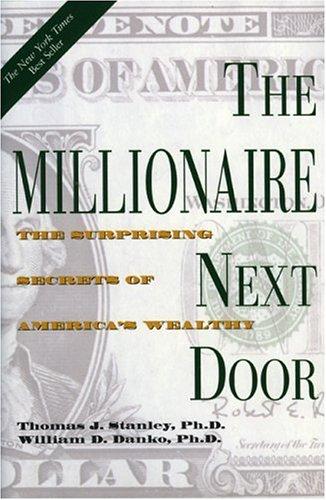
For anyone who confuses high income with wealth, or who feels behind because their lifestyle doesn't look like the we…
Buy on Amazon →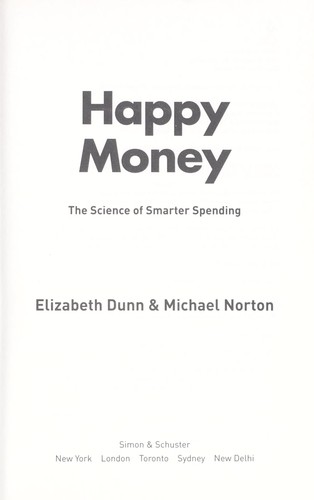
Anyone who earns enough to make discretionary spending choices but suspects their spending is not generating proporti…
Buy on Amazon →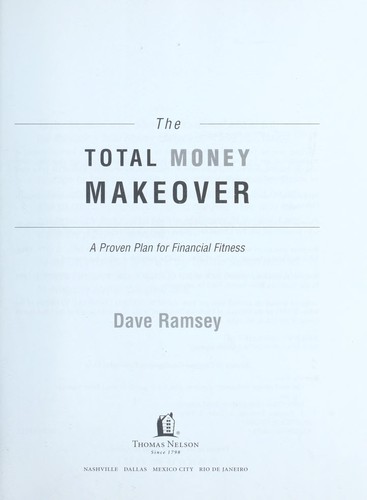
Households in active consumer-debt distress who need a non-negotiable shared script. Not for investors already past B…
Buy on Amazon →About Ric Edelman
Read more from Ric Edelman and explore the full bibliography on ClearValue Books.
View Ric Edelman's page →Get an email if our take on The truth about money changes.
We re-review our picks. We'll email you if The truth about money's ranking or review changes — no checking back.

Ready to read The truth about money?
Buy the edition we recommend on Amazon.
Buy on Amazon →