

The wealth choice

Curated by Brian Kim, CPA — every pick gets a plain-English summary and the key takeaways.
Brian Kim, CPA · 2.89M YouTube Subscribers →What this book actually teaches
- 01The core disciplines of wealth-building — clarity of purpose, deliberate financial literacy, disciplined reinvestment — are consistent across Kimbro's subjects, but the obstacles navigated were not: systemic discrimination in lending, networking, and inherited wealth are documented, not minimized.
- 02Financial literacy — understanding how money works, how to read a balance sheet, how businesses are valued — was a non-negotiable precondition that Kimbro's subjects sought out deliberately rather than encountered through formal education.
- 03Most of Kimbro's millionaires are first- or second-generation wealth holders who started in service businesses with low capital requirements and built through revenue reinvestment rather than waiting for outside capital.
- 04A specific mentor or early exposure experience appears consistently across the interviews as the inflection point — the moment when wealth became a conceivable goal rather than an abstract one.
- 05The survivor bias in interview-based wealth research is worth noting: the book studies people who succeeded with these principles, not those who applied them and did not achieve comparable results.
What's in this book
The Wealth Choice: Success Secrets of Black Millionaires by Dennis Kimbro, published in 2013, is the result of a decade-long research project in which Kimbro — a business professor and Napoleon Hill Foundation member — interviewed more than a thousand Black Americans who had achieved millionaire status. The book's thesis is that the pathways to wealth are consistent across racial lines, but that the obstacles, starting conditions, and social contexts that Black Americans navigate are distinct enough to warrant a separate study of how wealth is built within that specific context.
Kimbro's methodology draws explicitly on Napoleon Hill's Think and Grow Rich framework — he is a faculty member of the Napoleon Hill Foundation — and the book is in many ways an empirical update and cultural adaptation of Hill's work. Where Hill interviewed industrialists of the early twentieth century, Kimbro interviews Black entrepreneurs, executives, athletes, entertainers, and professionals of the late twentieth and early twenty-first. The principles he extracts — clarity of purpose, disciplined work habits, a willingness to serve others, financial literacy as a non-negotiable foundation — closely parallel Hill's thirteen principles, grounded in the specific experiences of his subjects.
The book's most distinctive sections document the obstacles that Black millionaires navigated rather than the success formula alone. Kimbro is direct that systemic barriers — discrimination in lending, limited inherited wealth, absence of professional networks, historical exclusion from wealth-building industries — are real features of the landscape his subjects operated in, and that the wealth they built was achieved through and despite those conditions rather than in their absence. This is the book's most honest and differentiated contribution: it does not pretend that the path is identical for all participants, while also making the case that the core disciplines are.
The interviews produce a consistent portrait. The millionaires Kimbro profiles tend to be first or second generation in their wealth, tend to attribute their financial start to a specific mentor or exposure experience, and tend to share a conviction that financial literacy — understanding how money works, how to read a balance sheet, how businesses are valued — was a precondition that they sought out deliberately rather than encountered through formal education. The theme of deliberate self-education in financial concepts recurs throughout.
The entrepreneurship chapters are the most practically oriented. Kimbro's subjects are disproportionately entrepreneurs rather than inherited-wealth holders, and the book is specific about the patterns: starting in service businesses with low capital requirements, reinvesting revenue rather than extracting it, and building customer relationships before seeking outside capital. The principle of starting with what you have and building incrementally, rather than waiting for optimal conditions, is stated and restated by multiple subjects.
Who this is for: Black professionals and entrepreneurs who want an empirically grounded account of how wealth has been built within their specific cultural and historical context, and anyone interested in the intersection of systemic economic barriers and individual wealth-building discipline.
Weaknesses
the Napoleon Hill framework that structures the book carries the limitations of that tradition — the emphasis on mindset, desire, and belief as near-sufficient conditions for wealth can underweight the role of structural economic factors that the book itself documents. The interview methodology, while rich in narrative, is not a controlled study; the sample is self-selected among those who achieved wealth, which means the book cannot assess how many people applied the same principles and did not achieve comparable results. The specific financial advice is general rather than tactical.
Verdict
a well-researched, honest, and motivationally grounded account of wealth-building in a specific cultural context — most valuable for the combination of empirical portrait and frank acknowledgment of the conditions those subjects operated within.
Read next

For anyone whose financial education was "get a good job and save" — the book is most valuable for first-time readers…
Buy on Amazon →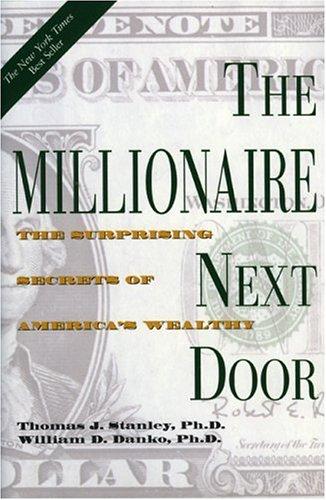
For anyone who confuses high income with wealth, or who feels behind because their lifestyle doesn't look like the we…
Buy on Amazon →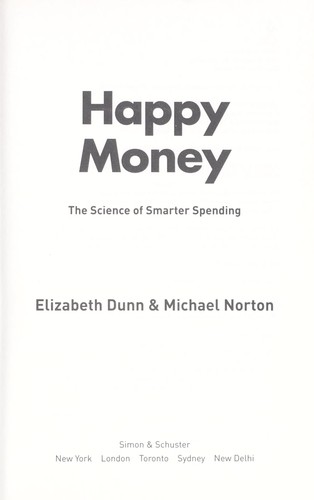
Anyone who earns enough to make discretionary spending choices but suspects their spending is not generating proporti…
Buy on Amazon →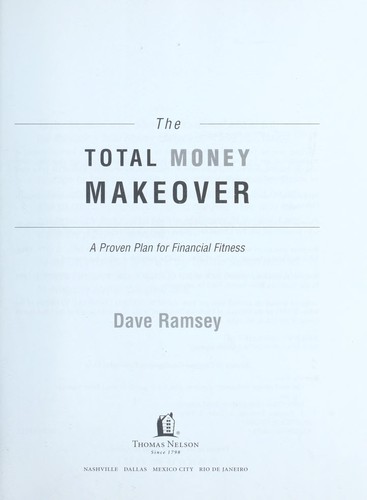
Households in active consumer-debt distress who need a non-negotiable shared script. Not for investors already past B…
Buy on Amazon →About Dennis Paul Kimbro
Read more from Dennis Paul Kimbro and explore the full bibliography on ClearValue Books.
View Dennis Paul Kimbro's page →Get an email if our take on The wealth choice changes.
We re-review our picks. We'll email you if The wealth choice's ranking or review changes — no checking back.

Ready to read The wealth choice?
Buy the edition we recommend on Amazon.
Buy on Amazon →